
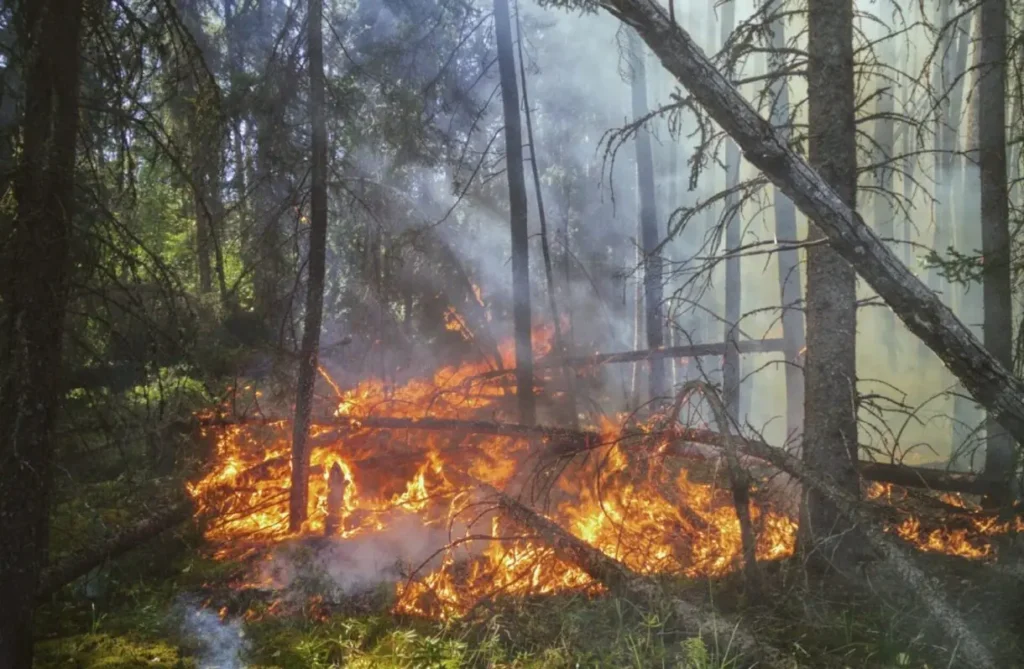
Within a few hours, fire services in several regions of southern France responded to dozens of fires. The situation is particularly worsening in the Mediterranean regions, where heat, drought and strong winds create a dangerous mix. Particularly alarming: some fire fronts are moving at almost walking speed.
“It is happening very quickly, almost 4 km/h — about as fast as someone walking at a brisk pace,” rescue workers on site describe the situation. What initially sounds like an abstract figure underscores the enormous challenge facing the fire service. When flames move at such speed through dry scrubland or forests, it is almost impossible to take firefighting measures.
The reason lies in the combination of several adverse factors. For weeks, many areas have been suffering from extreme drought. Grass, shrubs, and forests in many places resemble tinder. At the same time, temperatures are exceeding 30 degrees Celsius. When strong winds are added, small fire outbreaks quickly turn into fire fronts that are difficult to control.
So-called “fire jumps” are particularly alarming. The wind often carries glowing particles and sparks over long distances. New fire outbreaks can occur hundreds of meters ahead of the main fire line. For emergency responders, this is like an opponent constantly changing positions. As soon as one area is brought under control, new fires are already flaring up elsewhere.
Such developments significantly complicate the work of firefighters. It is no longer enough merely to fight existing fires. Command teams must constantly anticipate and predict where the fire will move next. Buildings, roads, power grids and, of course, the rescuers themselves must be protected in time.
Anyone who has ever seen how quickly a fire spreads through vegetation is unlikely to forget it. Within a few minutes, a small plume of smoke on the horizon can turn into a fire line several kilometers long. It is precisely this dynamic that is now causing great concern among the authorities.
The current situation reminds many experts of particularly severe fire years in past decades. The combination of prolonged heat, depleted vegetation and strong wind gusts means that the smallest spark is enough to cause new fires.
For southern France, the critical fire season is only just beginning. The coming weeks will show whether emergency services can stabilize the situation, or whether nature will set its own terms.
Andreas M. Bruker