
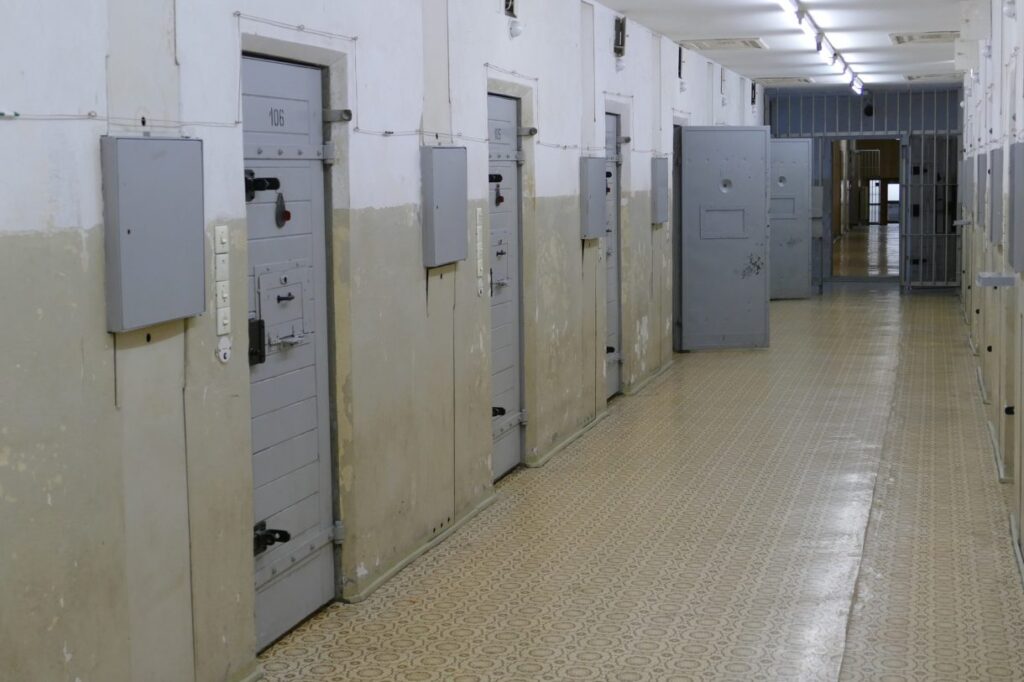
The death of a prisoner in a French prison is escalating into a case with significant political and legal importance. What initially seemed like a tragic isolated incident now raises fundamental questions about the state’s responsibility in carrying out punishments. At the center of attention is the family’s accusation that the prison administration observed the prisoner’s physical and psychological decline for weeks without intervening properly.
Relatives speak of a “slow decline in the sight of the state.” This statement makes a sensitive impression in France, where conditions in many prisons have been harshly criticized for years. The case touches not only on the individual responsibility of certain officials or doctors but also on the functionality of the entire French penal system.
The main issue of state responsibility
Legally, France found itself in a difficult situation. According to French law, the state is fully responsible for people in places of detention. A person deprived of freedom is entirely under the control of the state. This entails not only the obligation to ensure detention conditions but also to organize medical and psychological support.
The deceased’s family accuses the authorities of violating this obligation. According to their information, the man’s condition had clearly deteriorated over a long period. He lost weight sharply, became increasingly isolated, and showed obvious signs of health threats. However, proper medical care was not provided.
In French administrative law, there is the concept of “carence fautive” – culpable state inaction. French authorities have previously been condemned following cases of death or suicide in prisons due to insufficient care. Often the key question is whether warning signs were noticeable and whether the administration responded appropriately.
It is precisely this aspect that makes this case politically explosive. If the court determines that the authorities ignored obvious health deterioration, it could have far-reaching consequences for the French penal enforcement system.
Chronic crisis in French prisons
The case did not arise by chance during a time of intensified criticism of detention conditions. France has been struggling for many years with the structural overcrowding of the prison system. Many institutions are considered overcrowded, staff is lacking, and medical equipment is insufficient.
According to official data, the occupancy of French prisons regularly significantly exceeds their design capacity. In some facilities, inmates are forced to live two or three to a cell designed for one person. This overcrowding negatively affects not only the infrastructure but also complicates the care of inmates with psychological or physical problems.
The high rate of suicides and deaths in custody remains particularly alarming. Human rights organizations have been emphasizing for years that the psychological crises of many inmates are detected too late. France remains one of the European countries with the highest suicide rates among prisoners.
Experts do not see this as an isolated problem of individual institutions, but rather as a consequence of a system that is increasingly reaching its limits. Overburdened guards, lack of psychologists, and long waits for medical examinations create conditions in which vulnerable inmates can easily be overlooked.
Between the logic of security and human dignity
This case also reveals a fundamental conflict in modern penal systems. Prisons primarily serve a security function. At the same time, the state is obliged to protect the dignity and physical integrity of inmates.
Especially in political debates, these principles often come into conflict. Calls for harsher detention conditions or increased security measures regularly encounter warnings from lawyers and human rights activists that imprisonment should not lead to the dehumanization of the individual.
The French public often reacts ambivalently in such cases. On the one hand, there is a strong need for public safety and consistent criminal prosecution. On the other hand, concern grows when it seems that the state is losing sight of the fundamental principles of the rule of law.
The death of a prisoner has a special symbolic meaning. It serves as a reminder that the rule of law is tested precisely where people no longer have the ability to protect themselves.
The Role of European Jurisprudence
This is compounded by the European context. France has repeatedly been criticized by the European Court of Human Rights for the conditions in its prisons. Strasbourg has pointed out, in particular, the problem of overcrowding, insufficient hygiene, and inadequate medical care.
European case law considers the right to life and decent conditions of detention as fundamental obligations of member states. From this follows an active duty of protection: authorities cannot wait for the death or serious illness of a prisoner, but must identify risks early and take preventive measures.
If in the current case the ignoring of obvious warning signs is confirmed, France may once again face international pressure. Human rights organizations will likely use this case to draw attention to long-known structural deficiencies.
Political pressure on the government
For the French government, the matter is also important to consider from a domestic political perspective. The discussion about the state of penal enforcement is increasingly intertwined with broader societal issues: how much funding the state invests in public institutions, what priority is given to the resocialization of convicts, and how to ensure security without violating the principles of the rule of law?
Especially left-wing parties and human rights organizations have long demanded thorough reforms of the penal enforcement system. Conservative forces, on the other hand, often argue that the real problems lie in the increase in crime and the overburdening of the entire justice system.
The current case may intensify this discussion, as it shows how quickly institutional shortcomings can have concrete human consequences.
For the family of the deceased, financial compensation is now less important than the public acknowledgment of state responsibility. They demand that the death of their loved one not be seen as a tragic isolated case, but as a symptom of a system that ignored warning signs for too long.
In this way, the case goes beyond an individual fate and becomes a test of the French rule of law. The state’s treatment of its prisoners has always been considered an indicator of how seriously it takes the principles of human dignity and the rule of law.
Sources: Défenseur des droits (France), Observatoire international des prisons (2025), humanrights.ch (2025), European Court of Human Rights, French administrative law on “carence fautive”
Author: P. Tiko