
This year, a different atmosphere was drifting along the Croisette. The popping sound of champagne was rare, the calculated glamour was subdued, and the magical charm of old Cannes—with stars stepping out of black limousines and camera flashes firing like machine guns—had faded. Instead, the 79th festival often felt like a place for deep reflection on a chaotic world.
And at the center of it stood Cristian Mungiu.
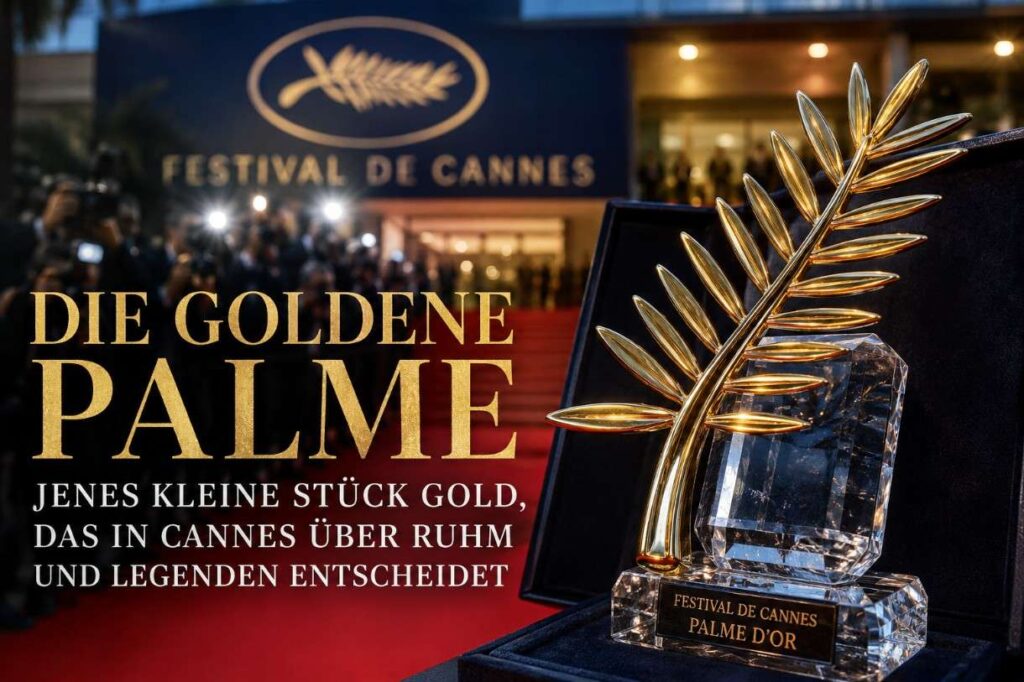
The Romanian director received the Palme d’Or for the second time with his film Fjord. He had previously made a shocking victory in 2007 with 4 Months, 3 Weeks and 2 Days, and this moment was not just a chapter in film history but also perfectly matched the strange atmosphere of this festival. Because Mungiu’s films are not interested in simple truths. His characters stumble through the ambiguous boundaries of morality, social tensions, and ideological minefields. This precisely overlaps with the position Europe finds itself in today.
Fjord depicts a Romanian-Norwegian family with religious strictness and inner tension living in isolation. When Norwegian child protection authorities intervene, a conflict beyond the family’s issues begins. Here, who is actually protecting whom? Where does consideration end and cultural authoritarianism begin?
Mungiu addresses these questions with his trademark quiet precision. There are no flashy explosions or moral coercion. Instead, glances, silences, and small gestures act like cracks in the ice that initially seem harmless but eventually move the entire landscape.
The audience at Cannes reacted almost reverently. There was a rare silence during the screening, with no coughing, whispering, or phone-checking. The film functioned as a collective experience of concentration. Are there still many such spaces in contemporary times?
And the entire award ceremony also reflected like a mirror of the present day. Many films dealt with themes of war, identity, immigration, and political violence. Almost half of the competition section seemed to carry deep social tensions. Contemporary cinema does not look away but digs into the core of the problems.
It was particularly symbolic when Russian director Andrei Zvyagintsev was awarded the Grand Prix for Minotaur, as he publicly called on Vladimir Putin to end the war in Ukraine. For a moment, the venue felt less like the festival’s palace and more like a political forum. The applause was hesitant for some, immediate for others, and some even stood up.
Cannes suddenly recalled the time when the festival was seen as a spiritual battlefield—somewhat chaotic, a bit overrated, but full of strong convictions.
Other awards also harmonized with that image. Valeska Grisebach received the Jury Prize for The Dreamed Adventure. Her film about immigration and crime on the fringes of Europe tells the stories of people who fully belong nowhere. The directing prize was split between Pawel Pawlikowski and the Spanish duo Los Javis. The acting awards also reflected an attitude that values collaboration over traditional star centrism.
It almost seemed as if Cannes was deliberately trying to dilute the idea of individual genius. A move away from the myth of the omniscient director toward ensembles and collective storytelling. That, too, might be a sign of the times.
Of course, there were also iconic moments. Barbra Streisand appeared on the red carpet, Peter Jackson showed up with a slightly unkempt beard, and flashes were flying over the Croisette. But even these scenes were tinged with a certain melancholy. It was as if the film festival sensed that the world outside the cinemas had become noisier than any red carpet.
That is precisely why Munjiu’s victory felt so convincing.
Fjord does not offer easy answers. It stubbornly refuses to depict clear perpetrators or victims. Instead, it shows that modern democracy is a vulnerable structure full of contradictions. Tolerance leans towards arrogance, protection turns into control, and freedom clashes with moral expectations.
It may sound theoretical, but in Munjiu’s hands it feels terrifyingly concrete.
Especially striking is the scene where Norwegian officials quietly sit at a family kitchen table while sleet beats against the window outside. No one shouts, nor does the situation escalate. Yet this silence carries more threat than many action movies. Yes, moments like these can only be created in great art cinema.
Perhaps this explains the success of Fjord. The film does not confine itself to the stories of Norway or Romania alone, but speaks about Europe, which can no longer fully understand itself. A society that constantly debates values, yet often forgets the complexity of human beings.
Therefore, this year’s Cannes reflected not escapism but rather a “longing”—a longing for guidance, empathy, and words that transcend ideological trenches.
Can film truly fulfill that role?
Perhaps not film alone. But for a few hours in a darkened theater, film achieves what political debates often fail at. It forces people to genuinely look at others.
Article by M. Legrand