
Although on TikTok or Instagram this looks like harmless summer fun, for the fire department and water suppliers, it is a nerve-wracking issue.
Because once a fire hydrant is opened, the water pressure in the network drops significantly. In the worst case, fire trucks may be unable to operate properly during firefighting due to lack of necessary water pressure. Firefighters have reported for years that opened hydrants have affected the water supply of entire blocks. In densely populated residential areas, this situation can have serious consequences.
In addition, there are problems such as flooding, basement water accumulation, and damage to underground garages. Water jets out from the pipes with great force, knocking down street signs, washing away sidewalks, and turning intersections into small lakes within minutes. Drivers lose control on the slippery roads, pedestrians fall, and electrical wires near the water jets pose safety hazards. Sometimes a small accident can cause the fire brigade to be dispatched for a serious incident rather than for heat-related emergencies.
Particularly ironic is the massive waste of water resources.
France has been battling drought, declining groundwater levels, and more frequent dry periods for years. Water use restrictions are being discussed in various places, farmers are worried about their harvests, and disputes have erupted in some regions over water shortages. Meanwhile, thousands of liters of drinking water flow uncontrolled through the streets within hours. A single open pipe can lose up to 80 cubic meters of water per hour, equivalent to the water use of many households over several days.
Many people also completely underestimate the risk of injury. The water pressure from fire hydrants is enormous, and in recent years water jets have thrown children several meters away with great force, causing serious injuries for some. Therefore, firefighters no longer see this as mere teenage mischief, but as a serious public safety threat.
The French authorities have taken stricter measures. Cities have installed special protective rings on fire hydrants, increased patrols, and threatened heavy fines and prosecution for damage to public property. However, these safety devices are costly and place a burden on local finances.
This discussion highlights a core issue: climate change not only alters temperatures but also changes urban life. High temperatures intertwine with social inequality, leading to new conflicts. Children seek ways to cool down, families flee stifling homes, and public infrastructure reaches its limits. Opening fire hydrants is not just simple vandalism but a reflection of many urban areas’ lack of preparedness for extreme summers.
This is exactly the true hidden danger embodied in these images.
Andreas M. Brucker
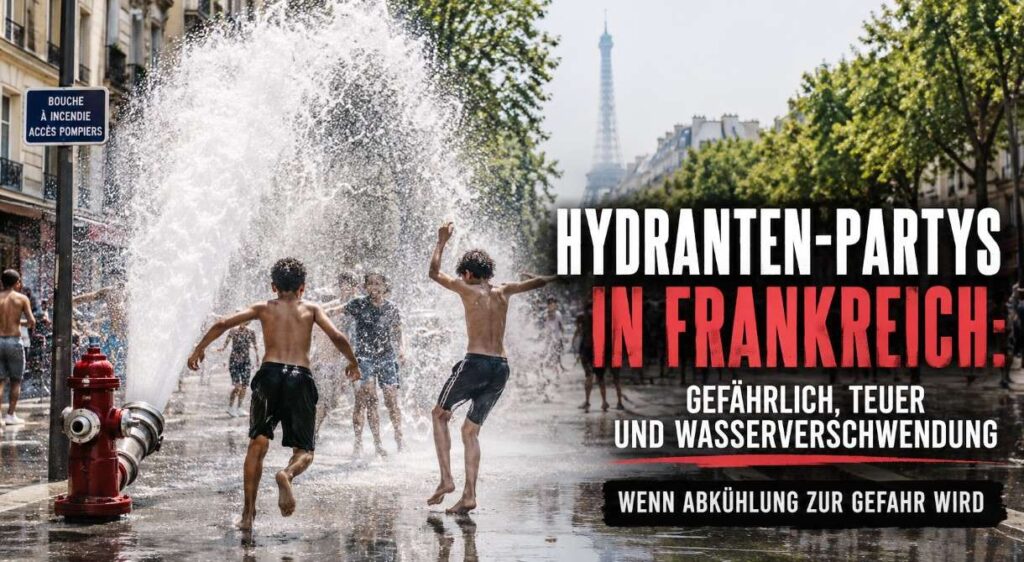
When the heat envelopes France and the asphalt roads in the suburbs of Paris shimmer with heat waves, some streets suddenly turn into temporary water parks. Children scream and run through fountains several meters high, teenagers film the scenes with their phones, and neighbors sit on folding chairs by the roadside. For a brief moment, everything seems like a summer festival in the heart of the big city.
But behind these spectacular scenes lies a problem that increasingly worries the authorities.
Whenever a new heat wave hits, France experiences so-called “Street Pooling”. At these times, fire hydrants—famously known as “bouches à incendie”—are illegally opened, creating drinking water fountains for cooling down. The most affected area is the densely populated Île-de-France region around Paris. Many communities lack free swimming pools, green spaces, or public venues, making it difficult for people to comfortably rest in temperatures above 35 degrees Celsius. As a result, some people open the valves on their own.
Although on TikTok or Instagram this looks like harmless summer fun, for the fire department and water suppliers, it is a nerve-wracking issue.
Because once a fire hydrant is opened, the water pressure in the network drops significantly. In the worst case, fire trucks may be unable to operate properly during firefighting due to lack of necessary water pressure. Firefighters have reported for years that opened hydrants have affected the water supply of entire blocks. In densely populated residential areas, this situation can have serious consequences.
Although on TikTok or Instagram this looks like harmless summer fun, for the fire department and water suppliers, it is a nerve-wracking issue.
Because once a fire hydrant is opened, the water pressure in the network drops significantly. In the worst case, fire trucks may be unable to operate properly during firefighting due to lack of necessary water pressure. Firefighters have reported for years that opened hydrants have affected the water supply of entire blocks. In densely populated residential areas, this situation can have serious consequences.
In addition, there are problems such as flooding, basement water accumulation, and damage to underground garages. Water jets out from the pipes with great force, knocking down street signs, washing away sidewalks, and turning intersections into small lakes within minutes. Drivers lose control on the slippery roads, pedestrians fall, and electrical wires near the water jets pose safety hazards. Sometimes a small accident can cause the fire brigade to be dispatched for a serious incident rather than for heat-related emergencies.
Particularly ironic is the massive waste of water resources.
France has been battling drought, declining groundwater levels, and more frequent dry periods for years. Water use restrictions are being discussed in various places, farmers are worried about their harvests, and disputes have erupted in some regions over water shortages. Meanwhile, thousands of liters of drinking water flow uncontrolled through the streets within hours. A single open pipe can lose up to 80 cubic meters of water per hour, equivalent to the water use of many households over several days.
Many people also completely underestimate the risk of injury. The water pressure from fire hydrants is enormous, and in recent years water jets have thrown children several meters away with great force, causing serious injuries for some. Therefore, firefighters no longer see this as mere teenage mischief, but as a serious public safety threat.
The French authorities have taken stricter measures. Cities have installed special protective rings on fire hydrants, increased patrols, and threatened heavy fines and prosecution for damage to public property. However, these safety devices are costly and place a burden on local finances.
This discussion highlights a core issue: climate change not only alters temperatures but also changes urban life. High temperatures intertwine with social inequality, leading to new conflicts. Children seek ways to cool down, families flee stifling homes, and public infrastructure reaches its limits. Opening fire hydrants is not just simple vandalism but a reflection of many urban areas’ lack of preparedness for extreme summers.
This is exactly the true hidden danger embodied in these images.
Andreas M. Brucker