
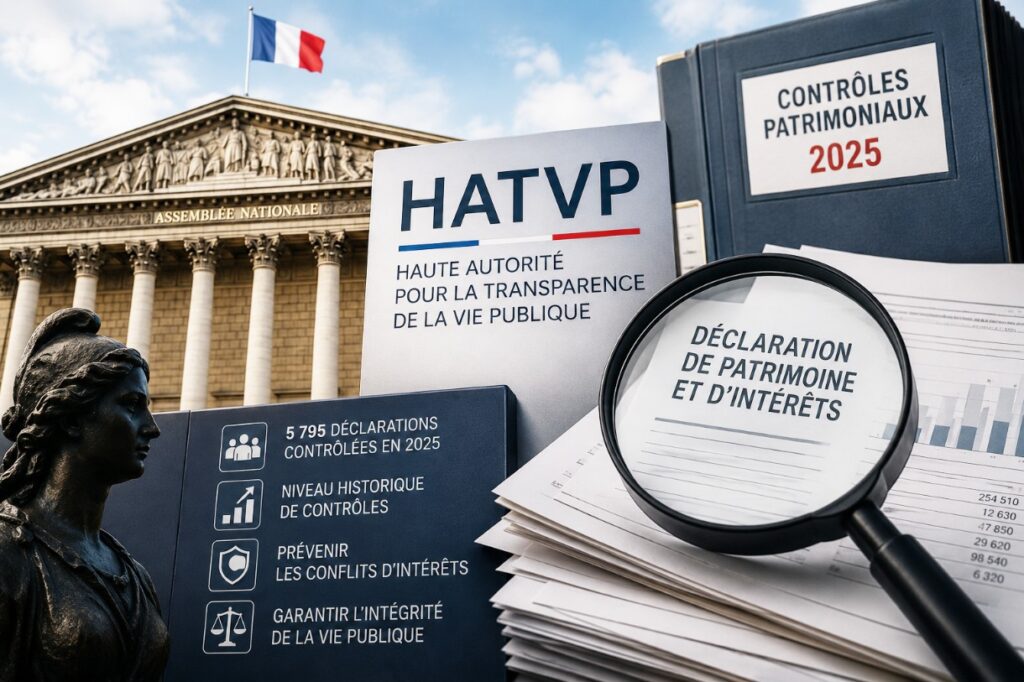
France nowadays exercises stricter oversight over its political class than ever before. The High Authority for the Transparency of Public Life (Haute Autorité pour la transparence de la vie publique, abbreviated HATVP) reviewed a total of 5,795 asset declarations from politicians, senior officials, and other public servants in 2025—this is a historic record since the agency’s establishment in 2013. In Paris, this number is seen not only as a statistical high but also as a symbol of a profound change in political culture.
This change reflects a significant transformation in the French state over the past decade: transparency, oversight, and institutional regulation of the political elite have now become essential components of democracy. Matters once considered private are now subject to systematic public scrutiny.
Cahuzac Scandal: Political Turning Point
The foundation of the HATVP is closely linked to one of the Fifth Republic’s most significant political scandals. In 2013, then Finance Minister Jérôme Cahuzac faced pressure due to media reports revealing his secret overseas accounts in Switzerland. Cahuzac initially denied the allegations publicly and firmly but later had to admit to years of concealing assets and failing to declare them to the French tax authorities.
This scandal shook Paris and the entire political sphere. Particularly shocking was that the minister responsible for tax fraud oversight was himself suspected of tax evasion. Then-President François Hollande promptly introduced comprehensive transparency measures. The same year, the High Authority for the Transparency of Public Life was officially established.
Since then, ministers, members of parliament, senators, mayors of major cities, senior civil servants, and many other responsible persons must disclose their assets and financial interests in detail. Real estate, corporate shares, bank accounts, part-time income, and consulting commissions must all be made public. This move aims to reveal conflicts of interest and detect potential hidden wealth accumulation early.
Record Data Brought by Political Upheaval
In 2025, HATVP reviewed nearly 5,800 asset declarations, closely related to France’s recent special political situation. In the past two years, there has been frequent institutional turmoil: early parliamentary elections, multiple government reshuffles, personnel changes at the ministerial level, and an increasingly fragmented political landscape.
Each change in position triggers a new declaration obligation. Those assuming or leaving public office must disclose their asset status. Therefore, the number of declaration documents has surged. As early as 2024, the agency referred to that year as the “bank of all records” (“banque de tous les records”).
In addition, the scope of supervision has continuously expanded. HATVP’s responsibilities go far beyond traditional asset declarations; it now also monitors lobbying contacts, senior civil servants moving to the private sector, and risks of conflicts of interest potentially related to international actors.
The expansion of duties reflects a broader trend in Western democracies: countries strive to make political influence more transparent and plug institutional gray areas.
Regulatory Tools with Legal Consequences
The work of HATVP is far from symbolic. The agency closely cooperates with French tax authorities and systematically compares asset declaration data with tax data. Once discrepancies are found, investigations can be initiated or cases referred to the judiciary.
In recent years, numerous politicians have faced criminal prosecution for incomplete or false declarations. Cases particularly involving real estate valuations or hidden corporate shares are extremely sensitive. Authorities investigate whether there has been deliberate undervaluation of assets or concealment of income sources.
This makes the HATVP an institution with significant political impact. Even mere suspicion of false reporting is enough to damage a political career. In France, public scrutiny of private assets has become a routine part of politics.
Twenty years ago, such development was hard to imagine. For a long time, France was seen internationally as a country with a weak culture of transparency. Political, economic, administrative, and party networks often operated informally, with conflicts of interest rarely discussed openly.
It was only after a series of scandals – from illegal party financing to corruption allegations against individual high-ranking politicians – that political pressure for institutional reform was triggered.
The new role of the transparency institution
It is noteworthy that the functions of the institution have expanded. The HATVP is gradually transforming from a traditional regulatory body into a comprehensive integrity safeguarding institution.
Since 2025, it has increasingly focused on the issue of possible foreign interference in political decision-making. This occurs in the context of Europe-wide debates on lobbying by authoritarian states, influence networks, and external funding of political actors.
France thus aligns with international trends. Democratic countries such as the EU, the United States, and Canada continue to strengthen transparency and compliance rules to address growing societal distrust towards political elites.
Especially against the background of the COVID-19 pandemic, the energy crisis, and declining public trust in national institutions, calls for transparent power regulation have become increasingly loud. Transparency is increasingly regarded as a prerequisite for democratic legitimacy.
Between democratic oversight and universal suspicion
Meanwhile, the transparency model in France remains controversial. Critics argue that the system leaves politicians under permanent universal suspicion and overly exposes private assets. Local officials in particular complain about the excessive administrative burden.
There is also doubt as to whether complete transparency necessarily leads to more trust. Some political scientists believe that continuous scandal exposure and media scrutiny may intensify political apathy.
Supporters, on the other hand, believe that without verifiable rules, democracy will lose credibility in the long run. In the face of populist waves and declining support for traditional parties, institutional transparency is especially necessary.
Changes in France show that political culture’s tolerance for conflicts of interest has greatly decreased compared to ten years ago. Private handling in the past is now publicly recorded, reviewed, and subjected to legal assessment.
These 5,795 reviewed declaration documents are not only a reflection of administrative burden but also symbolize a structural transformation of French democracy: from a traditionally highly personalized power culture to an institutionalized regulatory system.
Whether this expansion of national transparency can bring new trust in the long term remains inconclusive. But it is certain that France now views the public accountability of political elites as a lasting democratic necessity rather than a temporary response to a single scandal.
Author: P. Tiko