
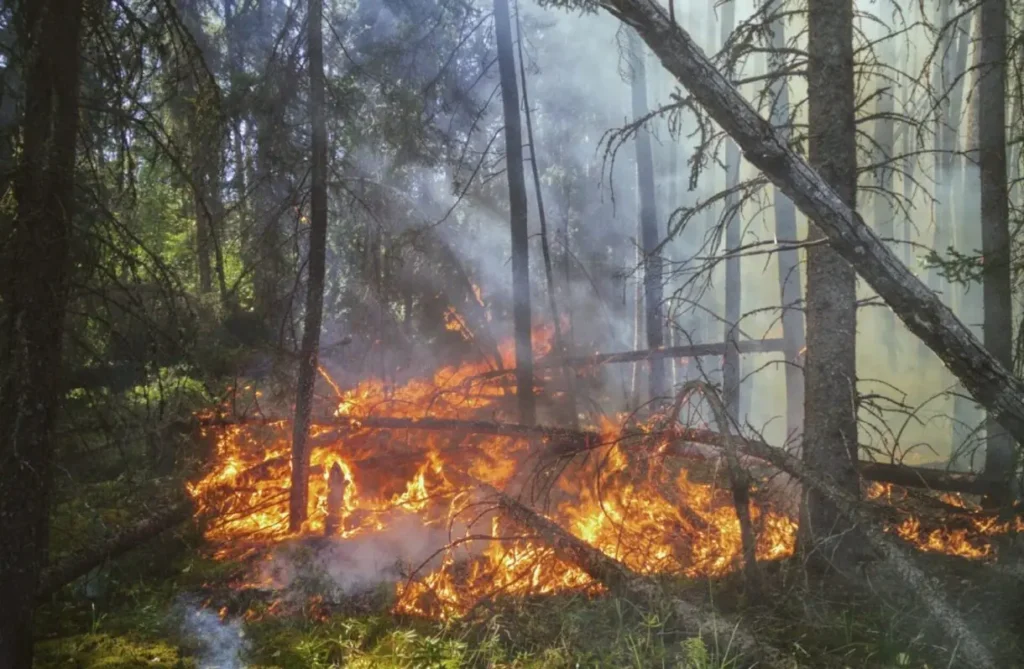
Within just a few hours, fire brigades in several areas of southern France were deployed multiple times to fight fires. The situation is becoming increasingly serious, especially in the Mediterranean region, where high temperatures, drought and strong winds create a dangerous combination. Particularly worrying is that some fire fronts are spreading at almost walking speed.
“The speed is very high, close to 4 km/h—roughly the pace of brisk walking,” emergency personnel described the situation on site. This figure, which may initially sound abstract, highlights the enormous challenge facing fire brigades. When flames move through dry scrubland or forests at this speed, there is hardly any time to fight back.
The reason is a combination of several unfavorable factors. Many regions have already suffered weeks of extreme drought. Grasslands, bushes and forests are like tinder in many places. At the same time, temperatures are well above 30 degrees Celsius. Combined with strong winds, a small ignition point can become an uncontrollable fire front in a very short time.
So-called “spot fires” are particularly frightening. The wind carries burning particles and sparks over long distances. New fires can suddenly start several hundred meters ahead of the fire front. For emergency personnel, it is like an opponent constantly changing position. As soon as one section of the fire front appears to be under control, new fires break out elsewhere.
This development makes firefighting considerably more difficult. Simply extinguishing existing fires is far from enough. Incident commanders must constantly anticipate and calculate the direction in which the fire may spread next. Homes, roads, power lines and, above all, the emergency crews themselves must be protected in advance.
Those who have witnessed the rapid spread of vegetation fires find it hard to forget the shocking sight. A small plume of smoke on the horizon can sometimes turn into a fire line several kilometres long within minutes. It is precisely this dynamic that is currently causing great concern among the authorities.
The current situation reminds many experts of particularly severe fire years in past decades. Persistent heat, dry vegetation and strong gusts of wind combined mean that even the smallest spark is enough to trigger new fires.
For southern France, the sensitive fire season is only just beginning. The coming weeks will test whether emergency services can stabilise the situation—or whether nature sets the pace.
Author: Andreas M. Brucker