
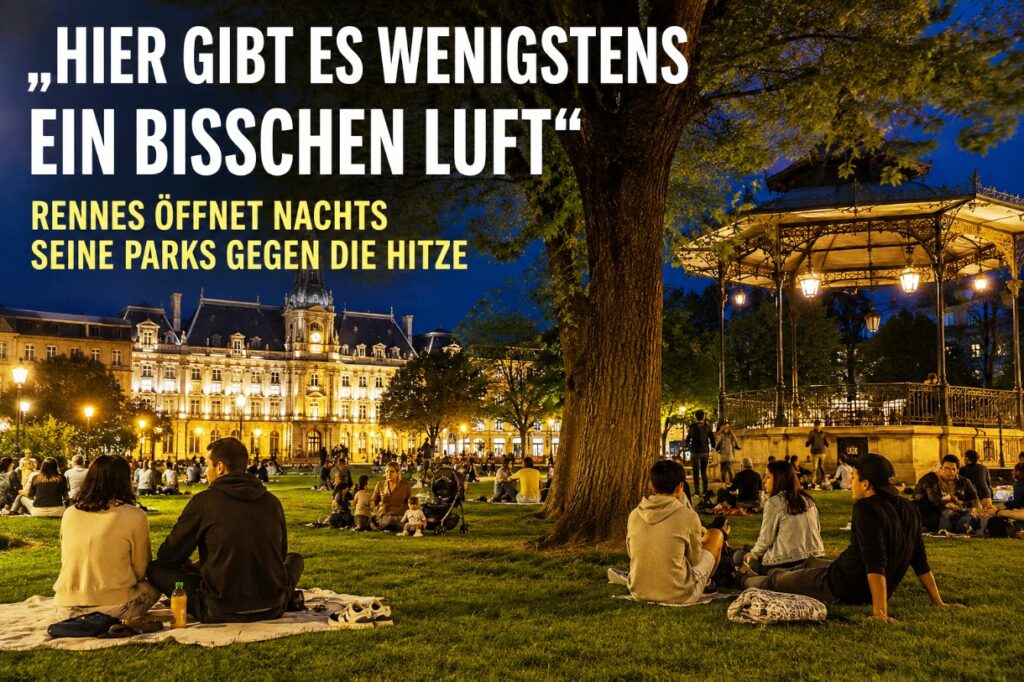
When the sun sets, Rennes is currently beginning to enter its second type of urban life.
During the day, the streets shimmer in the heat, and the facades of the Brittany capital buildings retain heat like stovetops. In the evening, hundreds of people flock to the parks. Families spread blankets on the lawns, young people sit laughing under ancient chestnut trees, and older residents enjoy every cool breeze. Some stay until after midnight. This is not out of romance — but because it is almost unbearable indoors.
Rennes has experienced an unusually early heatwave, with temperatures normally only seen in mid-summer. Daytime highs reach up to 36 degrees Celsius, and tropical night temperatures hardly drop — which unsettles many French people. Even more so in Brittany, where severe heat was often considered only a southern vacation problem in the past.
Now, the city has implemented a measure that sounds simple but profoundly reflects the new reality: parks and public gardens remain open at night.
Especially popular is Thabor Park, which usually closes at dusk. Now, people sit on benches or directly on the grass, staying until late at night. “It feels very dignified,” one visitor said about these open green spaces. Others speak more plainly: “At least there is some air here.”
That is precisely the point.
Because modern cities store heat like sponges absorb water. Asphalt, concrete, and dense neighborhoods only release this heat hours later. People living on high floors or under roofs know this feeling well: rooms at night are like ovens with the door half-open. Sleeping? Impossible.
Especially the elderly, children, pregnant women, and people living alone quickly reach their physical limits at this temperature. In response, the relevant authorities have long since ceased to see keeping parks open at night merely as a summer gesture of goodwill, and rather as part of health protection measures.
Rennes is not the only city facing such problems. Climate change has already changed everyday life in many French cities. Public drinking fountains, extended swimming pool hours, misting facilities in squares, or new shading schemes have become common measures in many places to combat heatwaves. Although it sounds technical, it has a direct impact on people’s daily lives.
Suddenly, parks are no longer just pretty green spaces within the building complexes, but important life refuges.
Therefore, cities continue to expand the so-called “cool island” network. These places significantly reduce the surrounding temperature through trees, bodies of water, and plants. Walking through the streets of Rennes on summer nights, you can feel a huge difference within just a few meters. In the scorching street canyons, the shaded parks are almost like another climate zone.
A few years ago, hardly anyone believed that people would seek coolness in parks at night at the end of May in Brittany. Today, this scene has become everyday life.
Honestly, this frightens many French people more than any weather app.
Author: C. Hatty