
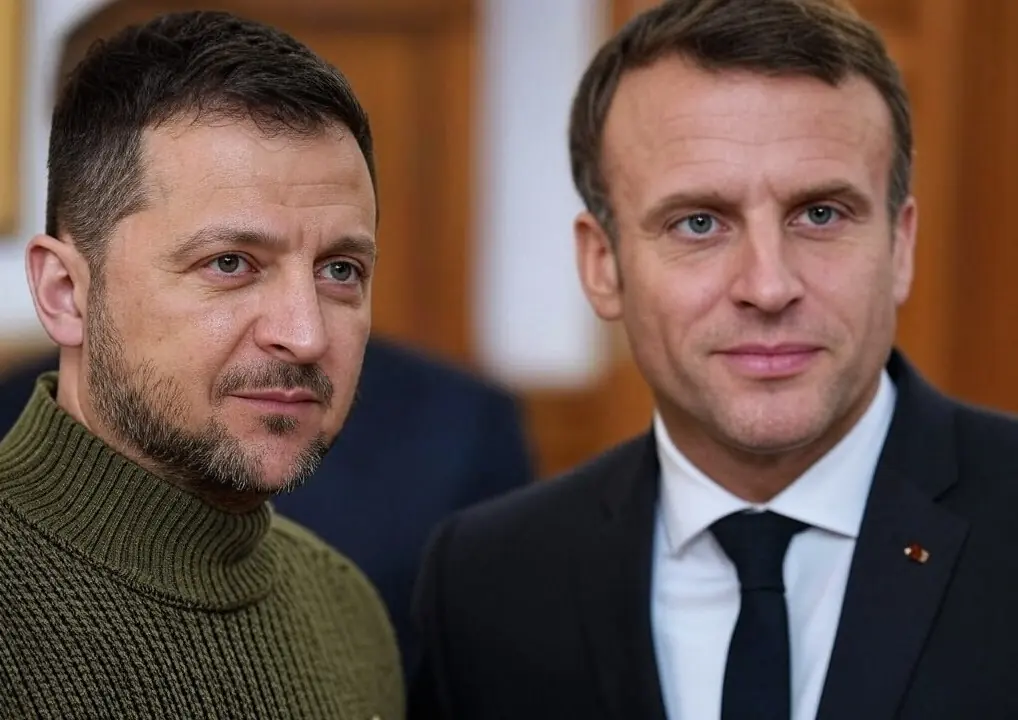
Diplomatic signals from Kyiv are gaining attention amid a conflict that has already turned into a tedious war of attrition. Ukrainian President Volodymyr Zelensky sent a letter to Russian head of state Vladimir Putin seeking a ceasefire and the possibility of new talks. French President Emmanuel Macron called the move a “good initiative” during his visit to Montenegro on Friday. The reaction in Paris shows how eagerly European governments are looking for signs of political movement in a conflict that has been stuck in a deadlock for years.
Diplomacy Amidst Deadlock
The war between Russia and Ukraine has entered its fifth year. Despite numerous military offensives, international mediation efforts, and various peace initiatives, a political solution remains elusive. Frontlines have become fixed in multiple regions, and the human and economic damages caused by the war continue to increase.
In this situation, every diplomatic effort holds special significance. Zelensky’s letter to Putin can be seen less as an immediate breakthrough and more as an attempt to keep political communication channels open. The specific content of the letter has not been disclosed. However, the very fact that Kyiv made direct contact sends a message simultaneously to Moscow, Western allies, and the international community.
In armed conflicts, the symbolic meaning of diplomacy is often as important as concrete negotiation outcomes. Even without immediate progress, such measures can contribute to signaling a willingness to engage in dialogue and revealing political positions.
France’s Balance Between Support and Dialogue
Emmanuel Macron has pursued a strategy since the early days of the war that combines military support for Ukraine with prospects for a long-term diplomatic solution. France is one of Ukraine’s main supporters within Europe, and President Macron repeatedly emphasizes that sustainable peace ultimately cannot be achieved solely on the battlefield.
The positive assessment of Zelensky’s initiative fits within this context. Macron made clear that Europe still stands with Ukraine but at the same time wants to support every serious opportunity for de-escalation.
This position is not without controversy. Critics point out that as long as fundamental conflicts remain, Western governments tend to overestimate diplomatic signals. Supporters argue that even limited channels of dialogue can be decisive in preparing for future negotiations.
France is traditionally perceived as a mediator and policy leader within Europe. Its support for Zelensky’s progress also aligns with France’s goal of playing an active role in security policy issues.
Major Obstacles to Negotiations
Despite all diplomatic gestures, the political reality still faces difficulties. The positions of Moscow and Kyiv differ significantly on key issues.
Ukraine focuses on territorial integrity and maintaining national sovereignty. In contrast, Russia insists on territorial claims and links security-related demands, which Ukraine finds hard to accept, as conditions for negotiation.
There is also deep mutual mistrust. Many past talks failed because both sides were not confident that the other would continuously honor the agreements. This lack of trust is one of the greatest obstacles to genuine peace negotiations.
The international aspect also complicates the resolution. This war is no longer just an issue between Russia and Ukraine. It affects the European security system, relations between Russia and the West, and the global economy and energy issues. Any political agreement must consider these broad strategic interests.
A Common Strategy Sought by Europe
Macron’s position reflects the current debate within Europe. Military support for Ukraine still enjoys broad backing, but discussions about what the political end state of the conflict will be are increasing.
Many European governments face two difficulties. One is to prevent Russia from achieving political goals by force, and the other is the growing recognition that the long-term stability of the European continent ultimately requires a political solution.
Therefore, support for diplomatic initiatives is not a fundamental change in the Western position but an effort to keep the door open for dialogue and preserve future options. From this perspective, any initiative that enables direct exchanges between the parties becomes even more important.
It is uncertain whether Zelensky’s letter will actually create new momentum. So far there are no signs that the fundamental differences between Moscow and Kyiv have been overcome. Nevertheless, Ukraine’s attempt shows that the diplomatic dimension has not been completely abandoned despite the ongoing war.
A political breakthrough in a long-term conflict usually does not appear suddenly. It is generally preceded by several symbolic gestures, informal contacts, and cautious efforts. Zelensky’s letter to Putin will primarily be interpreted as a political signal—that Ukraine continues its military defense while not completely closing off the possibility of future dialogue.
Macron’s positive reaction emphasizes that Europe is closely observing such signals. However, whether there will be concrete progress depends not on individual letters or statements but on the willingness of all participants to reconsider their existing positions. Unless this condition is met, diplomacy will remain primarily a tool for maintaining hope for peace. In the midst of a seemingly endless war.
Author: P. Tiko