
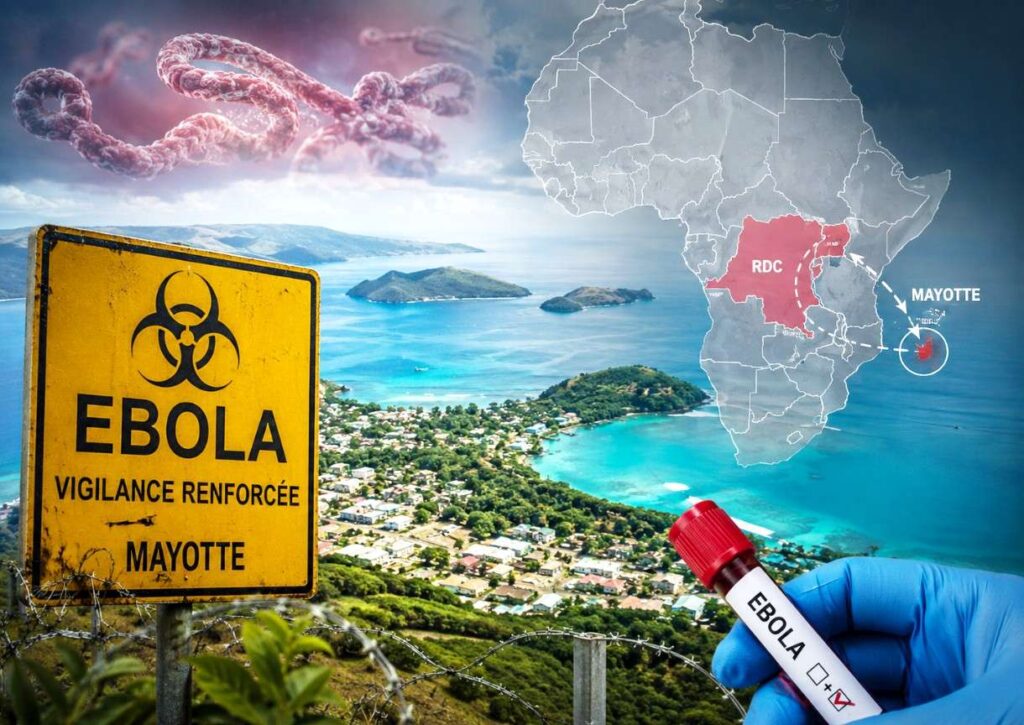
French health authorities are increasingly closely monitoring the Ebola outbreak in Central Africa. In particular, according to several experts, the overseas territory of Mayotte is considered vulnerable due to its geographical location and structural weaknesses, drawing attention. So far, not a single case of Ebola has been recorded on the island, but discussions about prevention, border control, and the capacity of the local health system have sparked new political repercussions.
What triggered concerns is the recent spread of Ebola in parts of Central Africa, especially in the Democratic Republic of Congo and Uganda. The World Health Organization (WHO) is taking this situation seriously and is closely monitoring the spread. The background includes the circulation of a particularly dangerous variant of the virus, and virologists assess that this variant has a greater potential to develop into an epidemic.
Vulnerable Health System on the European Periphery
Mayotte occupies a special position among the French overseas territories. Situated in the Indian Ocean, this archipelago is legally part of France and therefore part of the European Union, but it has suffered from serious infrastructure problems for years. The health system is chronically overloaded, the water supply is unstable, and many informal settlements continue to have poor sanitary conditions.
Such structural defects are raising concerns that control could be difficult if imported Ebola cases occur. French infectious disease specialist Xavier Lescure has publicly warned that the risk should not be underestimated. He said the key is to block possible infection routes already “at the source” and to identify suspected cases early.
Meanwhile, the French government is trying to avoid excessive alarm. The Ministry of Health emphasized that there is currently no urgent threat to Mayotte. However, the government stated that it is “in constant exchange with experts” and continuously assessing the risk of virus introduction.
Migration and Health Risks
Mayotte’s geographic location further increases the authorities’ sensitivity. The island is located between the East African coast and the Comoros, lying on an important migration route in the western Indian Ocean. For years, this French department has experienced significant illegal migration, especially from the neighboring Comoros Islands.
In Paris, concerns are growing that health policy risks may become more closely linked to migration flows in the future. However, experts warn against hastily classifying Ebola as a “migration-related disease.” Previous outbreak cases show that the greatest risk does not come from individual travelers but from late detection, insufficient medical infrastructure, and lack of international coordination.
The Ebola outbreak in West Africa from 2014 to 2016 remains a cautionary example to this day. According to international organization data at the time, more than 11,000 people died in Guinea, Liberia, Sierra Leone, and other countries. This epidemic clearly revealed serious deficiencies in the health systems of many African countries as well as the slow international crisis response.
Political Pressure from Mayotte
Politically, this issue is gaining more weight. Member of Parliament Estelle Youssouffa strongly criticized France’s current preparedness. She said that Mayotte, which is originally in a tense situation, “should not be placed on the front lines against such a dangerous virus.”
In fact, Mayotte has been grappling with several crises simultaneously for months. High poverty rates, rapid population growth, water shortages, and excessive public administration burdens are intersecting factors. Security and health issues are increasingly intertwined with social conflicts and migration policy debates.
This is a sensitive matter for the French government. President Emmanuel Macron has repeatedly promised for years to expand Mayotte’s infrastructure and strengthen the nation’s presence. However, progress in various regions still appears limited.
France Between Prevention and Calm
The French authorities are currently taking a dual approach. On one hand, they are strengthening surveillance and early detection, while on the other hand, they are trying not to create unnecessary fear. Quarantine, epidemiological monitoring, and establishing readiness in medical facilities are at the core of the current measures.
According to evaluations by many experts, the likelihood of a large-scale Ebola outbreak in France remains low. Modern isolation procedures, improved diagnostic methods, and international early warning systems have significantly increased response capabilities compared to past epidemics. Nevertheless, discussions surrounding Mayotte illustrate how global health issues are intertwined with geopolitical, social, and migration policy challenges.
The COVID-19 pandemic has reminded us that even geographically distant health crises can quickly have international impacts. Accordingly, authorities are reacting sensitively to potential epidemic risks, especially in regions with vulnerable infrastructure.
So far, the Ebola discussions about Mayotte have mainly remained in the realm of preventive scenarios. However, these warnings clearly show how vulnerable peripheral regions around Europe are to global health crises. For France, this island in the Indian Ocean is not merely a matter of migration policy but a case testing the nation’s health preparedness capabilities in the 21st century.
P.T.