
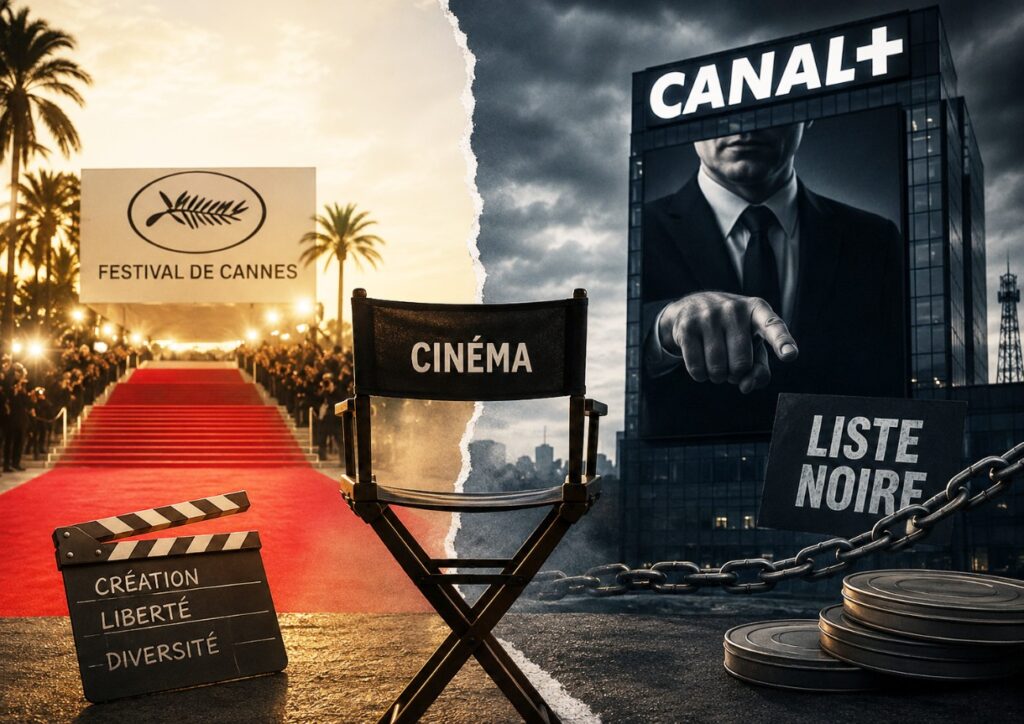
On the Croisette, cameras sparkle, designer dresses swirl on the red carpet, and champagne flows — yet this year’s Cannes Film Festival is tinged with a strange heaviness. Instead of the Palme d’Or, outstanding directorial debuts, or Hollywood’s next sensation, the industry is suddenly talking about boycott, political influence, and the limits of freedom of expression.
It is right there, where France traditionally celebrates its films as a national artistic religion, that a public culture war is unfolding.
At the center of the controversy is Maxime Saada, CEO of Canal+. His announcement came as a major shock to the French film industry. He declared at Cannes that Canal+ would no longer cooperate with filmmakers who supported the anti-Bolloré statement. Previously, about 600 actors, producers, and directors had publicly opposed the increasing influence of media entrepreneur Vincent Bolloré.
And suddenly one question arose. In France, it is a question almost considered sacred: can economic power decide who can work in the film industry?
This conflict goes far beyond a simple dispute between artists and broadcasters. Canal+ holds an enormously significant position in the French film system that cannot be underestimated. For decades, this broadcaster has financed a considerable portion of domestic productions. Many films were only made possible thanks to this involvement. Losing access here means quickly losing visibility, funding, and audience reach. Therefore, a word already heard only in dark political times is circulating in this industry: blacklist.
This is exactly what is creating tension.
Because France sees its cinema not as a mere entertainment industry but as a cultural backbone — a space for opposition, diversity, and creative freedom. This notion is almost part of the republican DNA. If political stance can lead to professional consequences, for many filmmakers this feels like a taboo violation.
The trigger was a declaration published in the Libération newspaper. This declaration, with prominent signatories, warned about the concentration of media power centered around Vincent Bolloré. Critics have accused his media empire for years of progressively shifting political and social debates to the right. In particular, the strong link between broadcasters, publishers, and production structures makes many figures in the cultural sector uncomfortable.
And the fact that Cannes immediately became the stage for this conflict holds almost symbolic power.
Between luxury yachts and a barrage of flashes, another side of the French cultural industry suddenly emerges — rough, politicized, and considerably tense. Behind the scenes, producers talk more about power relations than the script. Some say it’s already an American-style situation, while others call it a dangerous overreaction. Others shrug their shoulders, saying, “It was already foreseeable.”
Everything sounds like a family quarrel at a weekend family dinner — except that it involves millions in budget and national repercussions.
The president of the French film promotion center CNC has already begun efforts to calm the situation. Canal+’s statement was cautiously described as an emotional reaction. But even such diplomatic expressions show how sensitive the situation has become.
Behind this debate lies a bigger question: Whose is the French cultural narrative? The artists’? The media companies’? Or those who fund both?
This year, Cannes does not provide a clear answer. Instead, the world’s most famous film festival is turning into France’s political laboratory, and the outcome is still open.
C. Hatty