
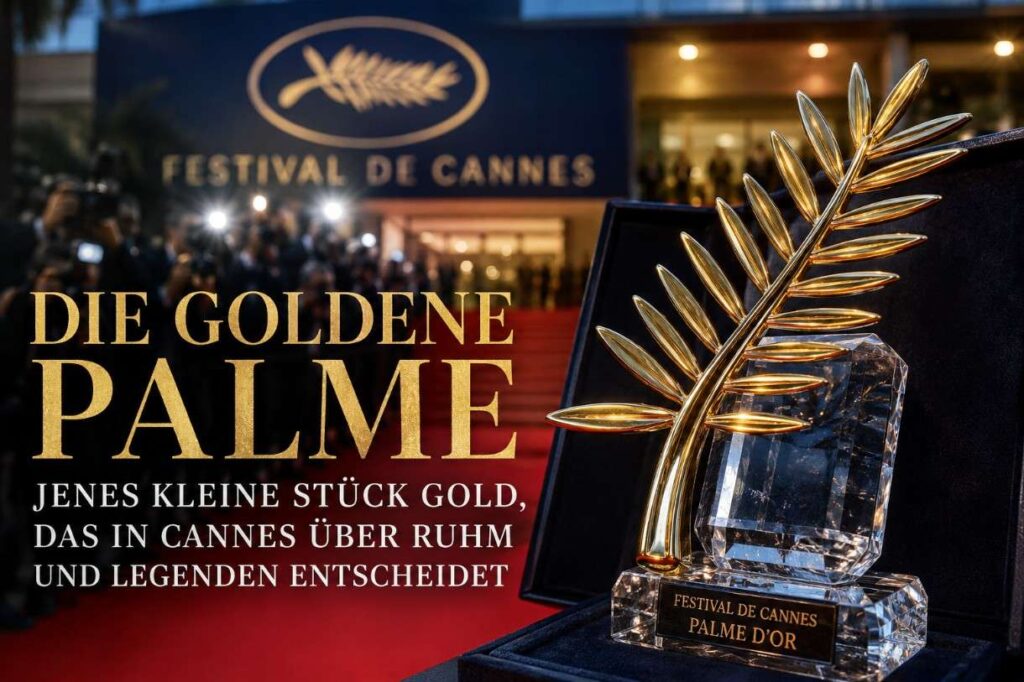
This year, a different atmosphere lingered at the Croisette. The sound of champagne popping was reduced, the calculated glamour diminished, and the old magic of Cannes, where stars would step out of black limousines to be greeted by the gunfire-like flashes of photographers, was less present. Instead, the 79th festival often felt like a moment to deeply reflect on a world that is cracking.
And at the heart of it was Cristian Mungiu.
The Romanian director won the Palme d’Or for the film R.M.N.. This was his second time, following the glory of 4 Months, 3 Weeks and 2 Days in 2007. This moment went beyond simple cinematic history and matched surprisingly well with this peculiar festival. Mungiu’s films are never interested in simple truths. His characters stagger between moral fog zones, social tensions, and ideological minefields. Europe itself seems to stand right at that point today.
R.M.N. tells the story of a Romanian-Norwegian family. It is a strictly religious, isolated, and internally tense family. When the Norwegian child protection agency intervenes, the conflict begins to go far beyond family issues. Who is protecting whom? Where does care end and cultural interference begin?
Moon Ki-woo directs these questions with his signature quiet precision. There are no big explosions, nor moral coercion. Instead, glances, silences, and small subtle gestures appear. Like cracks in the ice covering the fjords, it seems ordinary at first but soon shakes the foreground.
Korean audiences responded with almost reverential respect. During the screening, there was a rare festival silence with no coughing, whispering, or phone checking. It was a moment when the film became a collective experience of concentration. Are there many places today where you can have such an experience?
The entire awards ceremony also seemed like a mirror of the current era. Many films dealt with war, identity, migration, political violence, and more. Almost half of the films in competition were imbued with deep social sensitivities. Today’s films dive into problems without looking away.
Especially when Russian director Andrey Zvyagintsev received the Grand Prix for Minotaur, that message stood out. Zvyagintsev publicly appealed to Vladimir Putin, demanding an end to the war in Ukraine. For a moment, the venue felt less like a film festival palace and more like a political forum. Some clapped hesitantly, others applauded immediately, and a few stood up.
Cannes suddenly reminded me of a few decades ago when the film festival was still considered an intellectual battleground. Those days were a bit chaotic and somewhat delusional, but with a genuine attitude.
Other award winners also fit this trend. Valeska Grisebach received the Jury Special Prize for Adventures in the Dream. Her film, which deals with migration and crime at the borders of Europe, depicts people who never fully belong anywhere. The Best Director award was shared by Pawel Pawlikowski and the Spanish duo Los Javis. Even the Best Actor award was a choice focusing on the community rather than individual stars.
Cannes gave the impression of deliberately diluting the principle of individual genius. It might be a sign of the times moving away from the myth of the omnipotent director toward ensemble casts and collective narratives.
Of course, there were still iconic moments. Barbra Streisand on the red carpet, a slightly tousled-bearded Peter Jackson, the flashbulbs illuminating the Croisette—these were among them. But even these scenes had a rather melancholic tone this time. The festival seemed to feel that the outside world had already become far more chaotic than any red carpet.
So Mun Ki-woo’s victory feels all the more natural.
Fjord does not provide simple answers. The film stubbornly refuses to present clear perpetrators or victims. Instead, it shows modern democracy as a fragile structure full of contradictions. Tolerance leans towards arrogance, protection turns into control, and freedom conflicts with moral expectations.
It may sound theoretical, but in Mungi Woo’s work, it feels terrifyingly concrete.
One scene is especially striking. A Norwegian official quietly sits at the dining table inside the house, while sleet hits the window outside. No one shouts, nothing happens, but within this silence there is a greater threat than in many action films. Such moments can only be created by exceptional auteur cinema.
Perhaps this explains the success of Fjord. The film goes beyond stories about Norway or Romania. It speaks about Europe, which cannot fully understand itself, and a society that constantly talks about values but often forgets human complexity.
This year’s Cannes showed longing rather than escapist fantasy. It was longing for direction and empathy, a language beyond ideological trenches.
Can cinema truly fulfill such a role?
It is probably not something one can do alone. But in the dark cinema for a few hours, the film achieves something that often fails in political debate. It forces people to sincerely look at each other.
Written by: M. Legrand