
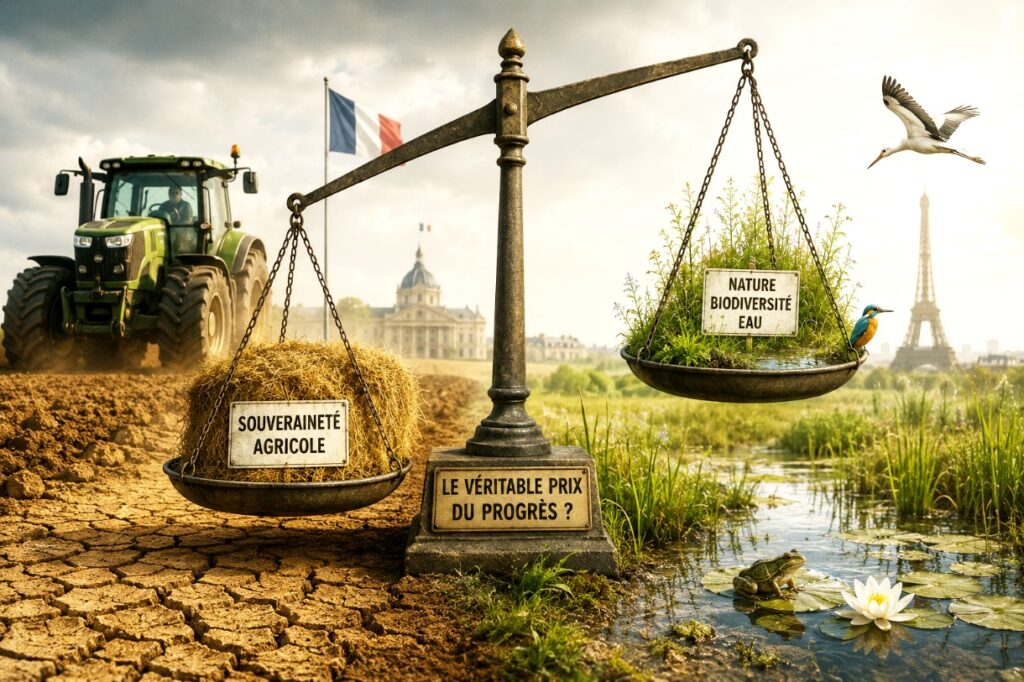
A new popular word has emerged in France: “food sovereignty.” It evokes independence, autonomy, and national resilience. Who could be against that? Who wouldn’t want to be able to grow food right at their doorstep instead of importing it from abroad?
The government’s answer is very simple: if farmers protest, they ease regulations. If farmers might protest again, they ease regulations a bit more. And if in the process wetlands disappear, rivers dry up, or animal species lose their last refuge – well, nature doesn’t block the highway or dump trash in front of ministries after all.
The real tragedy of this new agricultural law is not in the individual provisions. It lies in the message the law conveys. France suddenly acts as if it must choose: agriculture or environment. Food or biodiversity. Farmer or beaver.
What an absurd opposition.
Because nature is not the enemy of agriculture. It is the prerequisite for agriculture. No water, no harvest. No pollinating insects, no fruit trees. No healthy soil, no food sovereignty. Those who cut the branch they are sitting on should not be surprised to eventually fall.
The political speed of this policy shift is particularly remarkable. For years, citizens have been told that climate change is the greatest challenge of our time. They have been told that biodiversity protection is essential. They have been told that water will become the most precious resource of the century.
But after months of farmers’ protests – suddenly the political sphere realizes that environmental regulations might have been merely decorative.
Nature has a structural problem: It does not lobby with tractor convoys. Frogs do not march for flies. Wetlands do not occupy government headquarters. Bees do not organize general strikes. Nature simply disappears. Quietly. Permanently.
Unfortunately, this is precisely nature’s political weakness.
So the agricultural support law turns into a political surrender document. Not in front of the farmers – their concerns are often legitimate. Rather, in front of the idea that short-term conflicts should not worsen long-term problems.
Today France celebrates agriculture. Understandable. But one day, there will be a price to pay. And then, food sovereignty on parched fields may be as unconvincing a concept as sailing without water.
Nature does not demand. It does not write petitions. It does not vote.
It just reacts. And that conclusion is final.