
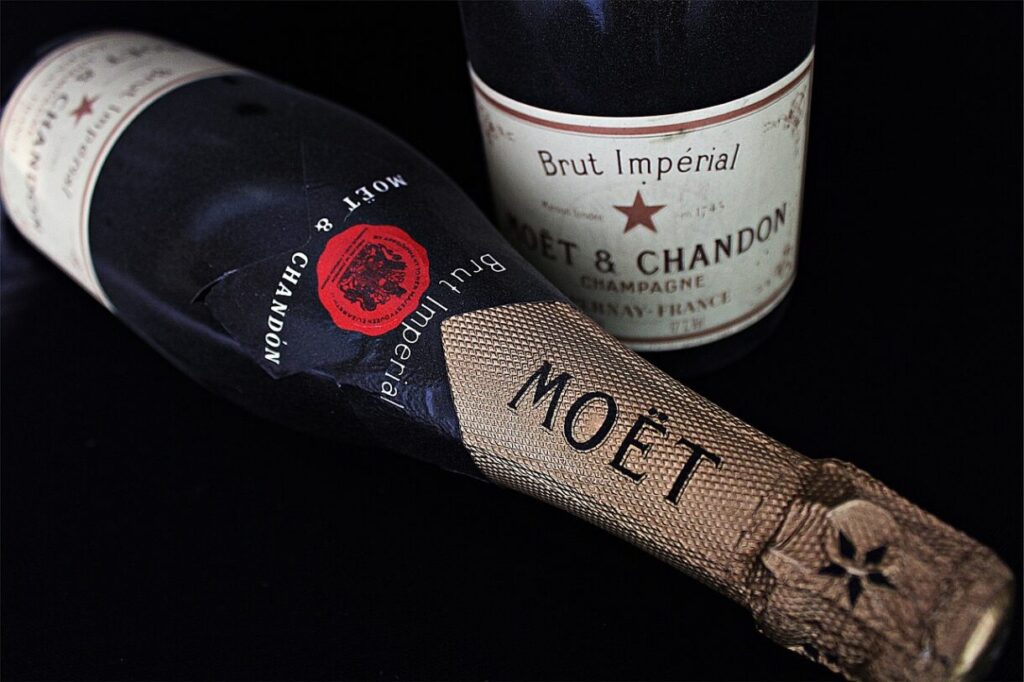
This announcement is causing widespread anxiety beyond the French vineyards. Donald Trump has once again threatened to impose 100% punitive tariffs on French wine, champagne, and spirits if Paris insists on the digital tax. This declaration came just before the G7 summit and reminds many wine producers of past trade conflicts where their domestic products became victims of geopolitical confrontations.
The key question is whether this is the US president’s negotiation strategy or a real threat to one of France’s major export industries.
Industry Warning Signals
The French wine and spirits industry does not dismiss Trump’s remarks as mere provocation. Industry groups issued immediate warnings, pointing out that producers will once again be caught up in conflicts far removed from their essence.
The concerns are well-founded. The United States is the most important sales market outside Europe for many French manufacturers. French wine, champagne, and spirits exports to the US amount to billions of euros annually. Not only many famous wineries but also small family businesses heavily depend on the American market.
A 100% tariff rate would effectively double the sales price of many products. This poses significant risks to US importers and sellers. High prices generally lead to decreased demand, while competitive products from other producing countries can expand market share. This will especially impact sales of premium wines and champagnes that are price-sensitive.
Trump Focuses on Longstanding Tariff Policy
This threat naturally fits a familiar pattern. During his first term, Trump used punitive tariffs as a key trade policy tool.
As part of the long-running Airbus-Boeing dispute, additional tariffs were imposed on European products, especially French wine. These measures led to reduced revenues for many exporters. In recent months, Trump has repeatedly issued public threats against European products, mostly in political pressure situations aiming for advantage.
The industry feels the problem lies precisely here. Some threats were later eased or withdrawn during negotiations, but Trump’s experience also shows he is ready to carry out economic threats if he sees political benefits.
Therefore, uncertainty arises not only from the possibility of new tariffs but also from the unpredictability of decision-making.
Increasing Pressure on the Industry
The French wine industry is already going through difficult times. Wine consumption in traditional sales markets has been declining for years, especially among younger generations who consume less wine than previous ones.
The effects of climate change add to this. Extreme weather events, late frosts, heatwaves, and water shortages make production more difficult in several wine regions. Meanwhile, competition from countries like Australia, Chile, Argentina, South Africa, and the US is intensifying.
French Cognac producers are also under pressure. Trade disputes with China and changes in consumption patterns have burdened the industry, so many companies have less financial leeway than before.
Another trade conflict with the US could occur at a very unfavorable time for many producers.
The Core of the Actual Dispute: The Digital Tax
Essentially, the issue is not the wine itself. French export products are being used as leverage in a larger dispute over taxing international technology companies.
France introduced a digital tax in 2019 targeting large platform companies with significant turnover in France. Mainly US technology firms are affected, and the US has criticized this as discriminatory.
The French government centers its argument on tax fairness – that global digital companies should pay taxes in the countries where they generate revenue. The US, however, views this as a targeted measure against American firms.
This dispute is part of a bigger debate about regulating the digital economy and allocating taxing rights in the global platform era.
Macron Holds Firm Stance
President Emmanuel Macron has so far shown no willingness to yield to US threats. From the French government’s perspective, conceding even once would set a problematic precedent.
Macron stresses that trade wars ultimately harm all participants. Especially between deeply economically linked partners such as the US and the European Union, punitive tariffs are inefficient and costly measures.
France’s position stems from concerns that further demands could follow and seeks to prevent economic pressure from becoming an effective tool against national tax policies.
How Likely Is Implementation?
Threats should neither be exaggerated nor underestimated.
The disadvantage is that Trump regularly uses tariff threats as a negotiation tactic. In many cases, public escalation of tensions is a strategy to force the other side to concede. Numerous past cases where threats were announced but only partly or not at all implemented support this interpretation.
On the other hand, there are many reasons to take the threat seriously. First, Trump has actually imposed trade barriers several times. Second, economic policy is a core element of his political identity. Third, the announcement itself significantly influences investment and purchasing decisions.
However, there are recent institutional limits. Legal disputes over presidential authority to impose tariffs have increased, which may make executing large-scale measures more complicated than during the first term.
Also, both Washington and Brussels have recently expressed interest in stabilizing transatlantic trade relations. Large conflicts would undermine this goal.
Uncertainty Itself Is the Problem
The current situation is a heavy burden above all because of planning unpredictability for French producers. Import contracts are delayed, inventory management becomes more cautious, and investments are postponed.
In many cases, economic losses occur well before punitive tariffs are introduced. Sellers try to reduce risks in response to uncertainty, and this effect may become even more pronounced in the coming months.
The debate over the possibility of 100% tariffs reveals a fundamental issue of international trade policy in the Donald Trump era: not only the actual measures but their announcements themselves change economic decisions. For the French wine and spirits industry, this threat is more than a mere media show. Whether new punitive tariffs will actually be introduced remains uncertain, but the industry is clearly once again a stage for political conflicts extending beyond French vineyards.
Author: P. Tiko