
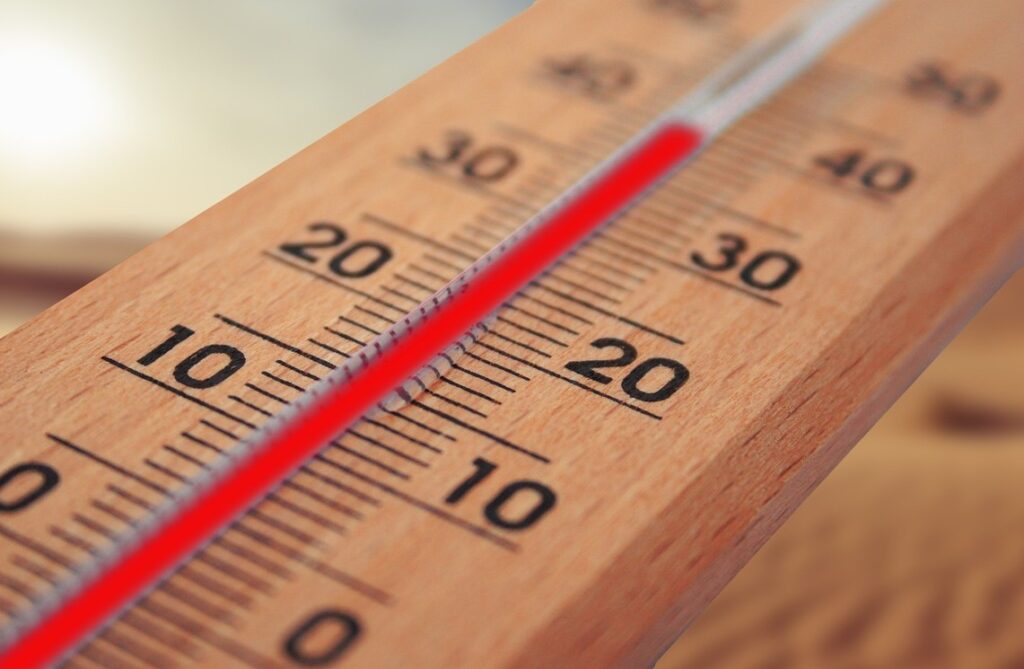
Summer is not just knocking on the door – it is wide open and coming in.
France is experiencing a powerful heatwave at the end of May that even experienced meteorologists find surprising. While many people are still thinking of spring jackets, unpredictable weather, and chilly mornings, temperatures in the western regions have already risen to levels typically seen in midsummer. The Atlantic coast and western areas are particularly affected. These regions have been experiencing abnormal weather conditions far above the usual temperatures for May since Tuesday.
In cities like Nantes, Bordeaux, and Lyon, temperatures rise between 34 and 35 degrees Celsius. Areas that are usually mild suddenly show colors ranging from deep orange to red on the weather map. Many departments are issuing alert levels due to the extreme heat. And as of now, the end of this weather situation is hardly in sight.
What stands out especially is the timing.
Temperatures above 30 degrees Celsius in France at the end of May are usually considered an exceptional phenomenon. However, this time experts are assessing it as a historic event. The air mass comes from North Africa and has been pushed into Western Europe by a stable high pressure system. Meteorologists call this a “Hitzedom” (heat dome), which acts like a lid over the atmosphere, trapping warm air, preventing rain, and causing temperatures to rise day by day.
More than 350 weather stations have already reported new May record temperatures. This shows how unusual the current situation is. Many elderly people remember the hot summers of 2003 or 2019, but such an early heatwave feels almost unreal even to the French. The phrase “really serious” is often heard at street cafes or train stations these days.
Health risks are now coming to the forefront.
Most people are accustomed to the midsummer heat and their bodies adapt to it. However, at the end of May, this adaptation is hardly achieved. Houses store heat more intensely, air conditioning is rare in schools and offices, and many people underestimate the burden of the heat. Especially the elderly, children, construction workers, and athletes can quickly reach their limits.
Authorities therefore recommend avoiding physical overexertion, ensuring sufficient fluid intake, and regularly contacting people who belong to risk groups. Especially in cities, heat gets trapped between concrete, asphalt, and dense road structures, creating oven-like conditions.
The current weather situation is more than just an unusual spring phenomenon.
Climate scientists have observed for years that heatwaves are starting earlier, lasting longer, and becoming more intense. What used to be extreme events are increasingly becoming the new reality. Traditional summer heat is moving earlier on the calendar — every year, by a little.
France is already experiencing a preview of a summer that will spark many debates from May onwards. Questions will arise about air conditioning, urban design, water supply, and how prepared Europe is for these new temperatures.
One thing this week clearly shows is that the old concept of a mild spring is being shaken.
Author: C. Hatty