
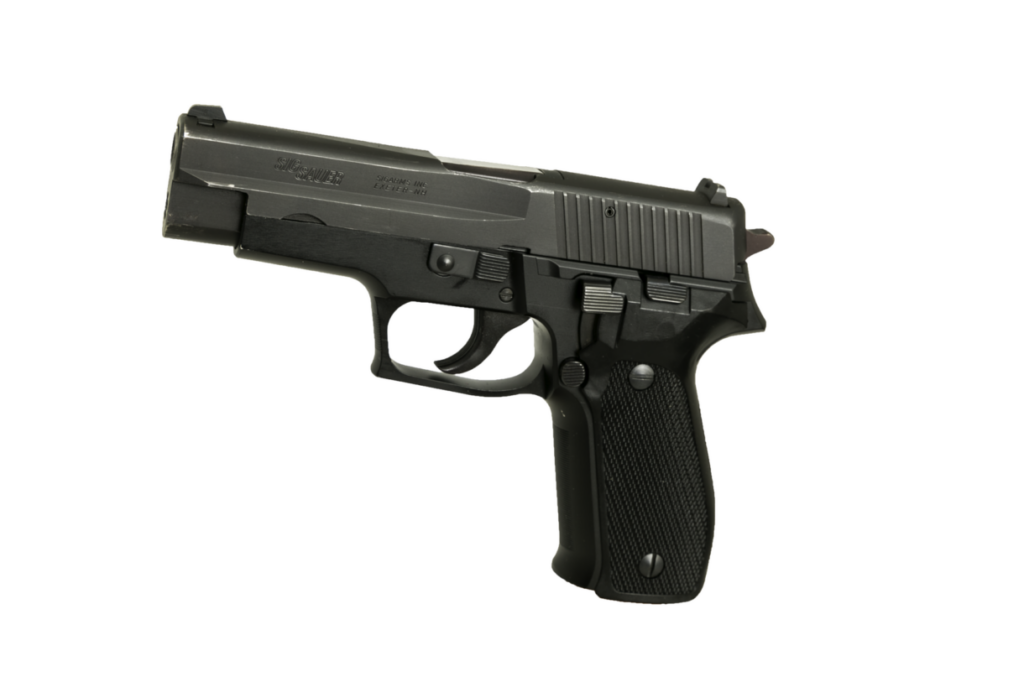
In Grenoble, an unusual case is currently occupying investigators, lawyers, and security experts alike. Six men aged between 33 and 69 came under the scrutiny of the French police after they were alleged to have tried to manufacture homemade firearms using a 3D printer. What initially sounds like a quirky tech experiment reveals upon closer examination an environment of crisis anxiety, survivalism, and growing mistrust towards the state and society.
The investigations took place over several months under the leadership of the specialized department for organized crime in the Département Isère. During this time, officers came across 3D printers, weapon blueprints, and partially assembled prototypes. However, according to current findings, the investigators did not find fully functional firearms. This apparently marked the technical limit of the project: metal barrels and other crucial components could not be produced with the available equipment.
Nevertheless, the case is causing unrest in France.
Because it shows how much the possibilities for improvised weapon production have changed. Just a few years ago, extensive machinery, expertise, and access to specialized workshops were needed. Today, detailed blueprints for so-called “Ghost Guns” — weapons without serial numbers, often made of plastic and only partially consisting of metal — circulate on the internet. A standard 3D printer is not sufficient for military precision. But the technical barrier is lowering. And that is exactly what is causing headaches for security authorities.
The suspects from Grenoble described a common motive according to the public prosecutor: preparation for a possible “civil war situation” or a societal collapse. Two of the older men have a criminal past as robbers; others were previously completely unknown to police and justice. This very mixture seems particularly puzzling to investigators. No classic terrorist cell. No organized arms trade. Rather a loose network of men who have lost themselves in grim future scenarios.
The term “survivalism” appears more and more frequently in this context.
Originally, this is a movement that focuses on self-sufficiency and crisis preparedness — stockpiling supplies, surviving power outages, living independently from the state. During the corona pandemic, after the start of the Ukraine war, and in view of international tensions, this scene gained significantly more followers across Europe. Many supporters remain peaceful and legal. Some seem almost like overly cautious hobby campers with a canned goods fetish. But a small part radicalizes slowly. There, doomsday thinking, fascination with weapons, and the feeling of having to defend oneself against an impending collapse mix together.
It is precisely this gray area that now occupies Europe’s security authorities.
Because such groups hardly fit into traditional categories. They often act in isolation, organize loosely through online forums, and share technical instructions anonymously on the internet. This makes surveillance and early detection considerably more difficult. Experts have long spoken of a new form of diffuse threat — less ideologically cohesive, but emotionally charged and increasingly technologically skilled.
The six suspects from Grenoble remain out on bail under court supervision until their trial on June 24. Three of them face charges of forming a criminal organization, the others for illegal possession of weapons.
The case is so disturbing because it does not show a spectacular terror network, but something much more ordinary: people who indulge in crisis fantasies — and suddenly start 3D printing weapons. Sounds crazy. But it is no longer purely science fiction.