
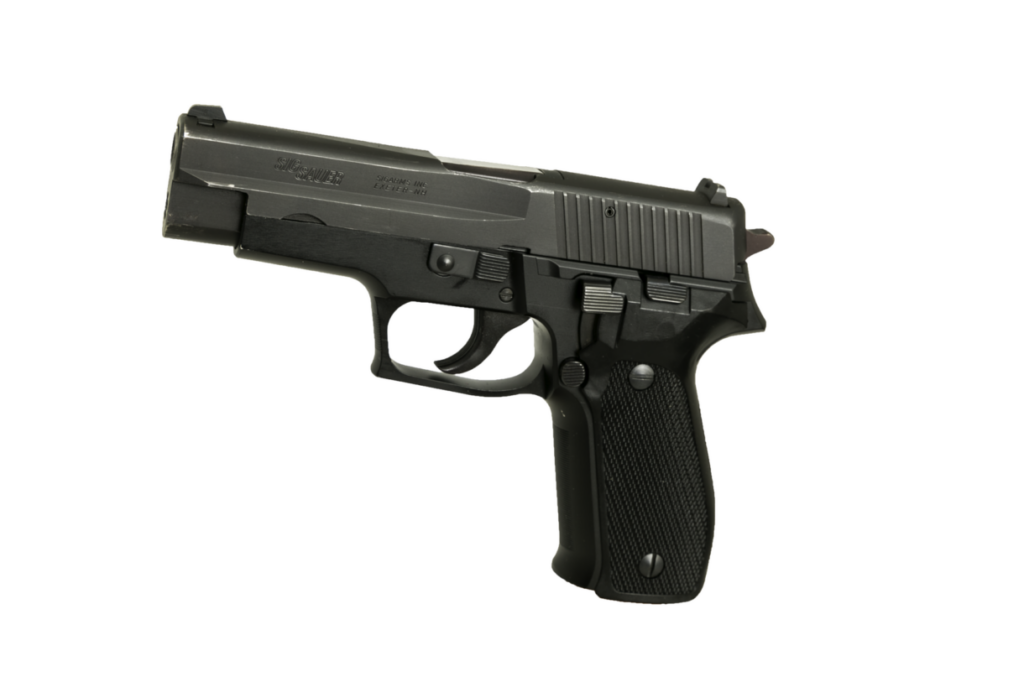
In Grenoble, an unusual case is currently occupying investigators, legal experts and security specialists. Six men aged between 33 and 69 have been placed under the scrutiny of the French police after allegedly attempting to manufacture homemade firearms with the help of a 3D printer. What initially appears to be a strange technical experiment reveals, upon closer examination, an environment marked by fear of crisis, survivalism and growing distrust of the state and society.
The investigations were conducted over several months under the direction of the unit specializing in organized crime in the Isère department. During the investigation, law enforcement discovered 3D printers, weapon plans and partially assembled prototypes. However, investigators have so far found no fully functional firearms. This appeared to be precisely the technical limitation of the project: it was not possible to manufacture metal barrels or other key parts with the available equipment.
Nevertheless, this case is causing concern in France.
Because it shows how much the possibilities for manufacturing improvised weapons have changed. Just a few years ago, heavy machinery, specialized knowledge, and access to specific workshops were required. Today, detailed plans for so-called “Ghost Guns” — weapons without serial numbers, often made of plastic and only partially of metal — circulate on the Internet. An ordinary commercial 3D printer is not enough to achieve military precision. But the technical barrier is decreasing. And that is precisely what worries security authorities.
According to the prosecutor’s office, the suspects in Grenoble described a common motive: preparation for a possible “civil war situation” or social collapse. Two of the older men have criminal records for theft, while others were completely unknown to the police and justice system until now. This particular mix is especially puzzling to investigators. It is not a classic terrorist cell. There is no organized arms trafficking. Rather, it is a loose network of men who have become lost in dark scenarios of the future.
The term “survivalism” appears increasingly frequently in this context.
Originally, it is a movement that advocates self-sufficiency and crisis preparedness – stockpiling supplies, surviving power outages, living independently of the state. During the coronavirus pandemic, after the start of the war in Ukraine, and in the face of international tensions, this scene has clearly gained followers across Europe. Many of its members remain peaceful and law-abiding. Some seem almost like overly cautious amateur campers with a fetish for canned goods. But a small portion is slowly becoming radicalized. There, apocalyptic ideas, a fascination with weapons, and the feeling of having to defend themselves against an imminent collapse are intertwined.
It is precisely this grey area that is currently worrying European security agencies.
Because such groups hardly fit into traditional frameworks. They often operate in isolation, organize informally via online forums, and anonymously share technical instructions on the web. This makes monitoring and early detection considerably more difficult. Experts are already speaking of a new form of diffuse threat — less ideologically coherent, but emotionally charged and increasingly technologically capable.
The six defendants from Grenoble remain free under judicial supervision until their trial on June 24. Three of them are being prosecuted for forming a criminal organization, the others for illegal possession of weapons.
This case is all the more worrying because it does not reveal a spectacular terrorist network, but something far more ordinary: people who become obsessed with fantasies of crisis—and suddenly begin printing weapons. It sounds crazy. But it is no longer pure science fiction.