
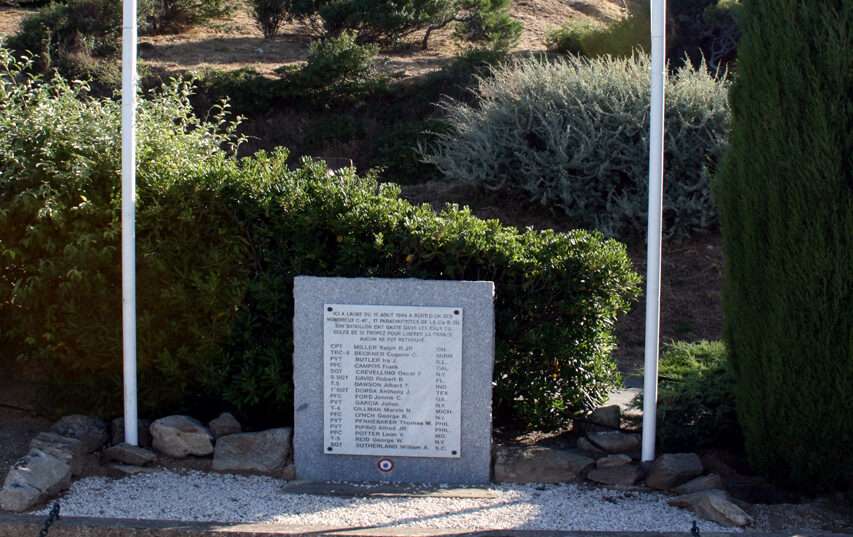
On 15 August 1944, more than 100,000 Allied soldiers—American, Canadian and British—stormed the beaches of the Var. This paved the way for the “Armée B,” a force of more than 250,000 soldiers, most of them from the French colonies in Africa. In less than two weeks, Toulon and Marseille were recaptured and liberated from the German Wehrmacht, a decisive success for the liberation of Europe.
But what makes this event so special today, 80 years later?
The answer lies in remembrance and recognition. The “Armée B,” led by General de Lattre de Tassigny, consisted largely of North African soldiers and fighters from the French colonies. Nearly 130,000 “Muslim” soldiers, as they were called at the time, came from Algeria and Morocco, joined by 12,000 colonial soldiers, including Senegalese riflemen, “Marsouins” from the Pacific and troops from the French West Indies. These men fought and died for a France they often knew only as a colonial power.
In the past, this contribution was often ignored, and that is precisely where this year’s commemoration begins. At this year’s ceremony, President Emmanuel Macron emphasized the importance of these soldiers and the obligation never to forget their sacrifice. It is a moment of collective reflection and perhaps also a call to retell history in order to honor those who often appear only as a footnote in history books.
That this year’s commemoration, held in a small circle, is attended by several African heads of state demonstrates the continuing ties between France and its former colonies. Those present include, among others, the presidents of Cameroon, Togo and the Central African Republic, as well as the prime ministers of the Comoros and Morocco. Other countries such as Senegal and Côte d’Ivoire were represented by ministers, while some states, including Niger and Mali, declined to participate—a sign of the more complex and tense relations with these countries.
Not only the memories, but also the weather made this year’s commemoration exceptional. A severe storm forced the organizers to cancel parts of the program, including a planned reenactment of the landing in the Bay of Toulon. Instead, the focus was placed on words, and those words resonated.
The role of the “Armée B” and its soldiers from the colonies is being appreciated this year more than ever. It is a reminder that the path to freedom and peace was often paved by those whose stories remained in the shadows. Sometimes it takes 80 years for these stories to fully enter the public eye.
The celebrations conclude with a symbolic luncheon aboard the French helicopter carrier “Dixmude,” where the heads of state present gather in a small circle. But many of the questions raised by this commemoration remain far from answered. Who will be remembered in 20 years, at the celebration of the 100th anniversary of the landing in Provence, and what will be told?