
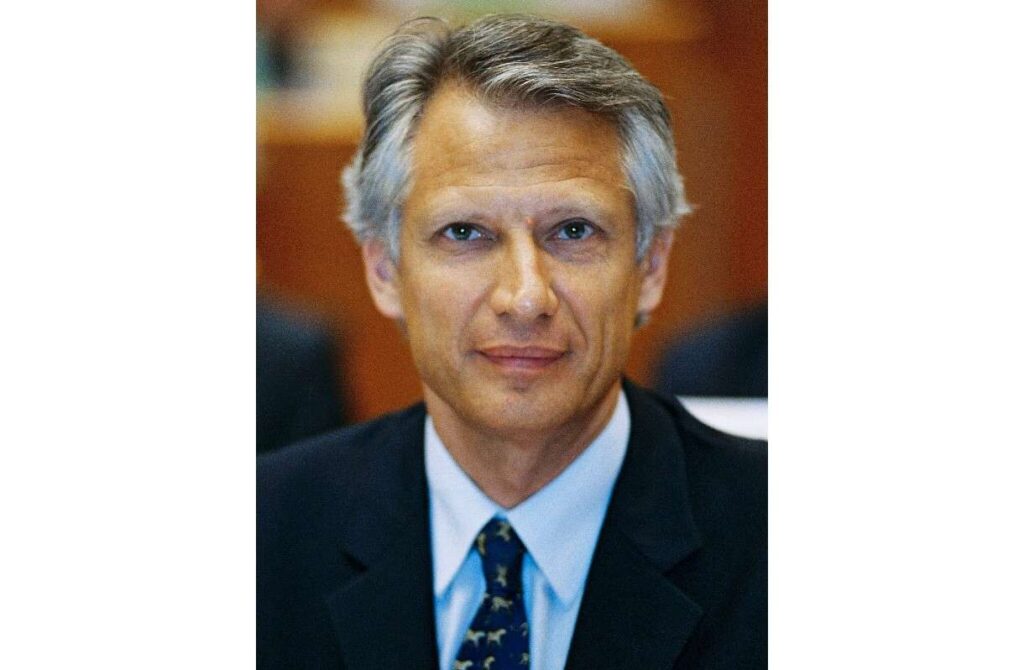
Dominique de Villepin’s statement could mark an important moment in French politics. When the former Prime Minister was asked on May 31st on franceinfo if he was “on his way to the Élysée Palace,” he replied with a concise “Exactly.” When the presenters insisted, he confirmed his statement again with the words: “Je l’ai dit.”
In France, these formulations are analyzed very closely. Someone who openly declares that they are “on their way to the Élysée” is indeed sending a signal of their intention to want to be President of the Republic, although a formal candidacy for the 2027 presidential elections has not yet been officially announced.
A political comeback with long preparation
The statement is not surprising. For about two years, Dominique de Villepin has been experiencing a remarkable political comeback. The former Foreign Minister and Prime Minister under Jacques Chirac had long been removed from daily politics. However, in recent years of crisis, he became a sought-after commentator on international conflicts again.
His analyses on the war in Ukraine, the situation in the Middle East, and Europe’s role have given him a new media presence. In this process, he managed to position himself as an experienced voice of French diplomacy.
It is especially notable that Villepin today receives approval not only in the conservative camp. His criticism of military interventions and his emphasis on an independent French foreign policy also attract parts of the left-wing electorate. Many remember his speech to the UN Security Council in 2003, when he publicly rejected the Iraq war planned by the United States. This moment continues to shape his political image to this day.
The search for an alternative
The French political landscape is currently in a phase of reorganization. The political center, dominated for years by Emmanuel Macron, seems weakened. At the same time, the right-wing camp around the Rassemblement National and various left-wing coalitions increasingly face polarization.
It is precisely in this political void that Villepin seems to want to advance. With his movement “La France humaniste,” founded in 2025, he pursues the goal of building a political force beyond the classic left-right division.
His political vision recalls in many respects the tradition of Gaullism: a capable state, national independence, diplomatic autonomy, and the conviction that France must play a special role on the international stage.
The obstacles remain considerable
Despite the current attention, the path to the Élysée Palace is difficult. So far, Villepin does not have a large party organization nor a broad local base. Moreover, it is unclear from which political fields he could gain enough votes.
In addition, there is an ongoing investigation related to art objects that were allegedly given to him during his time as Minister of Foreign Affairs. Although the presumption of innocence still applies, this process could politically affect a possible presidential campaign.
A symptom of change in French politics
The true significance of his statement possibly lies less in his personal ambition and more in what it says about France. Many French people have the impression that the traditional party order has reached its limits. After years of political crisis, social tensions, and international conflicts, there is a growing desire for experienced personalities outside the established party apparatuses.
Villepin tries to embody precisely this image: the statesman, the diplomat, and the intellectual. His statement on franceinfo was therefore much more than a spontaneous comment. It represented a political signal, directed at voters, the media, and his potential competitors.
Dominique de Villepin no longer sees himself simply as an observer of French politics. He makes it clear that he wants to become one of its active players again.
Author: P. Tiko