
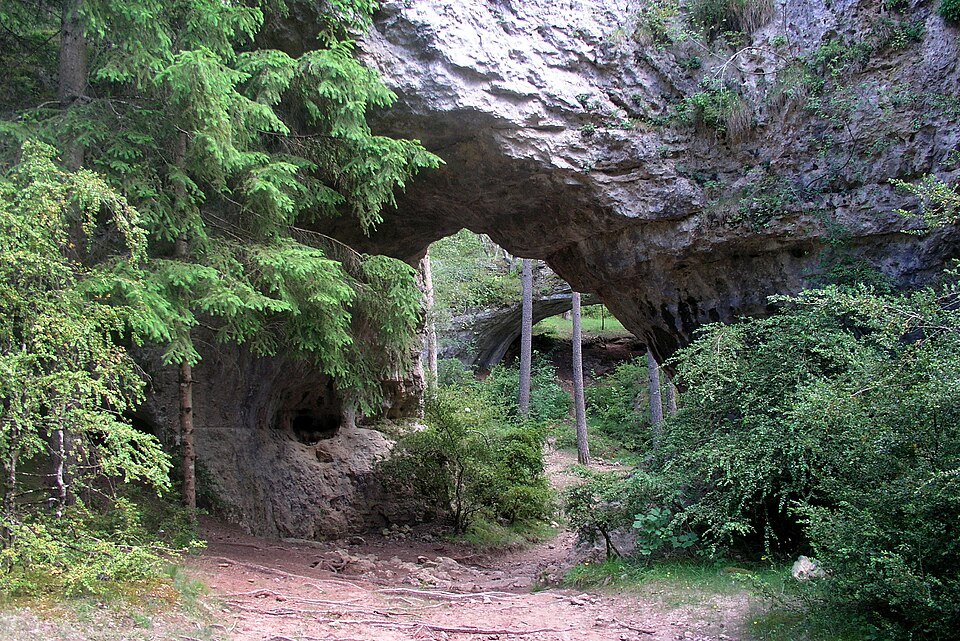
Upon first arriving at causse Méjean, one immediately feels that strange slowing down. The road winds upward, passing through the last dense forests, through the gorges, Tarn and Jonte cutting through the limestone like green ribbons, and suddenly, a plateau opens up, as if someone has simplified the world to the extreme. Sky. Wind. Stone. Light.
Nothing more.
Yet, it is precisely in this seeming emptiness that there lies an almost overwhelming abundance.
causse Méjean is located at the heart of Lozère, a region of France that often appears as a blind spot on maps when viewed from Paris. No celebrity seaside resorts. No glamorous ski resorts. No tree-lined avenues filled with luxury shops. Instead, there is a landscape that refuses to be quickly tamed. People come here not for hedonism. They seek distance.
Maybe even searching for themselves.
This plateau belongs to the Grands Causses of the southern Massif Central, with an elevation of over a thousand meters. The air here is of a different purity. Even in summer, the wind sometimes carries the chill reminiscent of an early autumn morning. A few roads cut through the wilderness like fine threads, passing dry stone walls, scattered farmhouses, and small villages with Romanesque churches whose bells seem to count centuries rather than hours.
Some places loudly compete for attention.
causse Méjean is not one of those places.
Its power is quite the opposite.
In silence.
Standing on a small hill at dusk, looking out over the seemingly endless plain, it quickly becomes clear why many visitors describe it as an almost mystical experience. The light here is constantly changing. Clouds move slowly like animals across the ground. The grass shimmers silver in the wind. Sparse flocks of sheep move across the plain, so small they almost look like pale pebbles.
And then there is the silence.
Not the silence of enclosed spaces, but the vast, open silence of nature, making every unnecessary word seem superfluous.
This landscape is not gentle. Causse Méjean has a certain harshness, nearly fragile. The limestone soil has tested both man and beast for centuries. Water quickly seeps into the porous rock; summers are often dry, winters harsh. To live here requires patience, resilience, and a certain stubbornness.
Perhaps for this reason, a culture has developed on this plateau that still seems astonishingly resilient today.
Old farmhouses built from pale stones cling deeply to the land. Their thick tiled roofs have weathered storms for generations. Ancient juniper bushes still stand in many courtyards, their twisted shapes seeming deliberately contorted by a sculptor. Behind walls, the low bleating of sheep can be heard.
Without the sheep, Causse Méjean as it appears today might not exist at all.
For centuries, nomadic grazing has shaped this plateau. The livestock keep the grasslands open, preventing shrub overgrowth, while also providing the milk for one of France’s most famous cheeses: Roquefort. Sometimes, when driving past a flock of sheep early in the morning, one can still see a scene that elsewhere has become almost folkloric: shepherds standing in the wind, sheepdogs alertly circling the flock, metal gates rhythmically clanging in the distance.
This is not a performance.
Just everyday life.
It is precisely in this everyday life that this region reveals its quiet dignity.
Since 2011, the Causse Méjean has been listed as a UNESCO World Heritage site under “Causses and Cévennes,” honored for its unique agro-pastoral cultural landscape. But even with this international title, the character of the area has hardly changed. Mass tourism has not arrived. Many residents are thankful for this.
This is easy to understand.
Because the beauty of the plateau does not lie in those sights that can be checked off like stops on a travel itinerary. It reveals itself slowly, almost reluctantly. People passing hurriedly may only see stones and vastness. Only after staying for several hours do the subtle tones of the landscape begin to appear.
For example, the sound of wind brushing through dry grass.
Or the scent of wild thyme on hot days.
Or that peculiar feeling: being completely alone yet strangely protected.
The wildness of Causse Méjean is particularly evident at its edges. The plateau drops off steeply at the edges into the deeply cut gorges of the Tarn and Jonte rivers. Cliffs descend vertically for hundreds of meters. The limestone is dazzlingly white in the sunlight. Below, the rivers shimmer almost motionlessly from this height.
And above it all, vultures circle.
Only a few decades ago, their return was almost unimaginable. The griffon vultures had once disappeared from the region, becoming victims of human persecution and changes in agricultural structure. It was not until the 1980s that an ambitious reintroduction program began.
It has been successful.
Today, a massive shadow sweeps across the canyon once again. Standing at Jonte’s viewpoint, one witnesses an almost primitive natural wonder. Huge birds glide along the rising air currents of the rock walls, barely flapping a wing. Silent gliding, pure elegance.
Sometimes they unexpectedly approach visitors.
At that moment, you can clearly see every detail: the grand wingspan, the light-colored feathers, the bare head, both unfamiliar and majestic.
Besides the griffon vulture, the area now also hosts the return of bearded vultures and black kites. Ornithologists from all over Europe come to Lozère for this reason. But even those usually uninterested in birds will marvel here.
How could one not be moved?
On the Causse Méjean, some moments make you feel as if you’ve stepped into another era. An era without highways, shopping centers, and constant reminders.
This is especially evident in the Chaos de Nîmes le Vieux. The very name sounds like a promise from an adventure novel. In fact, this rocky landscape looks like a forgotten ruin city. For thousands of years, wind, rain, and frost have shaped these strange limestone formations, occasionally resembling human or animal figures.
Some rocks evoke fortress towers.
Others resemble petrified giants.
And some appear like enormous mushrooms.
While hiking among these stones, perspectives are constantly shifting. Every turn reveals a new shape. Children immediately start making up stories. Adults do, too, although they may never admit it.
On a windless evening, this place almost seems unreal. The golden glow of the sunset bathes the rocks, swallows dart through the air, and suddenly there is a feeling of the landscape breathing.
Not far away unfolds another treasure of the plateau: Aven Armand.
At first glance from the outside, it is almost impossible to tell what is hidden underground. However, the path will lead you down into a huge cave, discovered at the end of the nineteenth century by speleologist Édouard Alfred Martel.
The first impression is unforgettable.
A cathedral of stone.
Stalactites stand everywhere, dense like a mineral forest. Some reach several meters high. The lights cast bizarre shadows on the walls, water drops fall in the darkness, and the temperature always remains cool.
Almost every visitor eventually falls silent.
Perhaps because this underground world awakens an ineffable awe.
The relationship of Causse Méjean with time itself is remarkable. Many places in Europe now seem accelerated, reshaped, everything organized down to the smallest detail. But here, there still seems to be room for chance. Time for slowness, time for blank hours.
You can drive for dozens of kilometers without meeting another car.
You can sit on a stone and for minutes hear only the wind.
You can gaze up at the starry sky at night and suddenly realize the Milky Way is clearly visible, a clarity lost in most cities long ago.
Darkness is one of the great riches of the plateau. Almost no light pollution. When night falls, the horizon almost disappears. Above the plain unfolds a starry dome almost awe-inspiring.
An old resident once joked that the stars here are so bright you could almost read a newspaper by their light at night.
He was not entirely wrong.
When you stand late at night before a remote sheepfold, you experience something rare: true darkness. No neon signs. No traffic noise. No flickering screens behind curtains.
Only the sky.
And that kind of deep tranquility that has become almost unfamiliar to modern people.
Of course, it is easy to romanticize such places. On the causse Méjean, life is not all pastoral poetry. Many young people leave, there is a lack of jobs, and the schools struggle to survive. Winter can be lonely. The wind can torment for days on end. Those who live here long-term know that beautiful scenery alone does not pay the bills.
But perhaps it is here that this landscape reveals a special kind of honesty.
Causse Méjean does not try to be someone else.
It does not sell artificial Provencal folklore.
It does not package itself as a trendy outdoor destination.
The plateau remains rugged, quiet, and stubborn.
And because of this, it touches the heart.
While many tourist areas operate according to the same pattern, Lozère still retains a certain unpredictability. A café might suddenly close because the owner has gone to a funeral. Hiking trails may briefly disappear behind a flock of sheep. Elders in small villages sit silently on stone benches, watching the rare passerby.
At times, it feels like a journey to a France that has long disappeared elsewhere.
Not a museum-like stillness.
But a living one.
It is precisely for this reason that causse Méjean attracts artists, writers, and photographers. Many say the landscape here cleanses the vision. In fact, the vastness changes perception. The eye can hardly find distractions and suddenly begins to notice details more intensely: the texture of dry stone walls, the shadows of birds, the dull sheen of limestone after a summer rain.
Perhaps people need such places more than they realize.
Places that do not make noise.
Places that do not demand attention.
Places that regard silence as a precious state.
causse Méjean does not have stunning elegance. Its beauty is more like an old face full of wrinkles and stories. You won’t notice it at first glance. But the longer you stay, the deeper its impact.
In the end, when people leave the plateau, they often carry a strange feeling. Not excitement. More like tranquility.
As if this landscape has organized something.
Perhaps that is its true magic.
Not in drama.
But in simplicity.
In the wind on the plains.
In the flight of the vultures.
In the echo of the church bells from some remote village.
And that precious impression: there are still places in the world that resist the noisy pace of today.
causse Méjean does not wait for visitors.
It simply exists.
For centuries.
Steadfast.
Almost stubborn.
Because of this, you will not forget it.
Article author: M. Legrand