
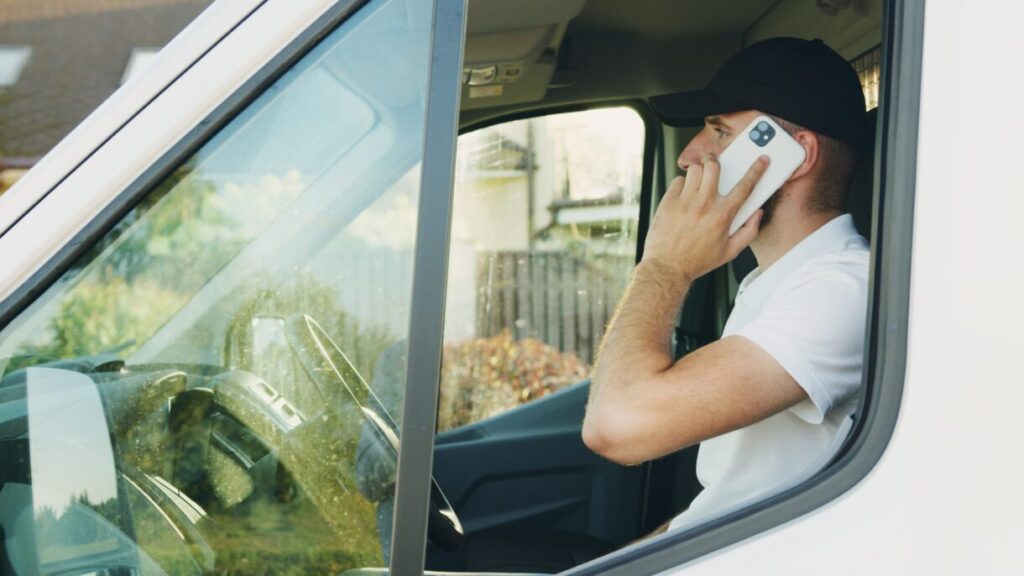
A quick glance at the smartphone, a read message at a red light, a fast reach to the screen while driving – for many drivers, this temptation has long been part of their daily routine. France is now responding much more stringently. In several départements, traffic offenders now face consequences that go far beyond the well-known fines: Those caught holding a mobile phone behind the wheel risk an immediate suspension of their driver’s license.
The départements Landes, Lot-et-Garonne, and Pas-de-Calais were the first to implement this. Since May 1, 2026, the stricter rules also apply in Charente-Maritime. The responsible prefects are using existing legal options to respond directly to dangerous behavior in road traffic. Instead of waiting for lengthy proceedings, the driving license can be revoked immediately for a period ranging from 15 days up to six months.
Until now, relatively uniform sanctions have applied nationwide. Those caught talking on the phone or texting while driving faced a fine of 135 euros and a deduction of three points under the French point system. In severe cases, a driving license suspension could already be imposed. What is new is the consistent application of administrative measures by the prefectures.
Behind this development lies a serious reality. Distraction has now become one of the greatest dangers on French roads. Reading or writing messages in particular demands far more attention than many road users realize. Experts often compare the effect to flying blind. At 80 km/h, a few seconds spent looking at the screen means traveling more than 100 meters without actually perceiving the traffic situation. Within this distance, the entire traffic situation can change – a braking vehicle, a crossing cyclist, or a suddenly appearing obstacle is enough to trigger a catastrophe.
In Charente-Maritime, the prefecture points to particularly alarming figures. Last year, 45 people lost their lives in traffic accidents there. Seven of these deaths were officially linked to the use of a mobile phone while driving. Such statistics give the debate a new sharpness. From the authorities’ perspective, this is no longer a minor lapse in attention but behavior with potentially fatal consequences.
Politically, this development reflects a typical French approach. Instead of the government in Paris introducing a nationwide reform first, individual départements test stricter enforcement of already existing regulations. The prefect, traditionally the state’s representative locally, is given a more active role in traffic safety.
However, this creates some uncertainty for drivers. Those driving through multiple regions must expect that identical offenses may lead to differently severe consequences. What ends with a fine in one département could mean a provisional loss of the driver’s license just a few kilometers further on.
Nonetheless, the direction of French traffic policy is clear. Using a smartphone behind the wheel is increasingly being placed in the same category as driving under the influence of alcohol or excessive speeding. The message is: Distraction is no longer a minor offense but a preventable risk that can cost lives.