
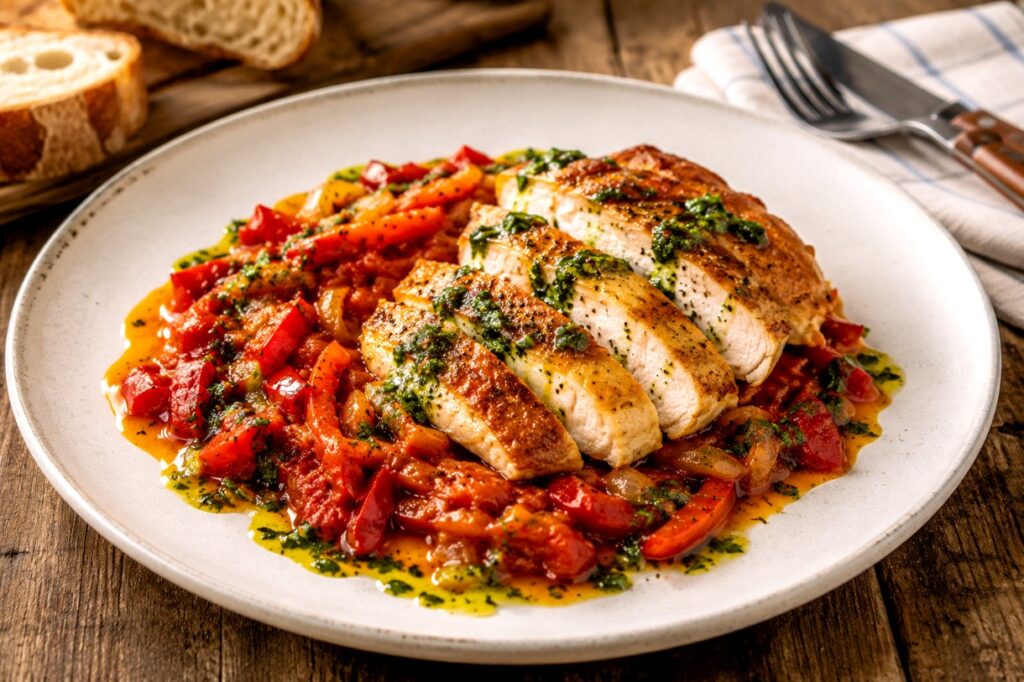
Poulet Basquaise is one of the great regional classics of France. The dish originates from the French Basque Country, in the far southwest of the country, and brings together everything that characterizes its cuisine: sun-ripened peppers, tomatoes, aromatic onions, garlic, herbs, and quality poultry. Traditionally, the chicken is slow-cooked in a rustic vegetable sauce until all the flavors meld together.
However, modern French cuisine today takes a different approach. Instead of long cooking times and heavy stews, precision, freshness, and the quality of each ingredient are prioritized. The result is a lighter, more elegant Poulet Basquaise with an even more nuanced flavor, without losing its Basque roots.
The story behind the dish
The term “Basquaise” designates in French cooking a typical preparation method from the Basque Country. At the center of this method is an aromatic mix of peppers, tomatoes, and onions known as Piperade. This vegetable base is used in numerous dishes—from fish and eggs to poultry.
The classic Poulet Basquaise emerged as a simple family dish. Peasants and fishermen used the ingredients abundant in summer. The combination of sweet peppers, fruity tomatoes, and slowly cooked chicken developed over generations into one of the most recognized dishes of southwestern France.
Modern interpretation instead of heavy stew
In a contemporary version, the vegetable sauce is cooked more concentrated, while the chicken is cooked separately. This way, the meat remains especially juicy and the sauce acquires an intense and fresh aroma.
In addition, roasted peppers, a touch of lemon zest, and high-quality olive oils add greater depth and lightness. This makes the dish clearly more modern and fits perfectly into current seasonal cuisine.
Modern Basque Chicken with Roasted Peppers and Herb Oil
Ingredients for 4 people
For the chicken:
- 4 chicken breasts with skin or 4 boneless thighs
- 1 tablespoon olive oil
- Salt
- Black pepper
For the modern piperade:
- 2 red peppers
- 1 yellow pepper
- 1 large red onion
- 2 shallots
- 3 cloves of garlic
- 500 g of ripe tomatoes
- 2 tablespoons tomato paste
- 100 ml dry white wine
- 1 teaspoon smoked paprika
- 1 pinch of Espelette pepper or mild chili powder
- 2 tablespoons olive oil
- 1 sprig of thyme
- 1 bay leaf
- Salt
- Pepper
For the herb oil:
- 20 g parsley
- 10 g basil
- 50 ml olive oil
- Fine zest of half a lime
Preparation
1. Roast the peppers
Preheat the oven to 230 degrees with top heat or grill function.
Place the peppers on a tray and roast until the skin is dark. Then put them in a bowl and cover. After about ten minutes, the skin will be easy to remove.
Remove the skin, clean out the seeds, and cut into thin strips.
2. Cook the piperade
Finely chop the onion, shallots, and garlic.
Heat the olive oil in a pot and gently sweat the vegetables. They should soften without browning.
Add the tomato paste and let it caramelize briefly. Deglaze with white wine.
Cut the tomatoes into cubes and add them along with the strips of pepper, thyme, and bay leaf.
Cook over low heat for about 30 minutes until a concentrated sauce is obtained.
Season with salt, pepper and Espelette pepper.
3. Prepare the herb oil
Finely mix parsley, basil, lemon zest, and olive oil.
Refrigerate until serving.
4. Cook the chicken to perfection
Pat the meat dry with paper and season.
Heat a pan well and brown the chicken first on the skin side until golden.
Finish cooking in the oven at about 160 degrees:
- Breast: 8 to 10 minutes
- Thigh: 12 to 15 minutes
Let rest for a few minutes before serving.
5. Plating
Place the piperade in the center of pre-warmed plates.
Arrange the sliced chicken on top.
Finish with a few drops of herb oil and freshly ground pepper.
Why this version is more modern
The traditional variant stews meat and vegetables together for a long time. This creates intense flavors but often a coarser texture.
The modern approach offers several advantages:
- The chicken stays juicier.
- The peppers retain their freshness.
- The tomatoes develop a clearer fruitiness.
- The herb oil adds additional freshness.
- The presentation is lighter and more elegant.
Recommended Side Dishes
For this current interpretation, the following pair especially well:
- Roasted new potatoes
- Creamy polenta
- White bean purée
- Grilled sourdough bread
- Young green asparagus
- Grilled zucchinis
Drink pairing
A fresh white wine from southwestern France pairs perfectly with the sweet flavors of pepper and tomato. Light rosés or an elegant low-tannin red wine also work well.
Conclusion
Poulet Basquaise impressively demonstrates how timeless regional French cuisine can be. The modern version respects Basque tradition but relies on more precise cooking techniques, more freshness, and clearer aromaticity. The result is a dish that retains the original character and meets the demands of contemporary cuisine — light, aromatic, and perfect for the first warm weeks of summer.