
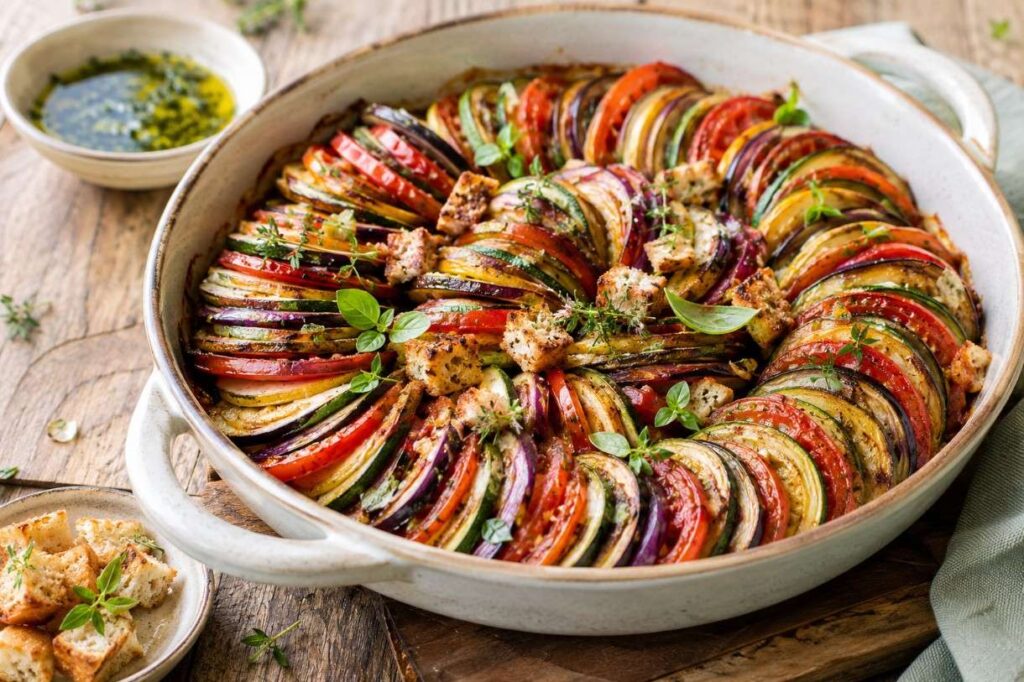
French cuisine has been experiencing an exciting return to its roots for several years now. Regional vegetable dishes are more in focus than ever before. One of the most beautiful examples of this is Tian Provençal – a traditional oven dish from Provence that originally developed as simple peasant food and today appears as an elegant signature dish in modern restaurants.
The term “Tian” originally referred to the shallow ceramic vessel in which the dish was prepared. Over time, it also became the name of the dish itself. Traditionally, zucchini, eggplants, and tomatoes are closely layered, drizzled with olive oil, and slowly baked in the oven.
The modern interpretation preserves the soul of the dish but focuses on more precise flavors, varied textures, and a significantly more refined presentation. Instead of a rustic casserole, it becomes a light, aromatically complex vegetable dish that works both as a vegetarian main course and as an elegant side.
Why Tian Is More Relevant Today Than Ever
The modern Tian combines many aspects of contemporary cuisine:
- seasonal vegetables
- regional ingredients
- Mediterranean diet
- minimally processed foods
- vegetarian or vegan orientation
- intense flavors with low calorie count
Especially at the beginning of June, the dish reaches its first seasonal peak. Young zucchini, aromatic tomatoes, and fresh herbs from the garden bring a freshness that perfectly suits early summer.
The Modern Interpretation
For this version, the vegetables are sliced very thinly and layered precisely. A cream made from roasted garlic forms the aromatic base. Lemon zest, fresh basil oil, and crispy sourdough croutons create exciting contrasts on top.
The result appears significantly lighter and more elegant than the traditional version.
Modern Tian Provençal with Basil Oil and Roasted Garlic Cream
Ingredients for 4 People
For the Tian
- 2 small zucchinis
- 1 eggplant
- 4 large beef tomatoes
- 1 red onion
- 3 tbsp high-quality olive oil
- 2 sprigs of thyme
- 1 sprig of rosemary
- sea salt
- freshly ground black pepper
For the Roasted Garlic Cream
- 1 whole garlic bulb
- 100 g ricotta
- 50 g Greek yogurt
- 1 tsp lemon juice
- salt
For the Basil Oil
- 30 g fresh basil
- 80 ml olive oil
- a pinch of salt
For the Topping
- 2 slices of sourdough bread
- 1 tbsp olive oil
- zest of an organic lemon
- some basil leaves
- edible flowers as desired
Preparation
1. Roast the garlic
Preheat the oven to 180°C (top and bottom heat).
Cut off the tip of the garlic bulb. Drizzle with a little olive oil and wrap it in aluminum foil or baking paper.
Roast for about 35 to 40 minutes until the cloves are soft and caramelized.
Let cool.
2. Make the basil oil
Puree the basil leaves with the olive oil and a small pinch of salt.
Then strain through a fine sieve.
Keep chilled until serving.
3. Prepare the garlic cream
Press the roasted garlic cloves out of their skins.
Mix smoothly with ricotta, yogurt, and lemon juice.
Season with salt.
4. Prepare the vegetables
Slice zucchini, eggplant, tomatoes, and onion into approximately 2 to 3 millimeter thin slices.
The more uniform the slices, the more elegant the finished dish will appear.
5. Layer the Tian
Lightly grease a shallow baking dish with olive oil.
Spread the garlic cream on the bottom.
Now fan and tightly layer the vegetables next to each other.
Between layers, distribute some thyme and finely chopped rosemary.
Drizzle with olive oil and lightly salt.
6. Bake
Bake for about 45 to 55 minutes.
The vegetables should be soft but still have structure.
The surface may caramelize slightly.
7. Make the croutons
Meanwhile, cut the sourdough bread into small cubes.
Toss with some olive oil and toast in a pan until golden brown.
Modern Plating
Let the Tian rest for a few minutes.
Serve in portions using a large spoon or a serving ring.
Drizzle the basil oil selectively over the vegetables.
Finish with lemon zest, basil leaves, and crispy croutons.
For a particularly modern presentation, add individual edible flowers as colorful accents.
Flavor and Texture
The strength of this modern version lies in the interplay of different layers:
The sweetness of the slowly cooked tomatoes meets the roasted aromas of the garlic. The fresh herbs bring the typical Provence to the plate, while the lemon zest provides lightness. The crunchy croutons create a deliberate contrast to the soft vegetables.
This creates a dish that feels both familiar and surprising at the same time.
Suitable Accompaniments
The modern Tian pairs excellently with:
- grilled sea bass
- pan-fried gilthead bream
- pink-cooked lamb loin
- burrata
- goat fresh cheese
- marinated white beans
As a vegetarian main course, a piece of roasted sourdough bread and a small herb salad is sufficient.
Conclusion
Tian Provençal impressively shows how a traditional dish can be gently transferred into the present. The basic idea remains unchanged: the best summer vegetables, olive oil, and herbs. However, modern techniques, more precise preparation, and additional texture components lend the classic a new elegance.
Thus, a simple Provençal oven dish becomes a contemporary vegetable dish that combines lightness, regionality, and enjoyment at the highest level.