
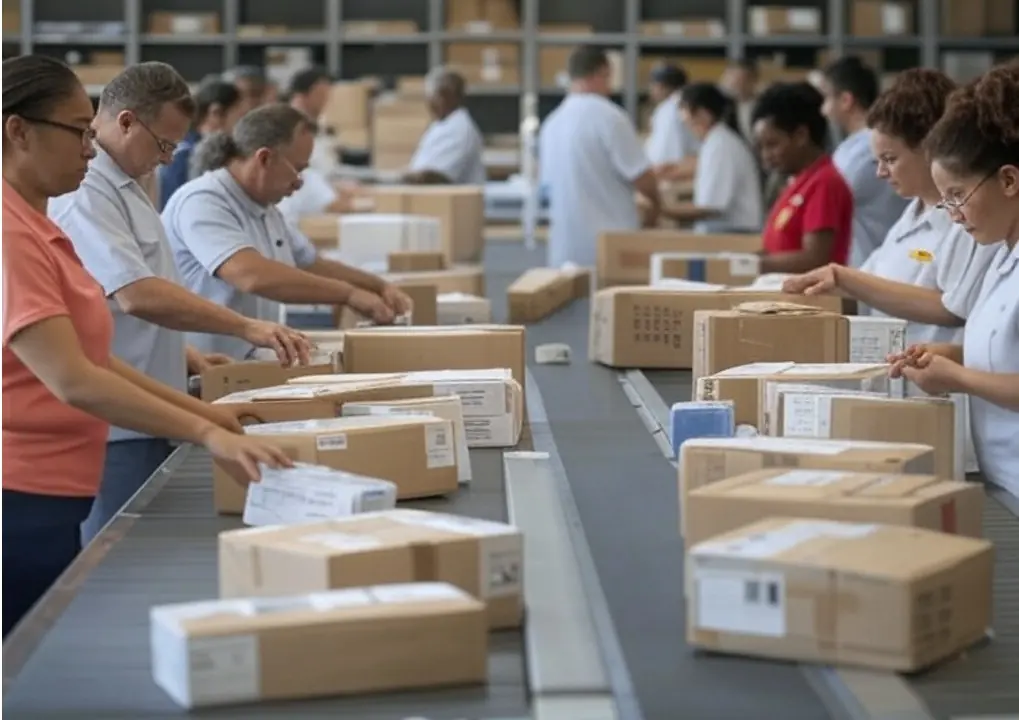
The French government attempted to take a stance against ultra-low-priced imports from Asia with new surcharges on small parcel deliveries from non-EU countries. However, just weeks after implementation, unexpected side effects became apparent. The pressure is not on major e-commerce platforms, but rather on a cargo hub within France itself. Paris-Vatry Airport in the Marne department has seen a significant drop in operations and is calling on Paris to reconsider the policy.
From March 1, 2026, France is imposing a surcharge of 2 euros per item on certain small parcel deliveries originating outside the EU. The measure targets especially low individual value products, many of which are flowing massively into Europe through platforms like Shein and Temu. This measure was positioned as part of countermeasures against the environmental and social impacts of ultra-fast fashion and market distortions within Europe.
However, this domestically driven initiative exposes the limitations of unilateral action within the European market.
Sharp Decline in Cargo Handling at Vatry
According to the airport’s announcement, air cargo volume has decreased by about 65% in less than 10 weeks. At the same time, 17 personnel reductions have already been announced. For Paris-Vatry, a regional cargo hub heavily dependent on international logistics flows, this is a significant blow.
The cause lies more in the adaptability of global supply chains than in a decrease in demand. International retailers and logistics companies quickly changed their routes. Instead of airfreighting goods directly to France, there is an increasing trend to import them via hubs in Belgium, the Netherlands, or other parts of Europe, and then transport them by truck to the French market.
This mechanism can be explained economically. Within the European single market, once goods are imported into the EU, they can generally circulate freely. If the special French surcharge is applied only to imports directly entering France, there is a strong incentive to circumvent it via neighboring countries.
As a result, France loses not only part of the expected tax revenue effect but also the added value and employment related to logistics and customs operations.
The Political Symbolism of the Tax
This parcel surcharge was originally designed in response to the rapid growth of low-price Asian platforms. In particular, Shein and Temu have been the subject of criticism for several months. The reasons include extremely short production cycles, large volumes of returns, questionable environmental standards, and suspicions of competitive distortions against European market operators.
The French government claimed that the existing customs system has effectively favored small, low-value imports. While millions of low-value parcels are cleared almost automatically on a daily basis, European businesses are subject to stricter regulatory obligations.
This new surcharge was intended to simultaneously serve multiple purposes:
- Suppression of especially low-priced imports,
- Strengthening oversight of cross-border e-commerce,
- Securing funding for additional customs and inspection capacities,
- A political demonstration of environmental regulation capacity.
France has long positioned itself as a leader in strict regulation of the platform economy. President Emmanuel Macron often uses domestic initiatives as a stimulus for later EU rulemaking.
However, the case of this parcel tax reveals a structural weakness in that approach. Unless there is a harmonized system at the European level, trade flows can be circumvented relatively easily.
The Single Market as a Circumvention Destination
The case of Paris-Vatry highlights a classic problem in European economic policy. When companies within the EU can use alternative bases, national regulations quickly reach their limits.
The Benelux countries in particular have long benefited as logistics hubs in Europe. Airports such as Liège, Amsterdam Schiphol, and Brussels are equipped with highly developed cargo infrastructure and flexible customs processing systems. Even a slight cost difference can trigger significant shifts.
For France, a double problem arises:
On one hand, many imported goods remain available on the French market. On the other hand, France itself is losing revenue and employment opportunities within the supply chain.
Additionally, the environmental impact of this measure seems limited. If goods begin to be routed via additional transport paths within Europe instead of direct flights, CO₂ emissions could rather increase.
European-Level Solution Being Prepared
For this reason, the French government points to a Europe-wide system scheduled to take effect on July 1, 2026. At the EU level, a unified mechanism is currently being considered to impose burdens uniformly and strengthen oversight for small parcel shipments from third countries.
This is in response to the remarkable increase in low-cost direct shipments from China. According to estimates by the European Commission, millions of low-value parcels now arrive in the EU daily. The existing customs duties and value-added tax systems are considered unmanageable in many places.
The following proposals are being discussed in Brussels:
- A uniform import levy across Europe,
- Strengthening product liability rules,
- A digital pre-registration system,
- Expansion of customs inspections,
- New transparency obligations for platforms.
The EU-wide approach has the advantage of reducing competitive distortions among member states. This is precisely the point highlighted in the criticism from Vatry.
As long as France continues to act alone, economic adaptation costs will remain domestically, while trade flows will respond flexibly at the European level.
Also a Debate in the National Assembly
This issue has also entered the political agenda. Already, a written inquiry has been submitted to the National Assembly (Assemblée nationale) questioning whether France’s surcharges can in the future be imposed in combination with a comprehensive flat-rate tariff at the European level.
A sensitive issue arises here: the risk of double taxation.
If France maintains domestic taxes while an EU-wide regulation is introduced, importers could face cumulative surcharges. This would increase pressure on French bases and trigger additional avoidance actions.
Furthermore, among the French business community, concerns are growing that domestic symbolic policies undertaken without coordination in Europe could ultimately hit domestic companies hard.
The government is currently facing a political dilemma. If it withdraws the measures, it could be seen as a defeat in the fight against ultra-fast fashion. On the other hand, if it maintains the regulations, it risks jeopardizing employment and the competitiveness of France’s logistics hubs.
The case of Paris-Vatry symbolically illustrates how difficult it has become to control economic policy in the European Single Market. As long as the movement of capital, goods, and logistics can be flexibly rerouted within Europe, the effectiveness of regulations at the national level is limited. Particularly in the field of digital commerce, companies respond almost in real time to new cost structures.
France tried to send a message with the parcel tax. However, within a few weeks, the integrated cross-border European supply chain became a field test challenging the limits of national industrial and trade policies. In the coming months, it will be decided whether Paris maintains its policy or yields to the reality of an integrated European supply network.
Author: P. Tiko