
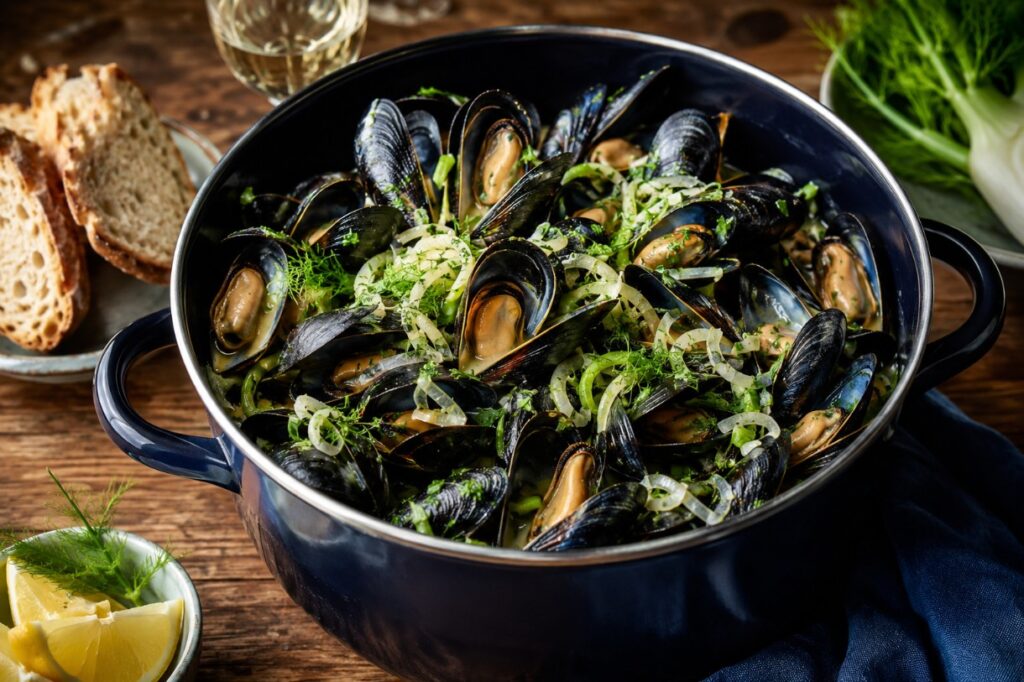
Few dishes embody French coastal cuisine as impressively as Moules Marinières. The combination of fresh mussels, white wine, shallots, and herbs has been the epitome of effortless elegance for generations. The dish originally comes from the coastal regions of Normandy and Brittany, where fishermen prepared the freshly caught mussels directly at the harbor upon returning from the sea.
Today, this classic is experiencing a renaissance. Modern chefs preserve the soul of the dish while adding contemporary accents: more freshness, finer aromas, a lighter texture, and surprising contrasts. The result is a dish that respects tradition yet fits perfectly into today’s culture of enjoyment.
The Fascination of Moules Marinières
The secret to its success lies in its simplicity. High-quality mussels need only a few ingredients to fully develop their flavor. During cooking, the shells open and release their salty, mineral taste into the broth. This combines with white wine, shallots, and herbs to create a sauce that is as important as the mussels themselves.
The modern interpretation introduces added freshness through fennel, lemon zest, and a delicate herb oil emulsion. This creates a lighter and more complex flavor profile that particularly suits the warm season.
Modern Moules Marinières with Fennel, Lemon, and Herb Oil
Ingredients for 4 People
For the Mussels
- 2 kg fresh mussels
- 2 shallots
- 1 small fennel bulb
- 2 garlic cloves
- 250 ml dry white wine
- 100 ml fish stock or vegetable stock
- 1 organic lemon
- 2 tablespoons olive oil
- sea salt
- freshly ground white pepper
For the Herb Oil
- 20 g parsley
- 10 g tarragon
- 10 g chives
- 80 ml mild olive oil
To Serve
- toasted sourdough bread
- some fennel fronds
- fresh chives
- lemon wedges
Preparation
Thoroughly clean the mussels under cold water. Sort out any open mussels that do not close after a light tap. Remove beards and carefully scrub the shells.
For the herb oil, finely puree parsley, tarragon, chives, and olive oil. Then strain through a fine sieve. Keep chilled until serving.
Dice the shallots, fennel, and garlic finely. Finely grate the lemon zest.
Cooking
Heat olive oil in a large mussel pot or a wide roasting pan.
Sauté shallots and fennel over medium heat for about five minutes until translucent. Add the garlic and briefly cook together.
Deglaze with white wine and stock. Add the lemon zest and bring the broth to a brief boil.
Add the mussels to the pot and immediately cover with a lid. Cook over high heat for four to five minutes, gently swirling the pot occasionally.
As soon as the mussels open, remove the pot from the heat. Discard any mussels that remain closed.
Season the broth and, if necessary, refine with a little pepper. Salt is usually scarcely needed because the mussels already release enough seasoning.
Distribute the mussels onto deep plates. Finally, drizzle the herb oil over the mussels and broth.
Garnish with fennel fronds, chives, and lemon wedges.
Why This Version Is Especially Modern
While classic Moules Marinières rely solely on white wine and shallots, fennel introduces an elegant anise note. Lemon adds extra freshness and highlights the maritime aroma.
The herb oil replaces frequently used cream or butter. This keeps the dish lighter, looks more refined visually, and provides additional herbal aromas without overpowering the mussels.
Moreover, the preparation aligns with today’s trend towards product focus: few high-quality ingredients take center stage, supported only by precise techniques.
The Perfect Accompaniment
A crispy sourdough bread is perfect for dipping into the aromatic broth. For a complete meal, complement the dish with a salad of young leafy greens, radishes, and herbs.
As a wine pairing, mineral white wines with lively acidity are especially suitable. A Muscadet, a Chablis, or a dry Sauvignon Blanc harmonize excellently with the salty notes of the mussels.
Tips for a Perfect Result
- Always prepare mussels on the day of purchase.
- The pot should be large enough to allow even cooking of the mussels.
- Keep the cooking time as short as possible to keep the mussel meat juicy.
- Consistently discard closed mussels after cooking.
- Never waste the broth – it is the core flavor of the dish.
Conclusion
Moules Marinières prove that true classics never go out of style. The modern version with fennel, lemon, and herb oil combines French tradition with contemporary lightness. The dish feels elegant but remains uncomplicated and is suitable for both a relaxed summer meal and a sophisticated dinner with guests. It is precisely this balance between originality and innovation that makes the enduring appeal of Moules Marinières.