
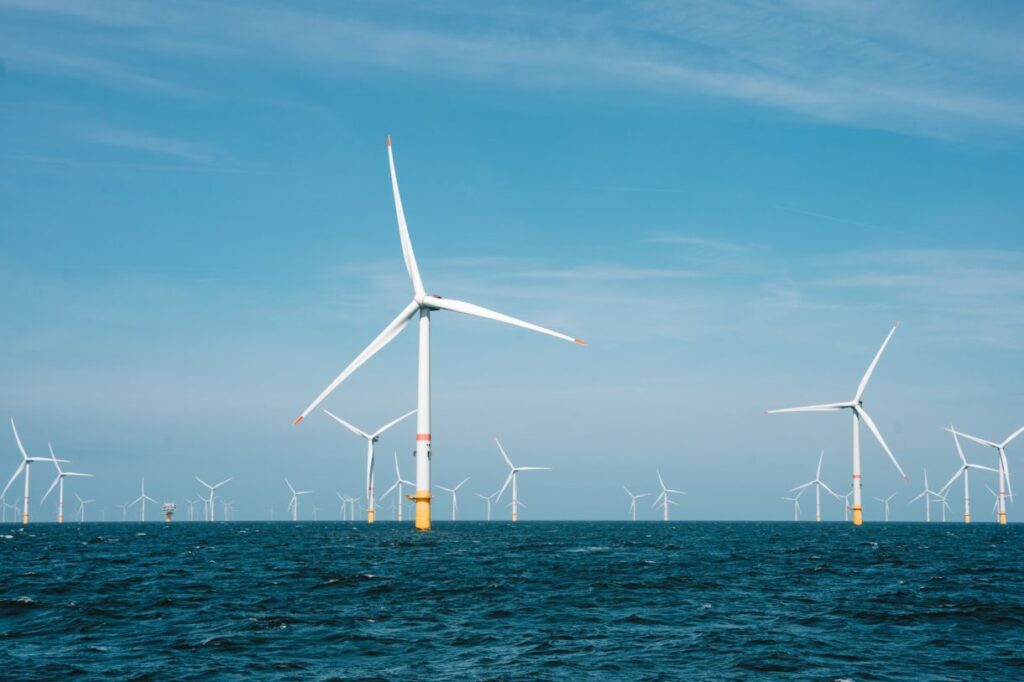
In front of the chalk cliffs of the Alabaster Coast, the 71 turbines of the Fécamp offshore wind farm have now become part of the Normandy landscape. Since its full operation in 2024, they have been supplying electricity to much of the Seine-Maritime department. Yet on land they continue to spark heated debates about the energy transition, landscape preservation and municipal finances.
In Fécamp and the surrounding communes, the issue remains sensitive. Some residents criticize the gradual industrialization of the coast, fearing long-term impacts on the marine environment, fisheries or the coastal tourism identity of Normandy. Opponents of the project also point out that related legal disputes lasted for years before the final objections were dismissed.
Others view the giant offshore installations as a symbol of energy modernization and a concrete response to dependence on fossil fuels. In a region historically closely linked to industry and the maritime economy, the offshore wind farm also represents new employment opportunities, additional infrastructure and substantial investments around the ports of Fécamp and Le Havre.
But what has particularly changed local perceptions today is its fiscal impact.
Thanks to the national redistribution of offshore wind taxation in France, several municipalities along the Alabaster Coast now benefit from additional revenues, in some cases considerable by scale. In total, seventeen coastal communes share the wind farm’s proceeds.
For some small places, this means a real transformation of municipal finances. Take Bénouville, for example: the mayor says the wind turbine tax amounts to roughly 50% of additional annual revenue — and this situation will persist for nearly two decades. With these funds, public facilities, bike paths, tourist amenities and local projects are funded, things that were almost impossible for a small town before.
This also reflects the whole paradox of offshore wind in France: the more controversial a project is during its construction, the more its local economic benefits become apparent once the installations are actually operational.
That debate has now gone far beyond Fécamp. Along the entire French coastline, the state is vigorously pushing the expansion of offshore wind. By 2050, plans call for adding tens of gigawatts of capacity. The English Channel and the Atlantic coast are both seen as major areas for future projects.
However, this development raises a politically sensitive question: to what extent are regions willing to accept such infrastructure — in exchange for new taxes and economic stimulus?
In Fécamp, the current answer is rather ambivalent. Many residents still dislike the turbines, but at the same time quite a few admit that the revenue from the turbines now helps fund roads, public facilities, soft mobility and tourism projects.
In Normandy and elsewhere, offshore wind therefore presents a typical French reality: ecological transition is often more easily accepted when it can tangibly improve everyday municipal life.
Andreas M. Brucker