
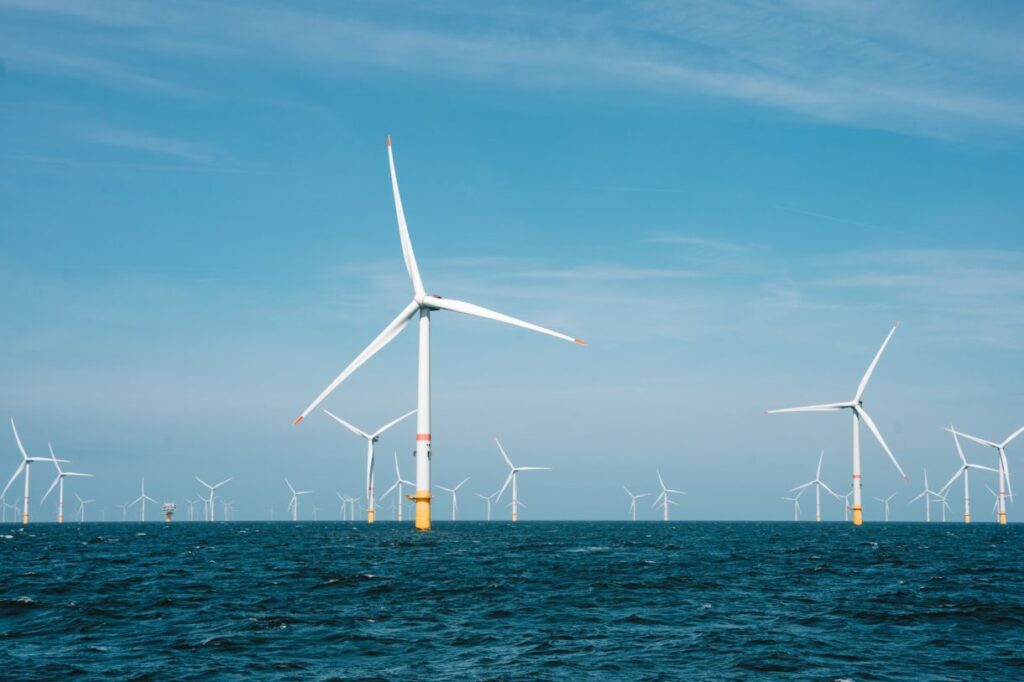
In front of the chalk cliffs of the Alabaster Coast, the 71 wind turbines of the Fécamp offshore park have now become an integral part of the Norman landscape. Since their full commissioning in 2024, they have been producing electricity for a large part of the Seine-Maritime department. On land, however, they continue to fuel a passionate debate about the energy transition, landscape protection, and municipal finances.
Because in Fécamp and the surrounding municipalities, the topic remains sensitive. Some residents denounce a gradual industrialization of the coastline and fear long-term consequences for the marine environment, fishing, or the tourist identity of the Norman coast. Opponents of the project recall that legal appeals lasted for years before the last objections were finally rejected.
Others, on the contrary, see these gigantic offshore installations as a symbol of energy modernization and a concrete response to dependence on fossil fuels. In a region historically linked to industry and the maritime economy, the offshore park also represents new jobs, additional infrastructure, and significant investments around the ports of Fécamp and Le Havre.
But what particularly changes the local perception today are the financial benefits.
Thanks to the offshore wind tax redistributed by the French state, several municipalities along the Alabaster Coast today benefit from new revenues, sometimes considerable given their size. In total, seventeen coastal municipalities receive a share of the wind farm’s income.
For some small municipalities, this has meant a real transformation of their municipal budgets. In Bénouville, for example, the mayor explains that the wind tax represents about 50% of additional revenue per year — and this for nearly two decades. Thanks to these funds, public facilities, bike paths, tourist developments and local projects have been financed, which would have previously been difficult to achieve for a small rural municipality.
This is the paradox of French offshore wind: the more the projects are contested at the start, the more their economic benefits become visible locally once the installations are in service.
The debate now goes far beyond Fécamp. Along the entire French coastline, the state is massively promoting the development of offshore wind. By 2050, several tens of gigawatts of additional capacity are expected to come into operation. Both the English Channel and the Atlantic coast are considered key areas for the upcoming projects.
But this development raises a politically sensitive question: how far are regions willing to accept such infrastructure — in exchange for new tax revenues and economic incentives?
In Fécamp, the response today is particularly ambivalent. Many residents still do not like the wind turbines. At the same time, many recognize that the revenues generated now fund roads, public facilities, soft mobility, or tourism projects.
In Normandy as elsewhere, offshore wind thus illustrates a typically French reality: ecological transformation is often better accepted when it concretely improves the daily lives of communities.
Andreas M. Brucker