
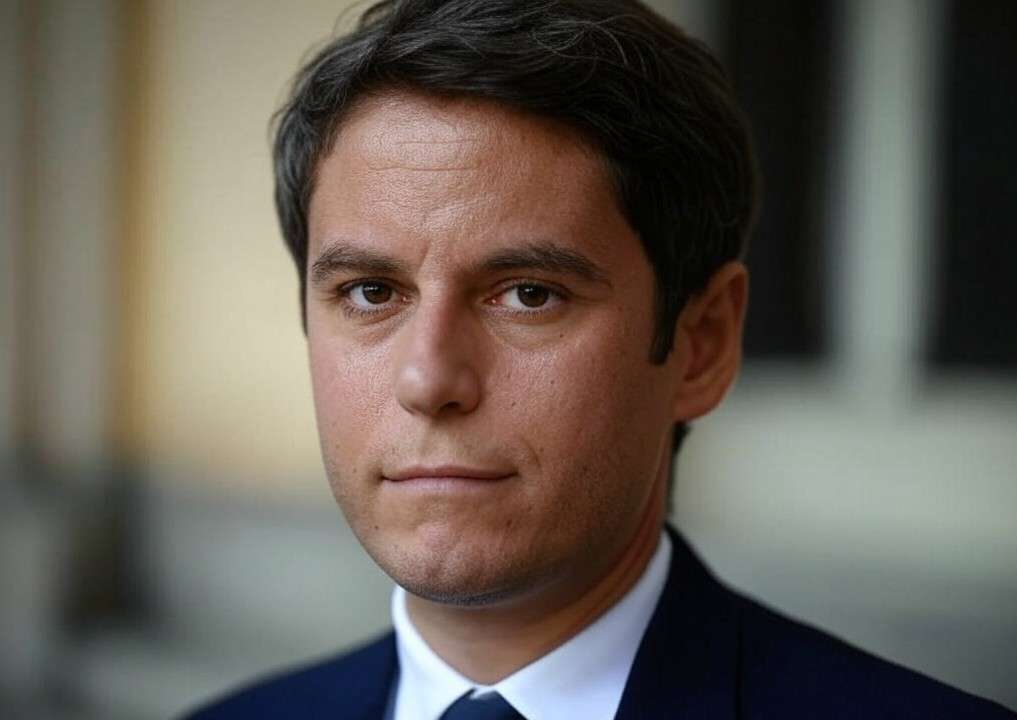
The struggle for the so-called “common core” — the shared political foundation of the center and moderate right — is now officially underway. With Gabriel Attal positioned as Renaissance’s preferred candidate for the 2027 presidential election, French politics is entering a phase of permanent primaries. Three men are now seeking to embody the same political promise: to prevent a new final duel between the National Rally and the radical left.
The problem: Gabriel Attal, Édouard Philippe, and Bruno Retailleau are largely addressing the same electorate, but they pursue fundamentally different strategies.
For months, Édouard Philippe has been striving to establish a resolutely presidential posture: the detachment of a statesman, measured public appearances, seriousness on the international stage, and an image of political stability. He wants to appear as the man capable of restoring calm and order after the years of Macronist fragmentation.
Gabriel Attal, by contrast, follows an exactly opposite strategy. Constant media presence, continuous travel across the country, assertive speeches, and a more energetic political rhetoric: the former Prime Minister is betting on speed, visibility, and the generational embodiment of a new political style.
Bruno Retailleau, for his part, is trying to rebuild a right-wing focused on authority, aimed at winning back conservative voters who increasingly sympathize with Jordan Bardella, without directly shifting to the National Rally.
Behind this personal rivalry lies a much more fundamental question: does this so-called “common ground” still exist?
This alliance was born from the gradual approach between the Macronist center and parts of the Republican right following the years of crisis in 2024. Originally, this camp mostly appeared as a pragmatic coalition aimed at securing parliamentary majorities. Today, it increasingly resembles a political space without a clear ideological axis.
The paradox is obvious. All the protagonists publicly emphasize the need for unity and warn against the fragmentation of the moderate camp. At the same time, each one is already building their own presidential machine. The debates about possible open primaries make this contrast particularly visible: no one seems really ready to support a rival.
Gabriel Attal has qualities that his competitors do not necessarily possess. At 37 years old, he masters the modern mechanisms of political communication almost perfectly. He notably maintains great visibility and the ability to mobilize among urban and academic electorates.
But this is precisely where its weakness also lies. Its political identity remains closely linked to the declining Macronism — and thus to a political phase that many French people now associate with institutional instability, reform fatigue, and the weariness of power.
In return, Édouard Philippe benefits from a more presidential image in the polls. However, his strategy of waiting also carries risks. Political caution can, in an increasingly polarized public sphere, quickly be perceived as pure opportunism or political passivity.
Bruno Retailleau manages, with his clearly right-wing and conservative line, to build a stable militant base within the Republicans. But it is precisely this ideological clarity that makes it more difficult for him to attract centrist voters and form a broader alliance.
The main challenge for this central and conservative camp could, however, lie elsewhere. While the moderate forces get lost in internal rivalries, Jordan Bardella and the political extremes benefit from much clearer political visibility. An increasing portion of public opinion now seems to favor simple and clearly identifiable political lines rather than broad ideologically vague coalitions.
The 2027 presidential election could therefore be less about the programs and more about the political embodiment and style of leadership. And it is precisely in this competition that the “common ground” risks losing its true political center.
Author: P. Tiko