
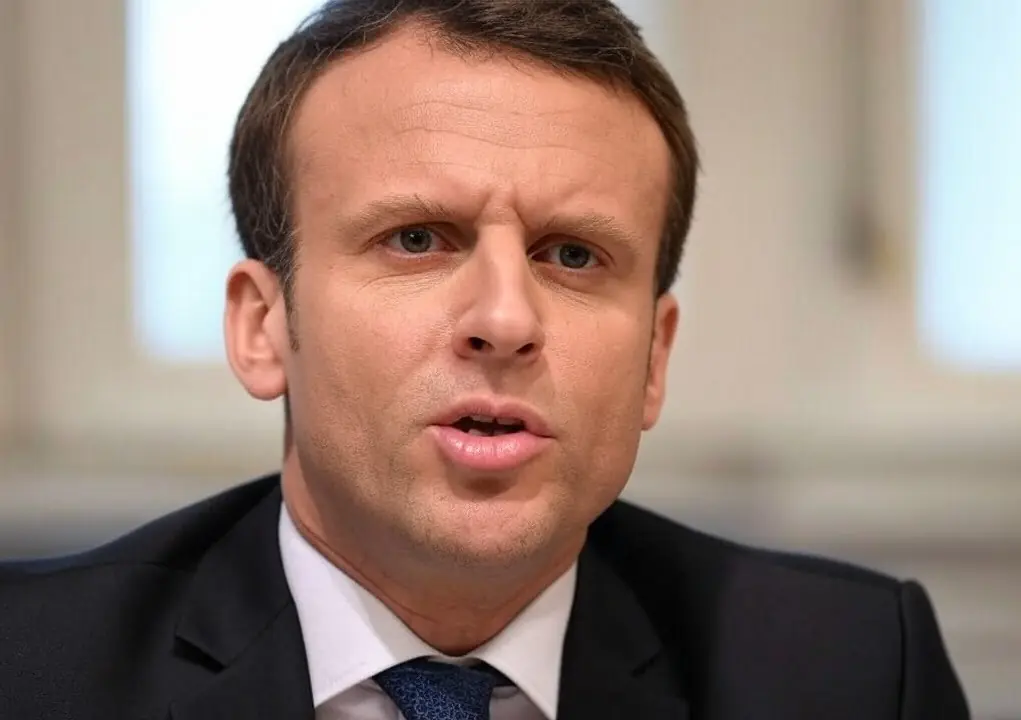
The case of eleven-year-old Lyhanna is becoming a matter of state in France. After the girl’s disappearance initially attracted national attention, the focus is increasingly on the question of whether the justice system and investigative authorities ignored warning signs or did not act with sufficient determination. President Emmanuel Macron spoke unusually clearly of “dysfunctions” and “shortcomings” in the judicial system. His words highlight the political relevance of a case that goes far beyond a single crime and raises fundamental questions about the capacity of state institutions.
A president distances himself
During a state visit to Montenegro, Emmanuel Macron spoke with surprising severity about the evidence revealed so far. He said he was “shocked” by how events unfolded and declared that things have not gone as they should have. The situation is “unacceptable.”
For a French president, such a direct criticism of the functioning of state authorities is unusual. Macron avoided premature condemnations but made it clear that thorough investigations are necessary. These must uncover both possible individual errors and structural and organizational deficits.
The political value of these statements lies in the fact that the president personally acknowledges the existence of possible state shortcomings. In France, where the executive traditionally places great importance on defending its institutions, this represents a significant step.
The central question: why was no action taken earlier?
At the center of the controversy is the fact that the main suspect was allegedly already known to the authorities before Lyhanna’s disappearance. Numerous clues and reports were said to exist against the 41-year-old man, including accusations of sexual violence against minors.
Particularly serious is the accusation that a rape report involving a minor, filed in August 2025, had not led to any interrogation of the suspect by the time of Lyhanna’s disappearance.
It is precisely on this point that public outrage is focused. In fact, the debate is not only about the crime itself, but about whether it could have been prevented.
In modern rule-of-law states, there are numerous mechanisms to protect at-risk children. Police investigations, prosecutors, child welfare services, schools, and social services must exchange information and promptly identify cases at risk. If, despite indications, no timely measures are taken, the question of causes inevitably arises.
Investigations by the judiciary and the gendarmerie
Faced with increasing political pressure, the government reacted quickly. Prime Minister Sébastien Lecornu called a crisis meeting with the relevant ministers. At the same time, inspections were ordered within the judiciary and the gendarmerie.
The investigations aim in particular to clarify whether all warning signs were properly evaluated and why certain proceedings have progressed slowly. It is also being checked whether organizational defects or individual decisions prevented an early intervention.
The first results are expected within a few weeks. In doing so, the government is obviously trying to avoid the impression that state authorities are merely buying time or covering up responsibility.
Meanwhile, the investigators are under considerable pressure. The public does not only expect a complete clarification of the crime, but also answers about the role that institutional errors may have played.
A delicate issue for French society
The particular emotional impact of the case can be explained by the combination of two topics that regularly trigger intense debates in France: the protection of minors and sexual violence.
In recent years, several high-profile cases have demonstrated how difficult it is to recognize dangerous situations in a timely manner. At the same time, social awareness of sexual violence against minors has increased significantly.
In this context, any sign of negligence by the authorities is viewed with particular criticism. Many citizens wonder why known risk factors were not enough to prompt more decisive action.
The outrage does not arise solely from moral considerations. It also affects the basic trust in state institutions. When citizens make complaints or reports, they expect them to be taken seriously and handled promptly.
The opposition exploits the affair for a debate of principle
Politically, the affair has already sparked a new discussion about the state of French justice. Opposition politicians from various factions see the case as evidence of deeper structural problems.
Critics have been pointing out for years the heavy workload of prosecutors and judges, the long duration of trials, and difficulties in coordination between different authorities. In their opinion, the Lyhanna case could be symptomatic of a system under pressure in various areas.
However, Macron rejects the thesis that the events can be explained solely by a shortage of financial resources. According to him, it is equally a matter of organizational structures, procedural processes, and responsibilities.
This argument points to a fundamental political debate. More personnel and higher budgets can alleviate problems but do not automatically guarantee better results. Likewise, organizational deficits can cause available information not to be used effectively.
The investigations now launched must therefore also clarify whether it is a problem of missing resources or rather a failure in institutional processes.
The Lyhanna case could have broad repercussions on French domestic politics. If it is confirmed that warning signs were not sufficiently considered, the pressure on the government, judiciary, and law enforcement will increase significantly. Calls for reforms in the protection of minors and the handling of sexual offenses will gain new momentum.
For Emmanuel Macron the issue is particularly delicate. On one hand, he shows readiness to act with his clear criticism. On the other, the public will judge the government based on whether the announced investigations lead to concrete consequences.
The case thus has the potential to become a symbol of the state’s capability. The decisive question is no longer just what happened to Lyhanna. It is also whether French institutions will be able in the future to better protect children at risk and promptly transform warning signs into effective actions.
Author: P. Tiko