
The death of eleven-year-old Lyhanna has sparked a debate in France that goes far beyond the specific criminal case. Central to the discussion is the question of why a suspect, already known to the authorities and against whom several accusations had been raised, could apparently not be stopped in time. The public outrage is directed not only against individual authorities but against the functioning of the entire justice and security chain.
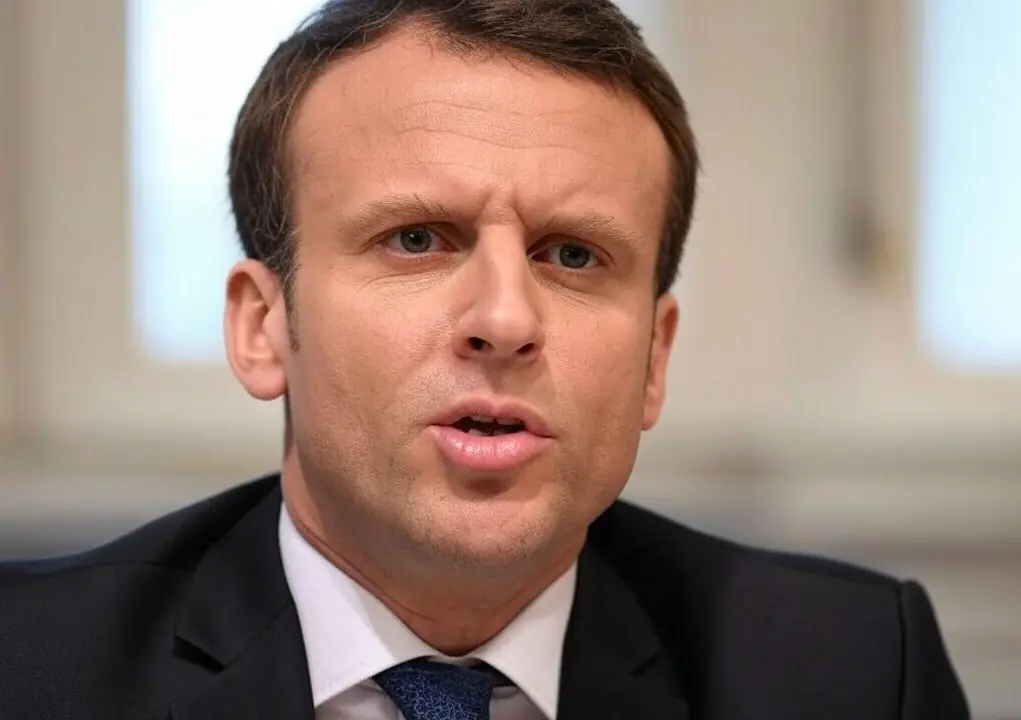
President Emmanuel Macron has responded to the growing criticism by speaking of a “dysfunction,” a serious failure of function. At the same time, he rejected the explanation that the causes were primarily due to insufficient financial resources. Instead, he placed the responsibility of the involved institutions and their organizational processes at the center.
A Case of National Significance
The Lyhanna case developed within a few days into a matter of national importance. The discovery of the girl’s body caused nationwide shock. Quickly, the focus shifted not only to the alleged crime itself but also to the suspect’s background.
It became known that the suspect had previously been the subject of various reports and complaints. Particularly, indications of serious crimes had raised questions as to why more effective measures were not taken. For many observers, this puts less emphasis on the actual investigation after the crime and more on whether the crime could have been prevented by a functioning warning and control system.
France is familiar with such debates from the past. Repeatedly, spectacular violent crimes have triggered discussions about the cooperation between police, judiciary, social services, and administration. The Lyhanna case fits into this tradition but has a particular political sensitivity because the accusations against the suspect were reportedly documented before the crime.
Macron Speaks of “Unacceptable” Failures
During a visit to Montenegro, Emmanuel Macron spoke unusually clearly. The procedures had not worked as they should have. The known deficiencies were “unacceptable.”
With this choice of words, the president explicitly acknowledged that state agencies might have made mistakes. For a sitting head of state, such a formulation is remarkable as it implicitly recognizes the responsibility of state institutions without yet establishing their definitive guilt.
Macron simultaneously called for a comprehensive clarification. It must be examined where the weaknesses lay and which parties may have failed. This concerns not only general structural problems but possibly also individual responsibilities.
The political message is clear: The Élysée Palace wants to avoid the impression that the government is turning a blind eye to possible errors within the justice and security authorities.
The Debate About Judicial Resources
Macron’s reaction to the accusation that the judiciary suffers from chronic staff shortages and insufficient funding is particularly enlightening. This criticism has been voiced in France for years. Associations of judges, prosecutors, and unions regularly point to high workloads, long durations of proceedings, and overburdened courts.
However, Macron contradicted the thesis that the Lyhanna case was primarily a result of a lack of resources. He pointed out that budgets for the judiciary and security forces have been significantly increased since he took office in 2017.
From the president’s perspective, the core problem does not lie in the amount of financial resources but their utilization. Decisive are organization, coordination, consistency, and acceptance of responsibility.
This argument follows a political line Macron has advocated for years. His government regularly emphasizes that state reforms are not successful solely through additional spending but above all through more efficient structures and clearly defined responsibilities.
Focus on Systemic Weaknesses
The announcement of an administrative inspection mission shows that the government does not regard the case as an isolated incident. The handling of previous complaints against the main suspect is to be examined in particular.
This brings a central question into focus: How are warning signals processed within the French legal system?
Modern rule-of-law states have numerous mechanisms to identify potentially dangerous individuals. Police reports, judicial proceedings, victim reports, and information from social institutions form a complex network. The challenge is to consolidate this information and draw timely conclusions.
It is precisely at this interface that problems often arise. Information exists but is not sufficiently linked. Responsibilities overlap or remain unclear. Procedures are delayed, decisions postponed, or warnings get lost in bureaucratic processes.
Macron’s reference to “collective” and “systemic” responsibilities suggests that the government considers such structural deficits as a possible cause.
Political Risks for the President
For Emmanuel Macron, the affair comes at a politically sensitive time. Although no direct personal connection to the events can be blamed on him, as head of state, he ultimately bears the political responsibility for the performance of state institutions.
Opposition parties are already using the case to raise fundamental questions about the government’s security and justice policies. Conservative forces feel confirmed in their calls for tougher measures. Left-wing parties argue that despite increased budgets, structural overloads and staff shortages persist.
Thus, the case is developing into a broader debate about the functionality of the French state. The discussion concerns not only individual authorities but the citizens’ trust in the ability of public institutions to recognize dangers early and act effectively.
Historically, French governments often respond to such crises with investigations, reform proposals, and organizational adjustments. Whether this will be sufficient in the Lyhanna case depends on the results of the ongoing investigations.
The Lyhanna case touches a sensitive nerve in French society. It raises the fundamental question of how a state deals with already known risk factors and what mechanisms come into play when warning signs exist. Emmanuel Macron has acknowledged the existence of serious deficiencies and demanded their clarification. At the same time, he rejects the notion that additional financial resources alone are the answer to the problem.
The coming months will show whether the investigations indeed reveal systemic weaknesses or whether individual errors are paramount. Regardless of the outcome, the affair has already triggered a debate that goes far beyond a single criminal case. It concerns trust in the judiciary, administration, and security authorities – and thus a central pillar of the democratic rule of law.
Author: Andreas M. Brucker