
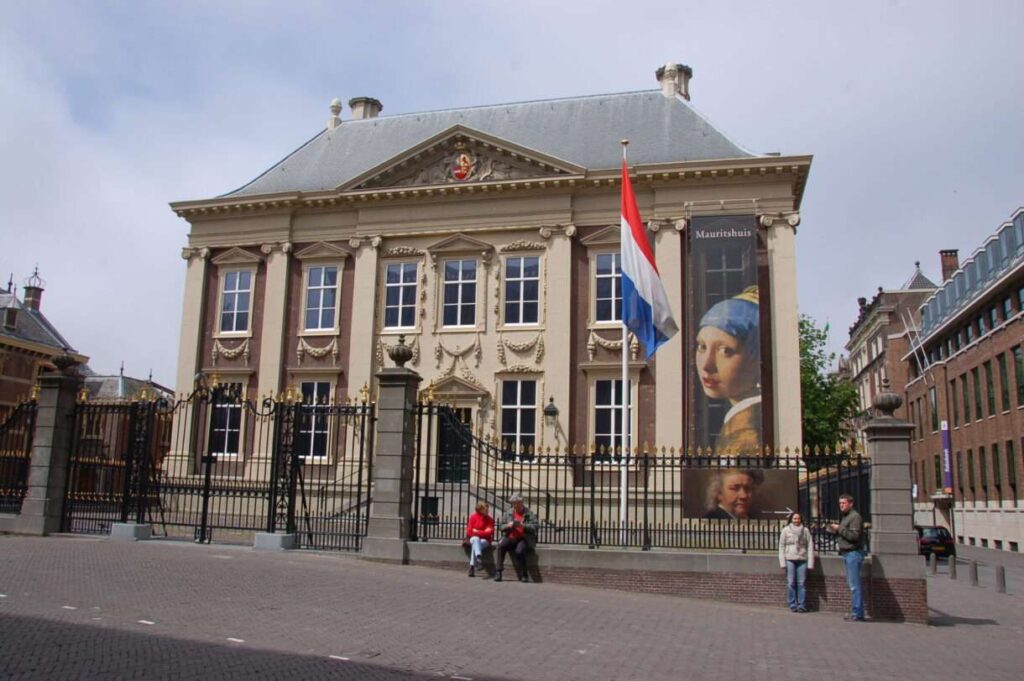
The famous Mauritshuis in The Hague has achieved an important legal victory. A Dutch court ruled that several paintings traditionally attributed to the painter Rembrandt van Rijn may remain part of the museum’s collection. This ends a legal dispute that went far beyond questions of ownership and at the same time sheds light on the complex world of art history.
The decision comes at a time when numerous works by old masters are being reexamined. Modern analytical methods now provide insights that were unthinkable just a few decades ago. Pigments, wood structures, and even the finest brushstrokes reveal to researchers with increasing precision whether a painting actually originated from the hand of a particular artist or was produced within their workshop.
This development has sparked intense debates about Rembrandt for years. The Dutch master led a highly productive workshop in the 17th century, where many students and assistants worked. Many of them learned his style so masterfully that the boundaries between original works and workshop productions still blur today. What was once considered an unmistakable Rembrandt often appears in a new light under the microscope of modern research.
The Mauritshuis is one of the most important art museums in Europe and owns an extraordinary collection of Dutch paintings from the Golden Age. Visitors from around the world flock to The Hague to admire masterpieces by Rembrandt and Johannes Vermeer. Especially the world-famous “Girl with a Pearl Earring” attracts hundreds of thousands of art lovers year after year.
However, behind the scenes, it is not only about exhibiting but also researching. In recent years, experts have subjected several paintings to thorough revaluation. The results surprised even experienced art historians. Some works, long presented as authentic Rembrandt pieces, very likely come from the sphere of his workshop. This in no way diminishes their value. On the contrary, they tell the story of an artistic community that was among the most influential in Europe.
This is precisely where the real significance of the current ruling lies. The affected paintings will not only remain physically in the museum. They remain part of a larger art historical context. Visitors will continue to have the opportunity to understand the development of Rembrandt’s style, the working methods of his workshop, and the influence on his pupils.
Much is at stake for the Mauritshuis. The collection is regarded as a cohesive ensemble of exceptional quality. Were individual works to be removed or their attribution questioned, gaps would arise in the narrative of an era considered the pinnacle of Dutch painting.
The case also illustrates how vibrant art history can be. Contrary to what many people assume, museums are not static treasuries. Research continuously changes knowledge. New technologies, fresh perspectives, and scholarly debates ensure that even centuries-old paintings still have surprises in store.
The ruling from The Hague now provides clarity for the time being. For art enthusiasts, this means above all one thing: The significant Rembrandt collection of the Mauritshuis remains preserved in its impressive diversity—a cultural treasure that continues to attract visitors from around the world.
Andreas M. Brucker