
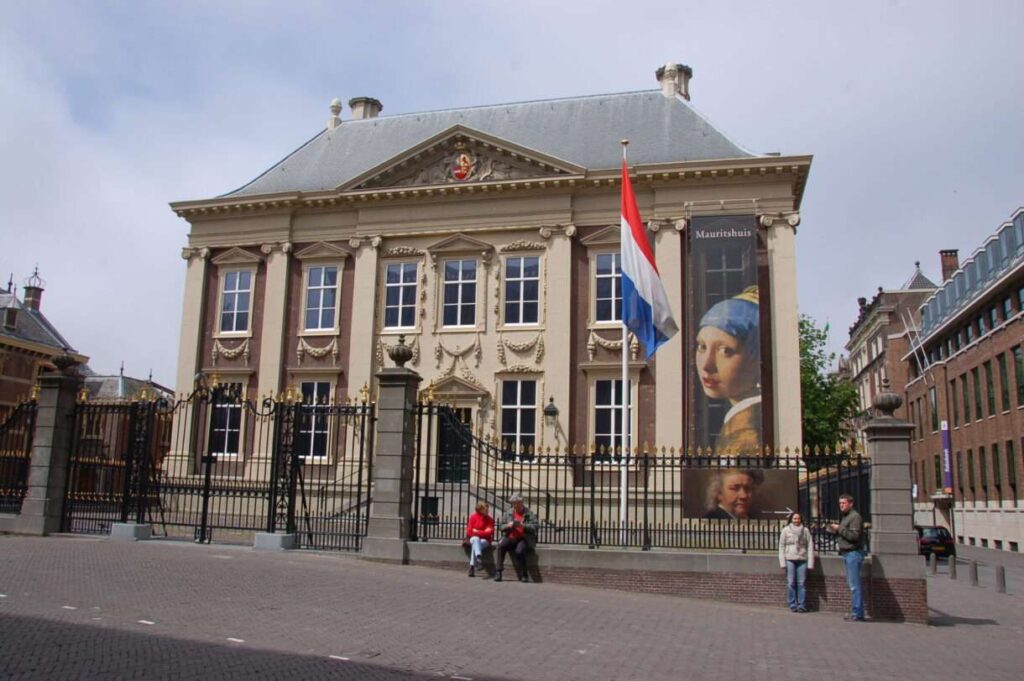
The famous Mauritshuis in The Hague has achieved an important legal victory. A Dutch court ruled that several paintings traditionally attributed to the artist Rembrandt van Rijn may remain part of the museum’s collection. This ends a legal dispute that extended far beyond ownership and at the same time opened a view into the complex world of art history.
The decision comes at a time when many works of the old masters are undergoing reexamination. Modern analytical methods today make it possible to see what just a few decades ago seemed impossible. Pigments, the structure of the wood, and even the finest brushstrokes increasingly reveal to researchers whether a painting was truly created by the artist’s hand or if it comes from his workshop.
This trend has especially sparked lively discussions in recent years in the case of Rembrandt. The Dutch master in the 17th century ran an extremely productive workshop, where numerous pupils and assistants worked. Many of them mastered his style so perfectly that the boundary between the original and workshop pieces remains blurred to this day. What was once considered unquestionably Rembrandt often appears in a new light under the microscope of modern research.
Mauritshuis is one of the most important art museums in Europe and has an exceptional collection of Dutch Golden Age painting. Visitors from all over the world travel to The Hague to admire the masterpieces of Rembrandt and Johannes Vermeer. Especially the world-renowned “Girl with a Pearl Earring” attracts hundreds of thousands of art lovers every year.
But behind the scenes, not only are exhibitions held, but research is also conducted. In recent years, experts have carefully reassessed several paintings. The result surprised even experienced art historians. Some works that were long considered authentic pieces by Rembrandt likely originate from his workshop circle. This in no way diminishes their value. On the contrary, they tell the story of an artistic community that was one of the most influential in Europe.
This is the true significance of the current court decision. By remaining in the museum, these paintings are not simply physically retained. They continue to be part of a broader art historical context. Visitors have the opportunity to continue tracing the development of Rembrandt’s style, the particularities of his workshop’s work, and the influence on his pupils.
For Mauritshuis, this is of great importance. The collection is considered a coherent ensemble of exceptional quality. If individual works are removed or their attribution questioned, gaps would arise in the narrative of the era regarded as the pinnacle of Dutch painting.
This case also demonstrates how vibrant art history can be. Contrary to many perceptions, museums are not static treasure troves. Research constantly changes knowledge. New technologies, fresh approaches, and scholarly debates ensure that even centuries-old paintings can still bring surprises.
The decision from The Hague currently brings clarity. For art lovers, this means the main thing: the significant Rembrandt collection at Mauritshuis is preserved in its impressive diversity — a cultural treasure that continues to attract visitors from around the world.
Andreas M. Brucker