
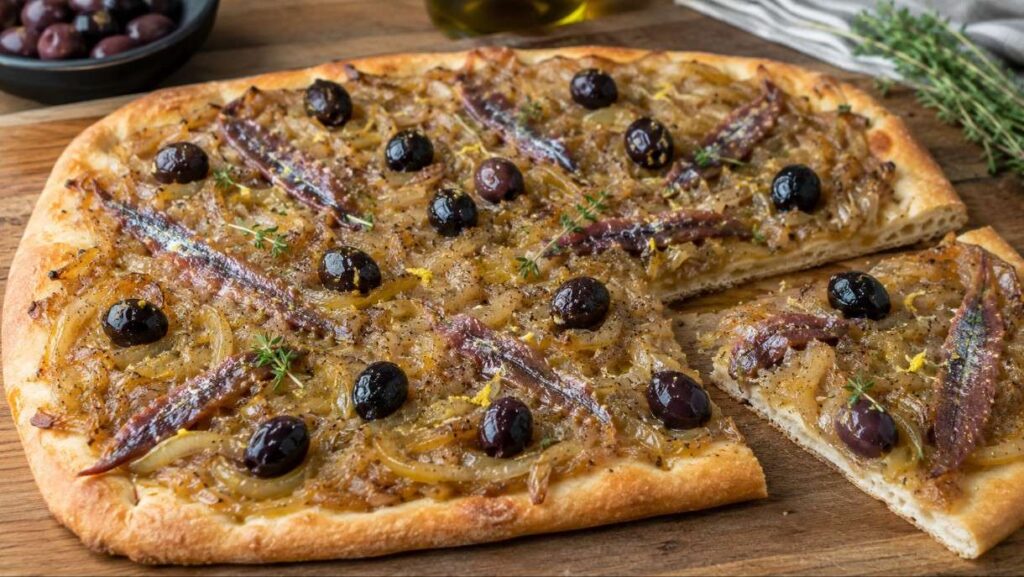
The Pissaladière is one of the great culinary treasures of southern France. Often referred to as a “Provençal pizza,” it is actually a distinct dish with a centuries-old tradition. Originally from Nice and the surrounding Côte d’Azur, where it remains omnipresent in bakeries, markets, and home kitchens today. Its unmistakable character comes from the combination of slowly braised onions, salty anchovies, and black olives on a thin yeast dough.
While the classic version is strongly influenced by its peasant origins, modern cuisine offers numerous ways to contemporarily develop the Pissaladière. High-quality ingredients, more precise techniques, and a lighter texture give the traditional dish a new elegance without denying its Provençal roots.
The History of Pissaladière
The name derives from the Provençal word “pissalat.” This was a historical seasoning paste made from fermented small fish, which originally formed the base of the topping. Over time, anchovies were used as a more readily available alternative.
The Pissaladière developed in the port towns of Provence as an inexpensive, nutritious dish. The ingredients were locally available: onions from the hinterland, anchovies from the Mediterranean, and olives from the sun-drenched groves of the region. Unlike Italian pizza, it traditionally contained no cheese and hardly any tomatoes.
Today, it stands for the authentic cuisine of the Mediterranean region – simple, aromatic, and completely focused on the quality of a few ingredients.
What Makes a Good Pissaladière?
The quality of a Pissaladière primarily depends on three factors:
The Onions
The onions form the heart of the dish. They are not browned but slowly braised over 45 to 60 minutes. This develops their natural sweetness and a jam-like consistency.
The Anchovies
Anchovies provide not only saltiness but also depth and umami. High-quality fillets preserved in oil deliver distinctly finer aromas than cheaper mass-produced products.
The Dough
Traditionally, the base resembles a bread or focaccia dough. Modern variations often rely on a particularly airy, long-fermented yeast dough, which is lighter and more digestible.
The Modern Interpretation
In contemporary French bistro cuisine, the Pissaladière is often presented finer and more elegant. The onions are refined with a bit of white wine or vermouth, the dough receives a longer fermentation, and fresh herbs add additional complexity.
The result is a Pissaladière that convinces both as an aperitif snack and as a light summer dish.
Modern Pissaladière with Caramelized Onions, Thyme, and Lemon Zest
Ingredients for 4 People
For the Dough
- 300 g wheat flour type 550
- 190 g water
- 5 g fresh yeast
- 6 g salt
- 15 g olive oil
For the Topping
- 800 g cooking onions
- 3 tbsp olive oil
- 2 tbsp dry white wine
- 1 tsp fresh thyme leaves
- 1 bay leaf
- 8 to 10 anchovy fillets
- 16 black olives
- Zest of half an organic lemon
- Freshly ground black pepper
For Serving
- Some young basil leaves
- High-quality extra virgin olive oil
Preparation
1. Prepare the Dough
Briefly mix flour, water, and yeast. Then add salt and olive oil and knead into a smooth dough for about ten minutes.
Let the dough ferment covered in the refrigerator for at least eight hours. This long resting time ensures more flavor and a particularly airy structure.
2. Braise the Onions
Cut the onions in half and then into thin strips.
Heat olive oil in a large pan. Cook the onions together with bay leaf and thyme over low heat slowly for about 45 minutes.
Once the onions have softened, add the white wine and let it evaporate completely.
The mixture should be creamy, soft, and slightly sweet but should not have a strong browning.
3. Shape the Pissaladière
Stretch the dough rectangularly on a baking sheet.
Evenly spread the braised onions on top.
Arrange the anchovies in a traditional diamond pattern and fill the gaps with olives.
Finally, sprinkle some lemon zest over the topping.
4. Baking
Preheat the oven to 250 °C top and bottom heat.
Bake the Pissaladière for about 12 to 15 minutes until the edges turn golden brown and crispy.
5. Refine
After baking, drizzle with a few drops of high-quality olive oil and garnish with fresh basil.
Why Lemon Zest Works
The classic Pissaladière has intense salty and sweet components. A hint of lemon peel adds freshness and balance. The essential oils from the peel enhance the flavors of the anchovies and give the dish a modern lightness without altering its traditional identity.
Suitable Pairings
The modern Pissaladière pairs wonderfully with:
- a dry rosé from Provence
- a mineral white wine from the Nice region
- a tomato and herb salad
- marinated fennel with orange
- grilled Mediterranean vegetables
Conclusion
The Pissaladière exemplifies how an extraordinary dish can arise from a few simple ingredients. Its combination of sweet braised onions, spicy anchovies, and aromatic olives embodies the essence of Provençal cuisine. In a modern interpretation with long-fermented dough, fresh herbs, and a touch of lemon, the classic gains additional sophistication while remaining unmistakably connected to its Mediterranean origin. Especially on warm early summer evenings, the Pissaladière proves that timeless recipes are often the best.