
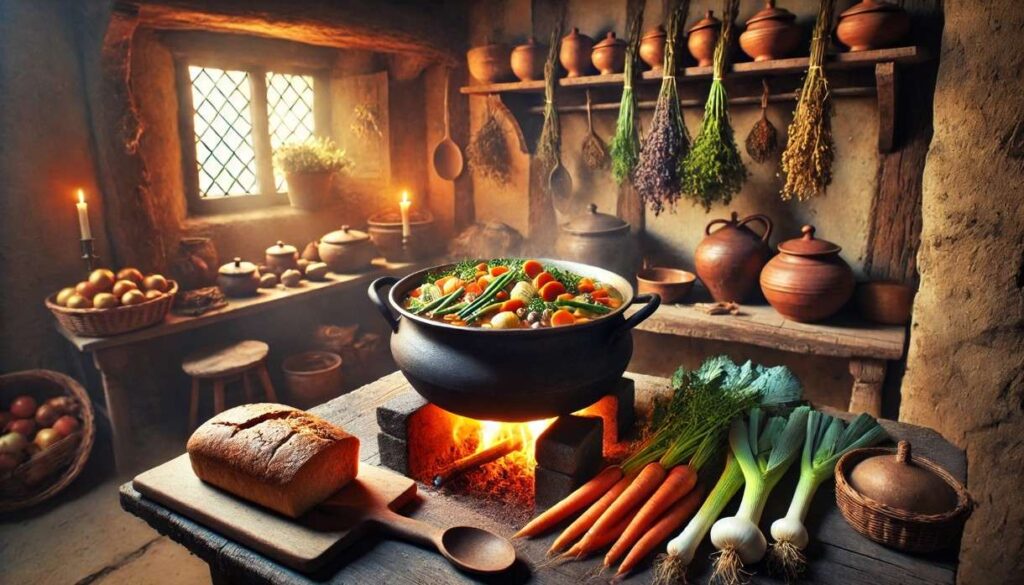
Bean and Bread Vegetable Stew – A Time Travel to the 15th Century Kitchen
The legendary Maid of Orleans, Joan of Arc, was raised in the French countryside of Domrémy. Her childhood was marked by simple and nutritious meals made by peasant families of that time. One of the dishes Joan and her contemporaries might have eaten was a rustic vegetable stew paired with plain peasant bread. This dish was not only practical and filling but also versatile and nutritious, ideal for farm work and long journeys.
In an era without refrigerators and with limited types of ingredients, peasant cooking relied on seasonal local produce. Beans, root vegetables, and herbs played a central role because they were inexpensive, preservable, and easy to prepare.
Why Bean Vegetable Stew?
Stew was very popular in the Middle Ages, easy to cook, and could be simmered all day over an open fire. The combination of beans, vegetables, and herbs provided quality protein along with vitamins and dietary fiber, creating a nutritious dish that met the basic needs of common people. Bread was the perfect side to scoop up every last drop of the stew instead of using a spoon.
15th Century Recipe: Bean and Bread Vegetable Stew
This recipe is inspired by medieval peasant cuisine and uses only ingredients that Joan of Arc might have known.
Ingredients (serves 4):
- 200g dried beans (e.g.: white kidney beans or broad beans)
- 2 carrots, roughly chopped
- 2 parsnips or beets, cut into large cubes
- 1 onion, roughly chopped
- 1 clove garlic, crushed
- 1 leek, sliced into rings
- 100g cabbage (e.g.: white cabbage or kale), finely chopped
- 1 bunch fresh herbs (thyme, parsley, bay leaves)
- 1.5 liters water or vegetable broth
- 1 tablespoon coarse salt (or to taste)
- Pepper, freshly ground
- 1 tablespoon pork fat or olive oil (optional, if available)
- Peasant bread or rye bread, sliced
Preparation method:
- Prepare the beans: Soak the dried beans in cold water overnight. The next day, drain and cook them in fresh water for about 45 minutes until half tender. (In the past, beans were often simmered for a long time directly in the stew.)
- Make the stew: Heat pork fat or oil (if available) in a large pot and lightly sauté the onion and garlic. Add the carrots, parsnips, leeks, and cabbage and mix well.
- Simmer: Add the beans and water (or broth). Add fresh herbs (thyme, parsley, bay leaf), coarse salt, and a small amount of pepper. Simmer over medium heat for about 1 to 1.5 hours until the vegetables are tender and the flavors are well infused.
- Serving: Remove the herb stems and bay leaf. Serve the stew hot, accompanied by coarse country bread. The bread can be dipped directly into the stew or eaten on the side.
Insights into Past Cuisine
This recipe reflects the humble cooking of farmers. It is a tribute to simplicity and at the same time a window into the world of medieval France. People back then made do with what was available and learned how to create surprisingly nutritious dishes with simple ingredients.
Conclusion
The vegetable stew with beans and bread is not only a delicious dish that provides historical insight but also continues to attract people today with its nutritional value and sustainable qualities. By referencing such traditional recipes, we can build a bridge between the past and the present. Even Joan of Arc might have enjoyed a bite! 🥖✨