
What makes a visit to the Musée d’Orsay so incomparable?
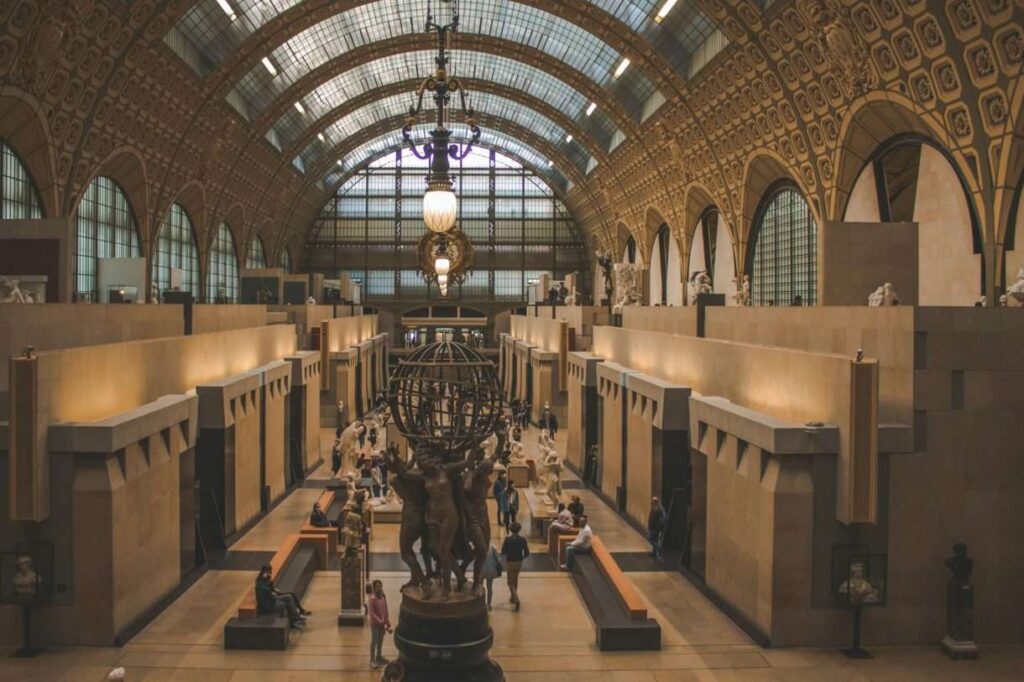
Let’s start with an image: the morning sun filters through the tall glass windows, and the first visitors enter the former station building with reverence. The Musée d’Orsay, located directly on the bank of the Seine opposite the Tuileries Garden, houses one of the most impressive collections of Impressionist and Post-Impressionist art in the world. But before paintings and sculptures take the stage, another work of art catches the eye – the grand clock of the Orsay.
The majestic clock of the station
The museum’s large clock is not only a time indicator but also a symbol of changing times. Originally part of the Gare d’Orsay, a station built in 1900, this clock has endured through the ages and witnessed the building’s transformation into a museum in 1986. The clock, which dominates the grand hall and also has a smaller sister on the top floor, offers a fascinating view of the city. Take a look through the clock face and you will see with your own eyes how Paris stretches out at your feet – a truly magical moment!
A tour through art history
The tour begins on the ground floor with 19th-century sculptures. Here you find works by artists such as Rodin and Carpeaux, whose figures seem almost alive, as if about to step out of the marble. It feels almost like another world, surrounded by passionate and dynamic forms carved in stone.
One floor up opens the golden age of painting. The impressionists and their successors. Here are exhibited masterpieces by Monet, Manet, Degas, and Renoir. Have you ever wondered what it’s like to step directly into a Monet painting? His “Water Lilies” almost seem like a portal to a peaceful, nearly mystical world.
Not to be forgotten: Van Gogh and Gauguin, two post-impressionists who captured light and color in a completely personal and revolutionary way. Van Gogh’s “Starry Night Over the Rhône” is truly impressive – the stars in the sky shine almost like on a clear night.
Culinary and cultural breaks
Fancy a short break? The Café at the Musée d’Orsay, located right under the impressive glass dome, offers not only refreshments but also a picturesque view of the Seine and the Sacré-Cœur. A perfect opportunity to let impressions settle and prepare for the rest of the tour.
Final impressions and tips
A visit to the Musée d’Orsay remains incomplete without exploring the works from later periods and the impressive temporary exhibitions the museum regularly offers. Every room, every corner of the museum tells its own story, immersed in the historic setting of a train station transformed into a temple of art.
How does it feel to walk through centuries of art, accompanied by the clock that constantly ticks, which is itself a work of art? Indescribable. So, when are you planning your visit to the Musée d’Orsay? Don’t miss this journey through time via art!