
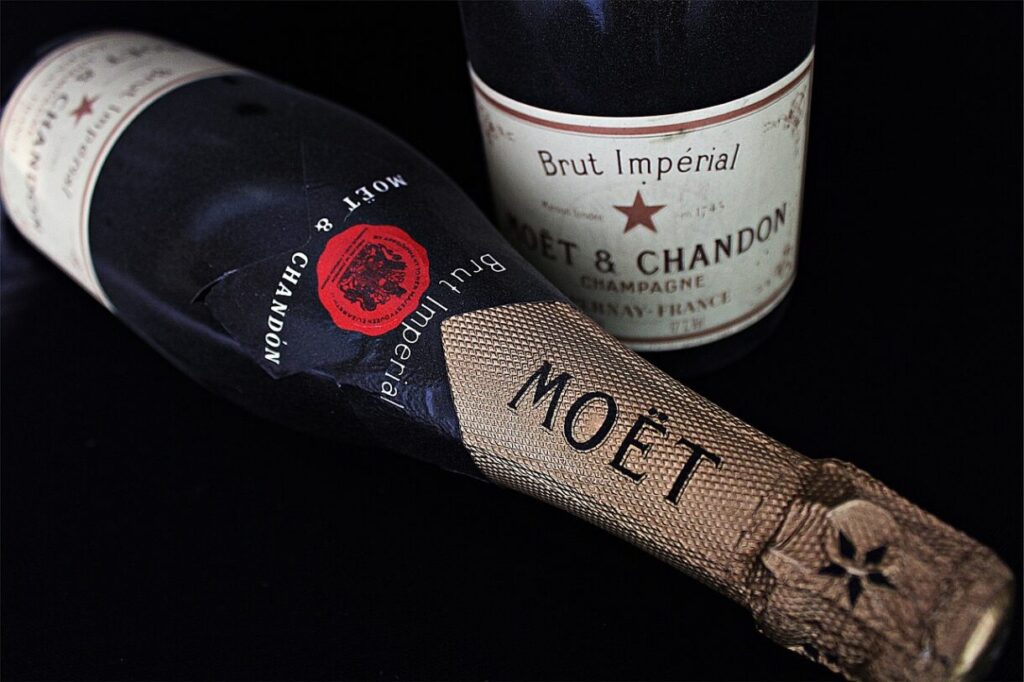
This statement caused concern far beyond the French vineyards. Donald Trump is once again threatening to impose 100 percent punitive tariffs on French wines, champagne, and spirits if Paris does not abandon the digital tax. The statement came just before the G7 summit and reminded many winemakers of previous trade conflicts when their products were manipulated in geopolitical disputes.
The main question now: is this the American president’s negotiation tactic or a real threat to one of France’s most important export industries?
The industry sounds the alarm
In the French wine and spirits industry, Trump’s statement is not at all seen as a simple provocation. Industry associations immediately responded with warnings, emphasizing that producers are once again caught up in a conflict that has little to do with their core business.
The reasons for concern are obvious. The United States is the most important sales market outside Europe for many French producers. Every year, French wines, champagne, and spirits worth several billion euros are exported to the US. Many well-known vineyards, as well as smaller family businesses, depend on the American market.
A tariff of 100 percent would effectively double the selling price of many products. For American importers and traders, this would mean significant risks. Higher prices usually lead to reduced demand, while competing products from other countries can gain market share. Premium wines and champagne, whose sales are highly dependent on the price level, would be particularly affected.
Trump has been using tariff policy for years
The current threat fits into a well-established scenario. Already during his first term in office, Trump made punitive tariffs a key instrument of his trade policy.
Within the long-running Airbus-Boeing dispute, European products, including French wines, were subject to additional tariffs. These measures led to a significant decline in sales volumes for many exporters. In recent months, Trump repeatedly resorted to public threats against European goods, especially when seeking to increase pressure in other political disputes.
This is exactly where the problem for the industry lies. On the one hand, some of these statements were later softened or canceled during negotiations. On the other hand, experience shows that Trump is willing to actually implement economic threats if he sees political advantage in doing so.
Uncertainty arises not only from the possibility of new tariffs being imposed but also from the unpredictability of the decision-making process.
Industry under growing pressure
The French wine industry is already in a difficult situation. For several years now, there has been a decline in wine consumption in many traditional markets. Especially younger generations are drinking less wine than previous ones.
Added to this are the effects of climate change. Extreme weather events, late frosts, heat waves, and water shortages complicate production in many wine regions. At the same time, competition is increasing from countries such as Australia, Chile, Argentina, South Africa, and even the United States themselves.
French cognac producers are also under pressure. Trade conflicts with China and changes in consumer habits have recently become an additional challenge for the industry. Many companies have smaller financial reserves than a few years ago.
Another trade conflict with the USA would be an extremely inappropriate moment for many manufacturers.
Digital tax as a real subject of dispute
Basically, it is not about wine. French export products serve more as a leverage in the broader conflict over the taxation of international technology companies.
France introduced a digital tax back in 2019. It concerns large platform companies that earn significant revenues in France. Primarily, these are American technology corporations, which Washington has been complaining about for many years due to the discriminatory nature of the tax.
For Paris, the key is the principle of tax fairness. The French government argues that global digital corporations should pay taxes where they earn their revenues. The United States, on the other hand, views this as a deliberate interference in the interests of American companies.
So, this conflict is part of a broader discussion about regulating the digital economy and allocating tax authority in the era of global platforms.
Macron shows firmness
President Emmanuel Macron has so far shown no willingness to give in under pressure from American threats. From the French government’s perspective, a concession would create an undesirable precedent.
Macron also emphasizes that trade wars ultimately harm all participants. Especially between closely economically linked partners such as the USA and the European Union, punitive tariffs are an ineffective and costly tool.
The French position is also based on the assumption that a concession could trigger additional demands. Paris wants to prevent economic pressure in the future from becoming an effective means of influencing national tax policy.
How realistic is implementation?
The danger should not be dramatized, but it should not be underestimated either.
According to the version that it is a bluff, the fact that Trump regularly uses threats with tariffs as a negotiation tactic indicates this. In many cases, public escalation is necessary to force the interlocutors to make concessions. The large number of previous statements that were ultimately not implemented or only partially implemented can confirm this interpretation.
At the same time, there are several factors indicating that the threat should be taken seriously. First, Trump has repeatedly demonstrated a willingness to actually impose trade barriers. Second, economic policy with tariffs is a central element of his political image. Third, even the announcements themselves already have a significant impact on decisions regarding investments and purchases.
But now there are also institutional constraints. Legal disputes over the president’s authority to impose tariffs have increased in recent years. This may complicate the implementation of such drastic measures compared to his first term.
Moreover, both Washington and Brussels have recently signaled interest in stabilizing transatlantic trade relations. A large-scale escalation would contradict this goal.
It is uncertainty itself that becomes the problem
For French manufacturers, the current situation is especially difficult due to the lack of planning. Import contracts are postponed, warehouse inventories are counted more cautiously, and investments are delayed.
In many cases, economic losses occur even before possible punitive tariffs are introduced. Traders react to uncertainty by reducing risks. This effect may become apparent in the coming months.
Debates around possible 100 percent tariffs illustrate the fundamental problem of international trade policy during the Trump era: not only specific measures, but even their announcements change economic decisions. For the French wine and spirits industry, this threat is more than media staging. Whether this will really lead to new punitive tariffs remains to be seen. However, it is clear that the industry has once again become an arena of political conflict, the consequences of which will extend far beyond the French vineyards.
Author: P. Tiko