
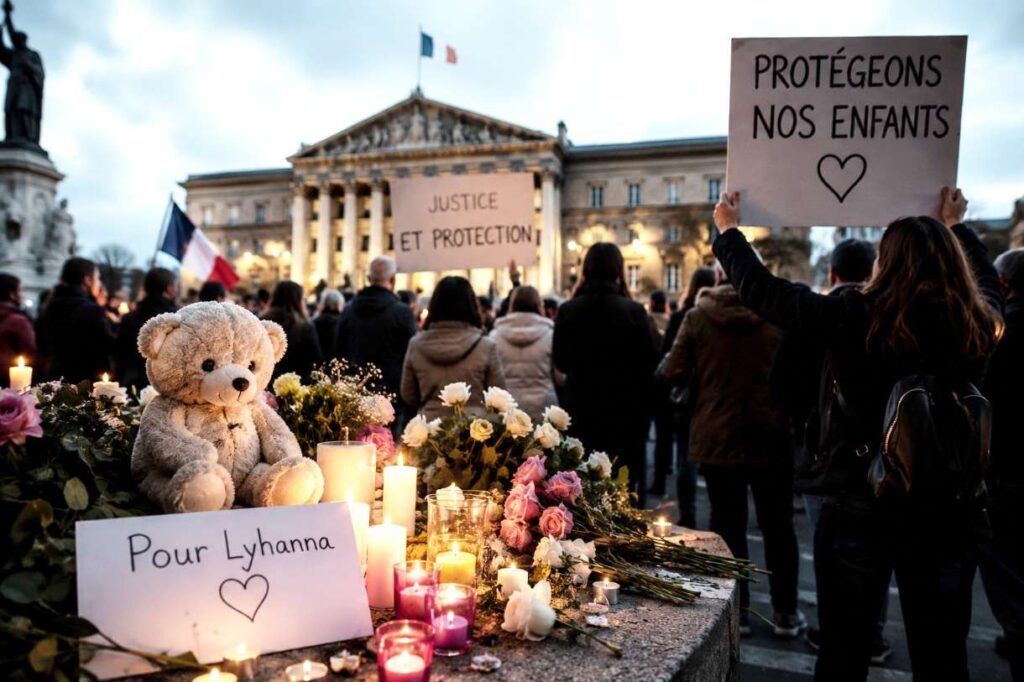
There are expressions that should never be uttered in a functioning rule-of-law state. One of them is: “The authorities were informed.” Because if the authorities were informed and still nothing happened, then the information becomes an alibi, and responsibility becomes secondary.
After the Lianni case, we are once again going through the usual ritual of sympathy. Politicians express shock. Ministers promise investigations. Experts demand consequences. Commissions are set up for inquiries. Documents are reviewed. Press conferences are held. And somewhere among all these carefully formulated statements, the key question disappears: Why did the child have to die, although clearly warning signals were already there?
The answer to this in France has almost become a separate bureaucratic apparatus: no one was responsible, but everyone was involved.
The modern state is an amazing construct. It often knows very precisely when you need to file a tax return. It knows what the parking fee in the city center should be. It knows which forms must be submitted in triplicate. But when it comes to protecting a child in danger, it suddenly turns out that the responsible authority was waiting for another responsible authority, which in turn depended on a response from a third responsible authority.
You could laugh about this if it were not so sad.
Of course, crimes are first and foremost the responsibility of the guilty. No one should pretend that individual guilt can be shifted onto the government. But it is equally wrong to absolve the state of responsibility. After all, the state legitimizes its power above all with a promise: we protect the vulnerable, we guarantee security, we intervene when there is danger.
If this promise is broken, it does not just cause anger. It causes distrust.
It is this distrust that is the real political explosive in this matter. Not just outrage over the crime, but the conviction of many citizens that institutions can govern, document, and record, but more and more often fail in their main function.
And then they are surprised by the success of political extremes.
How convenient it would be if the problem were only the strength of Rassemblement National. Then one could focus on the danger of the opposition. But in reality, the problem is deeper. Parties like RN win not because they are brilliant strategists, but because reality gives them arguments.
Every mistake by those in power becomes pre-election propaganda.
Every missed decision becomes a political campaign.
Every case left unaddressed sooner or later turns into a vote in the elections.
Herein lies the true tragedy. Established parties complain about the consequences when they often themselves produce the causes.
Especially notable is the speed with which new laws are demanded after such incidents. France already has thousands of laws. Obviously, there is a belief that every state failure can be solved with additional regulations. Perhaps the country will soon need a law against government inefficiency. The punishment for this could be yet another commission.
But the truth is simpler and more unpleasant.
Not everything fails due to a lack of laws. Much fails because existing rules are not enforced, competencies are unclear, or institutions are overcrowded with people and organizationally overloaded.
The death of a child becomes a reflection of state weaknesses.
Therefore, the discussion should not end with election slogans. The authorities and the opposition will not do justice to Lianna if her fate becomes merely a political resource. The real question is not who will ultimately benefit from this case.
The real question is: why could a state, which has rules, procedures, and competencies in practically all areas of life, fail precisely where its right to exist begins — in the protection of a child.
There are many explanations for this.
But there is still no convincing answer.