
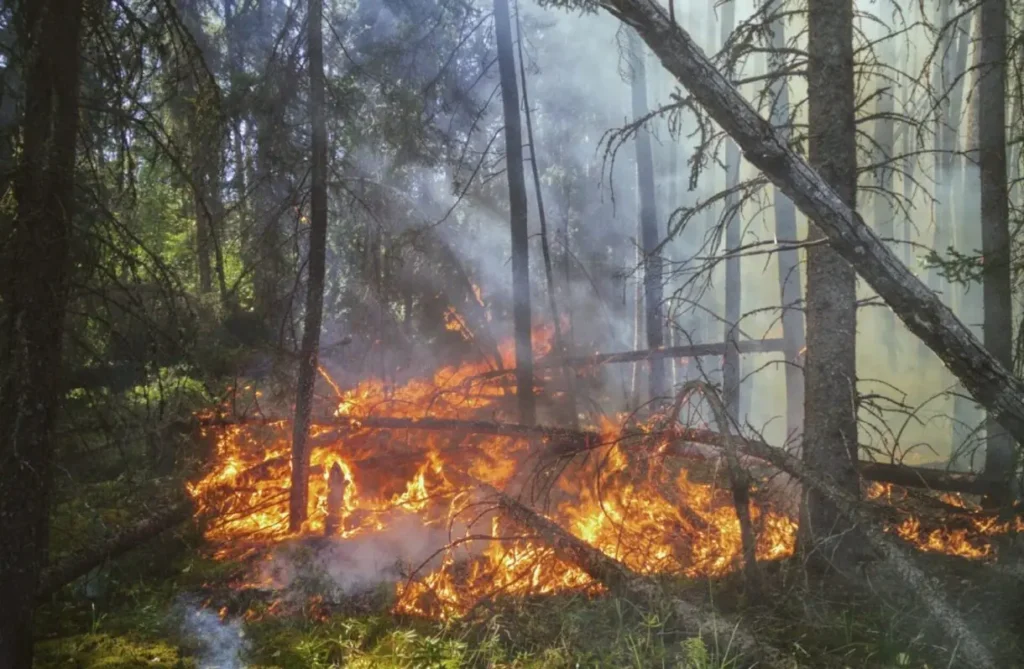
Within hours, firefighters from several regions in southern France had to respond to dozens of fires. The situation is particularly worsening in Mediterranean areas, where heat, drought and strong winds create a dangerous mix. Especially alarming: Some fire fronts are moving at nearly the speed of a walking person.
“It is moving very fast, almost 4 km/h, which is roughly the speed of someone walking quickly,” emergency crews describe the situation on site. What initially sounds like an abstract figure illustrates the enormous challenge facing firefighters. When flames advance at this speed through dry scrubland or forests, there is little time to take countermeasures.
The cause lies in a chain of unfavorable factors. For weeks, many areas have suffered from extreme drought. Grass, shrubs and forests in many places resemble tinder. At the same time, temperatures are clearly exceeding the 30-degree mark. When strong winds are added, a small fire source quickly becomes a fire front that is difficult to control.
What is most feared are the so-called “fire jumps.” The wind often carries glowing particles and sparks over long distances. This can cause new fires to start hundreds of metres ahead of the main fire line. For emergency crews, this is like an enemy constantly changing position. No sooner does one section seem under control than new flames appear elsewhere.
This development makes firefighters’ work enormously more difficult. It is no longer enough to fight only the existing fires. Operational command teams must constantly anticipate and calculate where the fires might spread next. Houses, roads, power lines and, not least, the crews themselves must be protected in time.
Anyone who has ever seen how quickly a forest fire can spread is unlikely to forget the image. A small column of smoke on the horizon can turn into a fire line several kilometres long within minutes. This dynamic is precisely what is currently causing great concern among the authorities.
The current situation reminds many experts of particularly severe fire years in past decades. The combination of persistent heat, dried-out vegetation and strong wind gusts means that even the smallest spark can trigger new fires.
For southern France, the sensitive wildfire season has only just begun. The coming weeks will likely show whether emergency crews can stabilize the situation, or whether nature will set the pace.
By Andreas M. Brucker