
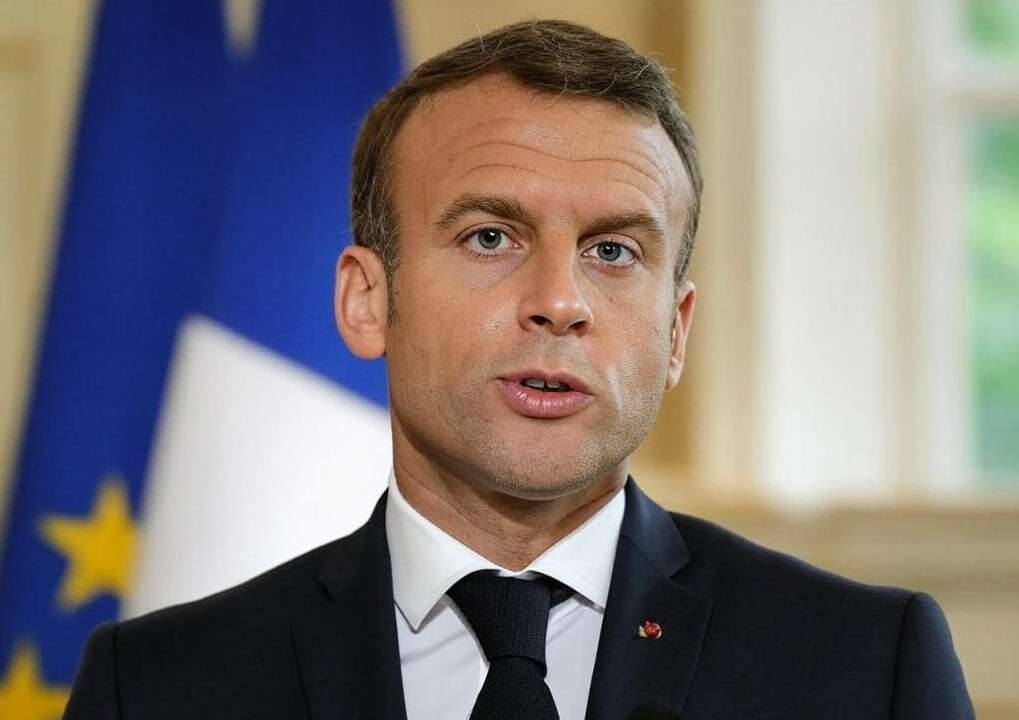
On March 3, 2026, French President Emmanuel Macron addressed the nation in a solemn televised speech. The occasion was the dramatic escalation in the Middle East: following massive airstrikes by the United States and Israel on Iranian facilities, the region is in open military confrontation with Iran. The killing of the Iranian Revolutionary Leader Ali Khamenei during the initial attacks marked a point of escalation to which Tehran responded with regional counterstrikes.
Macron’s speech was an attempt to maintain a strategic balance in a highly polarized environment: solidarity with Western partners and regional allies on one hand, distance from legally questionable military actions on the other.
Tehran as the Starting Point of the Escalation
The president identified the Islamic Republic as primarily responsible for the escalation. He pointed to the advanced Iranian nuclear program, the expansion of ballistic capabilities, and the support of armed non-state actors in the region. These factors had created a climate of structural instability over years, which has now turned into open violence.
With this, Macron addressed the tensions simmering since the US withdrawal from the Vienna nuclear agreement in 2018. The agreement, formally known as the Joint Comprehensive Plan of Action (JCPOA), was intended to limit Iran’s nuclear program. After its practical failure, Tehran significantly intensified uranium enrichment. International observers repeatedly reported enrichment levels technically approaching weapons-grade material.
At the same time, Macron recalled the domestic political repression in Iran. By pointing out that the regime had “shot at its own people,” he referred to violently suppressed protests in recent weeks. This dual argument – external aggression and internal repression – served to emphasize Tehran’s political responsibility.
However, the French president avoided unconditional partisanship. The airstrikes by the USA and Israel were “outside international law,” according to his wording. With this, Paris marked a diplomatic distance towards Washington and Tel Aviv – a classic element of French foreign policy that has relied on strategic autonomy since the times of Charles de Gaulle.
Military Presence as a Signal and Security Measure
The core of the address was concrete security policy measures. France is increasing its military presence in the eastern Mediterranean and the Gulf. The nuclear-powered aircraft carrier strike group around the Charles de Gaulle has been deployed, accompanied by Rafale fighter jets and additional air defense systems.
Furthermore, existing bases and cooperation structures with Gulf states such as the United Arab Emirates, Qatar, and Kuwait are being more securely protected. France maintains a permanent military base in Abu Dhabi; defense agreements guarantee assistance in case of crisis.
Strategically, it is about more than symbolism. The Strait of Hormuz remains a critical point in the global economy: around one fifth of the world’s traded oil passes through this strait. The security situation in the Red Sea is also fragile. A further escalation could severely disrupt supply chains – with direct effects on energy prices and inflation in Europe.
However, Macron emphasized that the French deployment remains defensive. The goal is the protection of its own citizens, military facilities, and allied states, not participation in offensive operations. This limitation is politically significant domestically: the French public traditionally reacts sensitively to longer-term military deployments without a clear mandate.
Evacuations and Internal Security
Parallel to the military measures, the President announced evacuation operations for French nationals in the region. Special flights that have already been organized are intended to bring vulnerable people out of the country. France has significant diaspora communities in Lebanon, Israel, and the Gulf States – their safety is a high priority for Paris.
The security level was also raised domestically. Protective measures around religious institutions, diplomatic missions, and potentially vulnerable infrastructures were strengthened. The experience of past Middle East escalations shows that international conflicts can have immediate effects on the security situation in European metropolises.
Diplomacy as a Strategic Necessity
Despite military security, Macron placed diplomacy at the center of his argument. Lasting stabilization can only be achieved through negotiations – especially concerning the Iranian nuclear program and regional security guarantees.
France is coordinating closely with Germany and the United Kingdom – the E3 format that already played a central role in the nuclear agreement. The goal is a rapid ceasefire and the resumption of structured talks under international mediation.
Noteworthy was Macron’s warning about a possible Israeli ground offensive in Lebanon. He described such an operation as a “strategic mistake” that could set the entire region on fire. This assessment reflects the experience of previous Lebanon wars, whose destabilizing effects extended far beyond the immediate battlefield.
France’s balancing act between alliance and autonomy
The speech highlights the structural tension of French foreign policy: Paris is firmly anchored in the Western alliance system, but at the same time claims strategic independence. Since returning to NATO’s integrated command structure in 2009, little has changed in this regard. The idea of a “Europe puissance” – a capable, sovereign Europe – remains a guiding motif.
Macron tries to continue this course under extreme conditions. On the one hand, France shares the concern about possible nuclear armament of Iran. On the other hand, it does not want to give up its role as a mediating power. Historically, Paris has repeatedly seen itself as a channel of communication between antagonistic camps in the Middle East – whether in Lebanon, Iraq, or in the framework of the Iran negotiations.
However, the current crisis could reach a new level of severity. Since 2024, direct confrontations between Israel and Iran have increased. Should the fighting expand, for example through the involvement of additional militias or state actors, a regional chain reaction with global consequences threatens.
Macron’s speech was therefore more than a status report. It was a political signal to several recipients at once: to the French public, to whom determination and prudence were to be demonstrated; to allies, to whom support was assured but no blank check was granted; and to Tehran, which was both ascribed responsibility and left a diplomatic way out.
Whether this balance is sustainable depends less on rhetorical skill than on the dynamics on the battlefields and in the negotiation rooms. France relies on deterrence outwardly and readiness for dialogue inwardly – a strategy that is rarely predictable in the Middle East, but for a middle power with global ambitions, hardly has an alternative.
Author: Andreas M. Brucker