
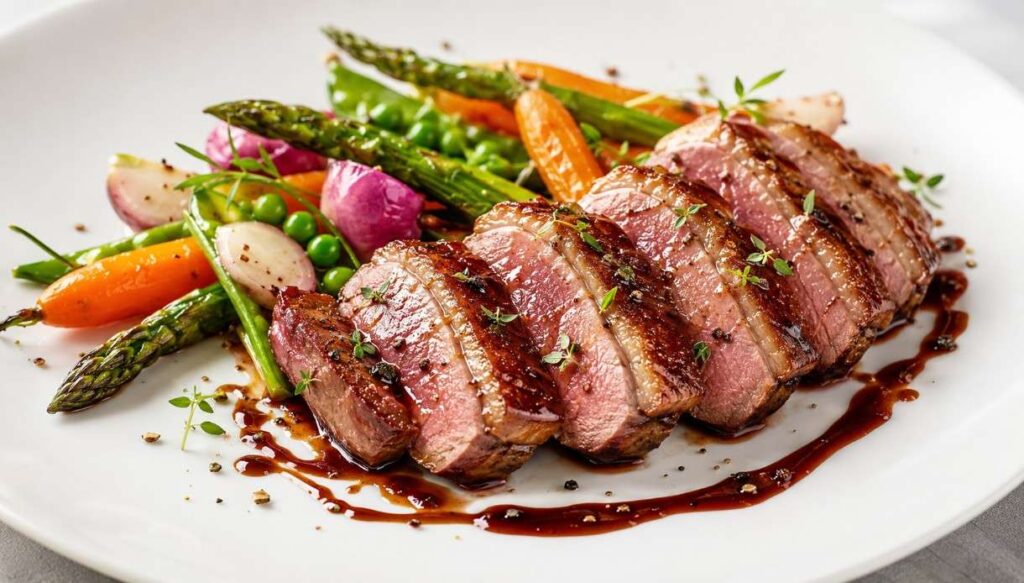
As the days grow longer and the markets fill with delicate, fresh colors, one of the most beautiful seasons begins in the kitchen: spring. It is a time of lightness, clarity, and a return to fresh, unadulterated flavors. Hardly any dish brings this mood to the plate as elegantly as a perfectly pan-seared Magret de canard, accompanied by crisp spring vegetables and a finely balanced balsamic reduction.
The combination is typical of modern French cuisine: a classic product — the duck breast — meets seasonal freshness and a sauce that artfully combines sweetness and acidity. The result is a dish that is both refined and accessible.
The Idea Behind the Dish
The Magret de canard traditionally comes from the Barbarie duck and is characterized by its strong aroma and the distinctive layer of fat that slowly melts during cooking, keeping the meat juicy. In spring, this intense meat is deliberately combined with light, green components: asparagus, young carrots, peas, or sugar snap peas bring freshness and texture.
The balsamic reduction acts as a unifying element. It highlights the natural sweetness of the vegetables and provides an elegant contrast to the savory duck breast.
Recipe: Magret de Canard with Spring Vegetables and Balsamic Reduction
Ingredients for 2 people
For the meat:
- 2 duck breast fillets (Magret de canard)
- Salt and freshly ground black pepper
For the spring vegetables:
- 1 bunch of green asparagus
- 100 g sugar snap peas
- 100 g young carrots
- 80 g peas (fresh or frozen)
- 1 shallot
- 1 tbsp butter
- 1 tsp olive oil
- Salt, pepper
- Optional: fresh herbs (e.g., tarragon or chervil)
For the balsamic reduction:
- 100 ml high-quality balsamic vinegar
- 1 tsp honey
- 1 small shallot, finely chopped
- 50 ml poultry stock (optional, for more depth)
Preparation
1. Preparing the Meat
Score the skin of the duck breast in a diamond pattern without cutting into the meat. This ensures the fat renders evenly and the skin becomes crispy. Lightly salt the duck breasts.
2. Cooking the Duck Breast
Place the duck breasts skin-side down in a cold pan and slowly heat over medium heat. This allows the fat to render gently. Cook for about 6–8 minutes until the skin is golden brown and crispy. Drain excess fat if needed.
Then turn the duck breasts and cook for another 3–4 minutes on the meat side. Afterwards, let them rest in a preheated oven at 160 °C (320 °F) for about 5–7 minutes depending on desired doneness. Be sure to rest for 5 minutes before serving.
3. Balsamic Reduction
Sauté the chopped shallot in a small pot until translucent. Deglaze with balsamic vinegar, add honey, and optionally stir in the poultry stock. Simmer over medium heat until a syrupy consistency forms. Season with salt and pepper.
4. Preparing the Spring Vegetables
Cut the asparagus into bite-sized pieces, halve the carrots depending on their size. Heat butter and olive oil in a pan. First sauté the carrots, then add asparagus and sugar snap peas. Finally, add the peas and cook everything until crisp-tender. Season with salt, pepper, and fresh herbs.
5. Plating
Slice the duck breast thinly. Arrange the spring vegetables on the plate, place the duck slices on or beside them, and drizzle with the balsamic reduction.
Culinary Nuances and Variations
This dish thrives on balance. To make it even more spring-like, you can work with lemon zest or a hint of orange peel in the vegetables. A few toasted hazelnuts also add interesting texture and depth.
For a lighter variation, the duck breast can be sliced thinner and combined more heavily with herbs. For those who prefer it richer, finish the reduction with a small piece of butter — this makes it shinier and rounder in flavor.
A Plate Like a Spring Day
This dish is more than just a meal. It is a transition — from the heaviness of winter to the lightness of spring. The crispy, aromatic duck breast meets lively, fresh vegetable notes and is brought together by a finely balanced sauce.