
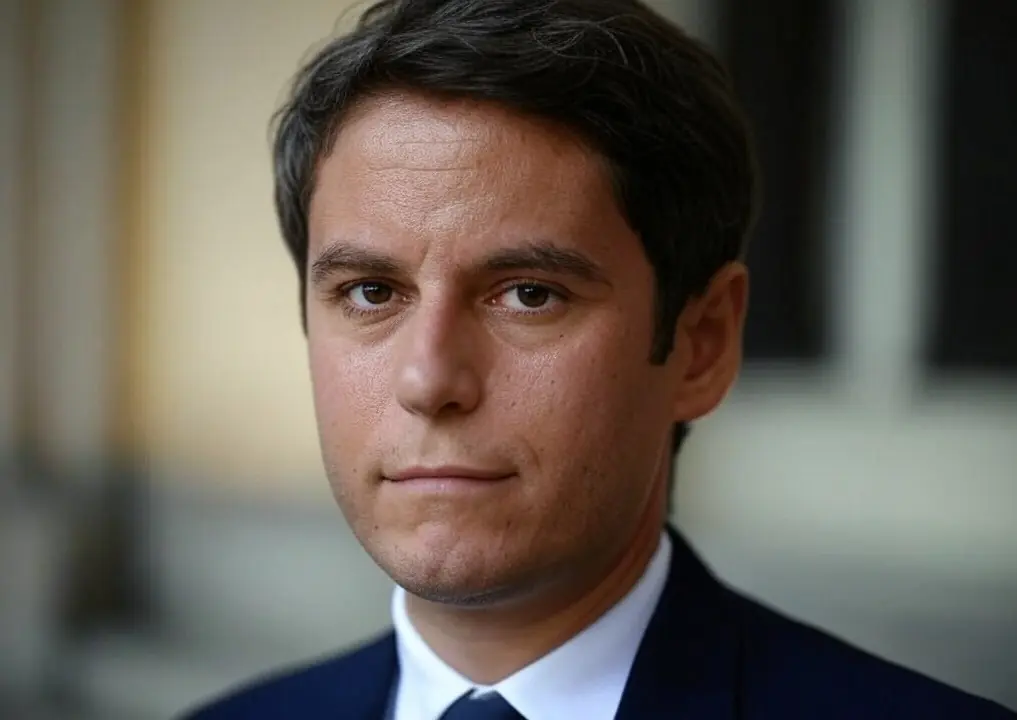
The peace protocol concluded this week in the Middle East is being regarded by many Western governments as an important step toward de-escalation. Gabriel Attal, chairman of the French presidential party Renaissance, also welcomed the agreement. At the same time, he made clear that the diplomatic breakthrough should not be confused with a permanent solution to the numerous conflicts in the region. His assessment is deliberately cautious: The agreement is above all a form of relief because it reduces the risk of an immediate military escalation.
A Diplomatic Success with Limited Scope
The new protocol is seen as an attempt to curb tensions between the United States, Iran, and several regional actors. Mechanisms for conflict prevention, communication channels for crisis management, and measures to resume important trade and transport connections are foreseen. In particular, securing strategic trade routes is regarded by international observers as economically significant.
Against the backdrop of recent escalations in the region, the agreement holds considerable political symbolic power. In recent months, military incidents, mutual threats, and the risk of expanding existing conflicts had raised concerns about a larger regional war. The fact that this scenario has become less likely for the time being is seen by many governments as a success of diplomacy.
The Unresolved Causes of the Crisis
Gabriel Attal’s cautious response, however, points to a fundamental problem in Middle East policy. Numerous causes of conflict continue to persist. The strategic rivalry between regional powers, the role of Iran, the political and economic crisis in Lebanon, the activities of armed groups, and unresolved security issues continue to shape the regional balance of power unchanged.
From this perspective, a diplomatic agreement can reduce tensions but cannot eliminate the structural causes of instability. Historically, many agreements in the Middle East have led to short-term calming but have failed to resolve the underlying conflicts of interest permanently.
It is precisely for this reason that Attal warns against interpreting the current development as a decisive turning point. The political landscape of the region remains marked by deep mistrust. As long as central contentious issues remain unresolved, new tensions can arise at any time.
Europe’s Cautious Optimism
Attal is not alone in his assessment. Many European government representatives also welcome the agreement reached but attach a clear cautionary note to their approval. The diplomatic initiative is seen as a necessary step but not as the conclusion of a peace process.
This attitude reflects an experience that European diplomats have encountered repeatedly over the past decades. Ceasefires, transitional agreements, and political understandings have often interrupted phases of violence but frequently proved fragile. Even minor violations of agreed rules or shifts in regional power often led to new escalations.
In addition, the current conflicts are closely interconnected. Developments in one country can quickly affect neighboring states. As a result, the stability of the entire region depends on a multitude of political and military factors.
Between Hope and Reality
Gabriel Attal’s choice of words illustrates the balancing act between optimism and realism. On the one hand, the agreement is unquestionably suited to reducing the immediate danger of a larger military clash. On the other hand, there is currently no guarantee that the actors involved will permanently fulfill their obligations or that political opposing positions can be overcome in the long term.
Thus, the present moment can be understood as a diplomatic breather. It provides the states involved with time to build trust and prepare further negotiations. Whether a sustainable peace arrangement will emerge from this, however, remains to be seen in the future.
For Europe and especially for France, the development remains of considerable importance. Any stabilization of the Middle East directly affects energy supply, trade, migration, and security issues. Accordingly, the European capitals will closely monitor whether the current easing indeed leads to a lasting political process or whether the region once again proves to be a stage for unresolved conflicts.
P.T.