
The heat hung heavy over the hills of Haute-Corse when suddenly on Thursday smoke clouds rose above the community of Castello-di-Rostino. Within a short time, this developed into an extensive vegetation fire that affected large parts of the surrounding maquis and posed a challenging task for the emergency services.
Between 60 and 64 hectares of brushland and vegetation fell victim to the flames. That corresponds to an area of almost ninety football fields. In the rugged landscape of the Corsican interior, fires often spread rapidly – especially when high temperatures and dry vegetation come together.
Exactly these conditions prevailed on Thursday. Temperatures climbed well above 35 degrees Celsius. Under such circumstances, even a small spark is enough to cause a fire to start. According to initial findings, the cause could be related to vegetation maintenance work. However, investigations are still ongoing.
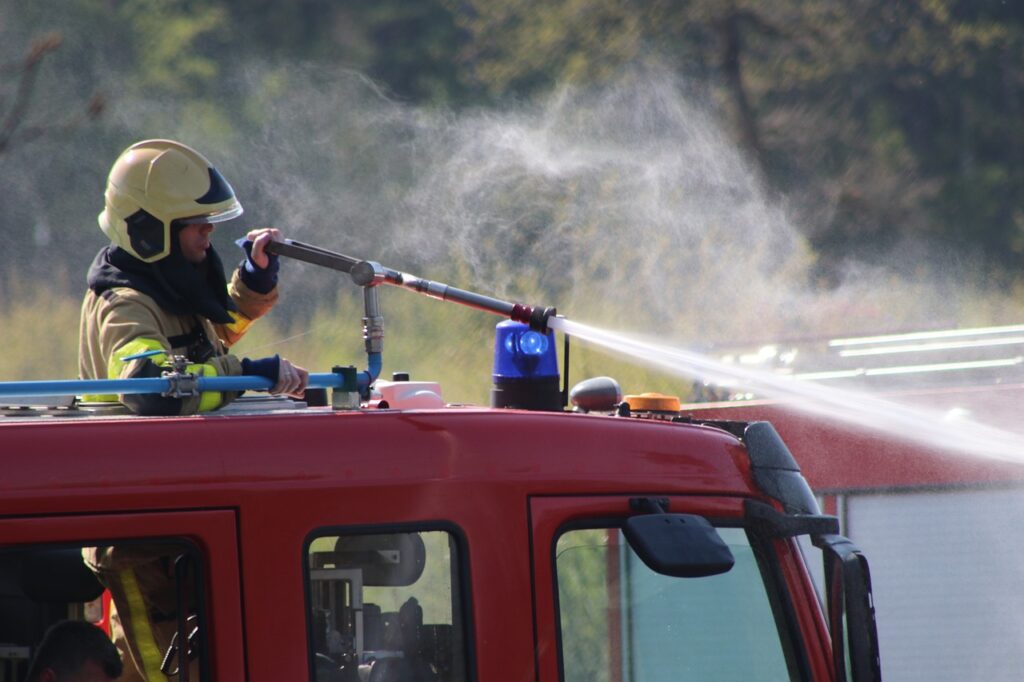
The fire brigade responded with a large deployment. Around 60 emergency personnel fought the flames on the ground. They received support from the air. Several water-dropping aircraft, including Canadair machines specialized in forest fires as well as Dash planes, dropped large amounts of water over the affected areas. Especially in Corsica, where many regions are difficult to access, such aircraft are considered indispensable tools in the fight against fire.
Despite the scale of the fire, there was also good news. Residential houses were never in immediate danger. Additionally, authorities reported no injuries. This likely brought considerable relief to many residents of the region.
The fire, however, did not remain without impact. The departmental road D105 had to be temporarily closed to allow emergency services to work safely. Furthermore, there was a power outage in the neighboring community of Canavaggia. Such side effects show how even remote vegetation fires can strongly affect daily life.
In the evening, the situation finally eased. The fire department declared the fire under control. However, no one wanted to speak of an all-clear. Too often, smoldering hotspots have reignited after hours or even days. Therefore, numerous forces remained on site to monitor the affected area and prevent any flare-ups.
The fire at Castello-di-Rostino once again illustrates the challenges of the summer in the Mediterranean region. Rising temperatures, dry soils, and dense vegetation transform wide landscapes into a sensitive network that reacts to any carelessness. For the people of Corsica, this danger has become almost as much a part of summer as the chirping of cicadas – but it certainly does not become routine.
Every successfully contained fire is ultimately a race against time. This time it ended well.