
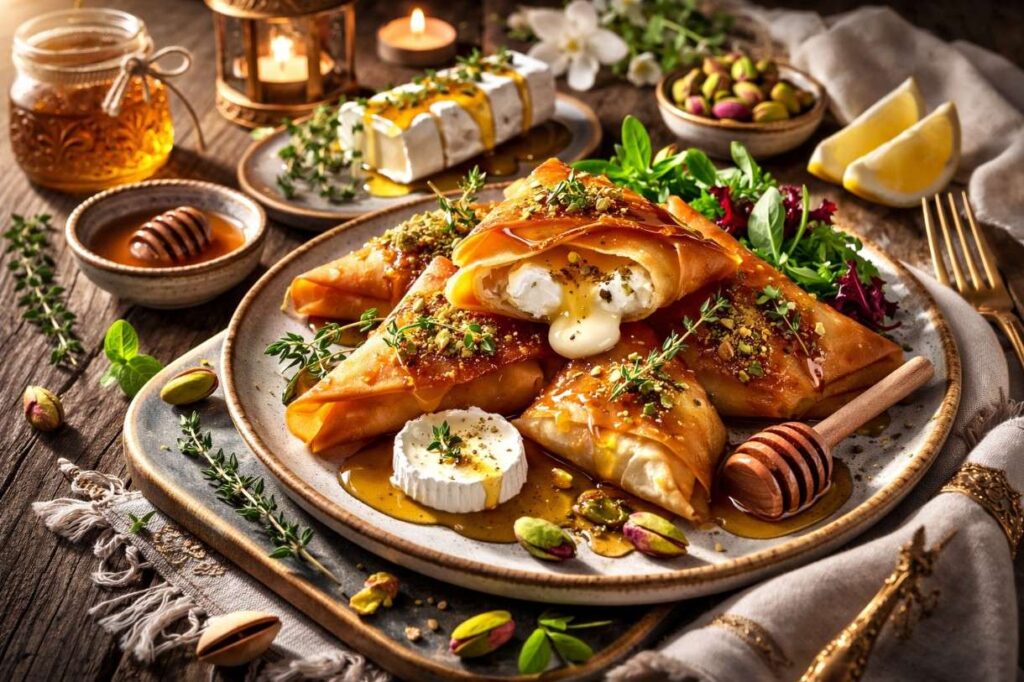
When Ramadan fills the evenings with warmth, community, and reflection, the Iftar table becomes a place where tradition meets creativity. Under the motto „Ramadan in French cuisine“, North African influences merge with French refinement – a culinary liaison that feels both natural and elegant.
A particularly successful example of this fusion is Brik au fromage de chèvre et miel: crispy, creamy, sweet and savory, and wonderfully aromatic. The Brik – traditionally filled with egg or tuna in North Africa – here receives a French interpretation with goat cheese and honey. The result is a delicate, light Iftar dish that shines both as a starter and as part of a larger mezze selection.
The Idea Behind the Dish
The Brik originally comes from Tunisian cuisine, where it is often served during Ramadan – golden brown fried, crispy on the outside, soft on the inside.
In French cuisine, goat cheese – especially from regions like the Loire or Provence – has a fixed place in starters and salads. The combination with honey is classic and popular there.
This fusion combines:
- the crispiness of the North African Brik,
- the creamy elegance of French goat cheese,
- and the symbolic sweetness of honey, perfectly suited to Iftar.
The dish is light enough after a long day of fasting and yet rich in flavor – a balancing act that every good Ramadan kitchen should master.
Recipe: Brik with goat cheese and honey
Ingredients (for 4 servings, approx. 8 Briks)
- 8 Brik or phyllo dough sheets
- 200 g fresh goat cheese (or mild soft goat cheese)
- 2–3 tbsp liquid honey
- 1 tbsp chopped fresh thyme (optional rosemary)
- 1 small handful chopped walnuts (optional, for texture)
- 1 egg (for sealing)
- Salt & freshly ground black pepper
- Oil for frying (e.g. sunflower oil)
Preparation
1. Prepare the filling
Put the goat cheese into a bowl and stir creamy with a fork.
Fold in honey, thyme, and optionally walnuts.
Season with a pinch of salt and freshly ground pepper.
The mixture should be creamy but not too liquid.
2. Shape the Brik
Place one Brik sheet on a clean work surface.
Put about 1–2 tablespoons of filling on the lower half.
Lightly brush the edges with beaten egg.
Fold into a half-moon or triangle and press the edges firmly.
Tip: Work quickly, as the dough dries out fast.
3. Frying
Heat about 1–2 cm oil in a pan.
Fry the Briks in batches for 1–2 minutes per side until golden brown.
Let drain on kitchen paper.
4. Serving
Serve warm, optionally drizzle with a fine thread of honey and sprinkle with some fresh thyme.
Flavor profile
At the first bite, the paper-thin shell cracks.
Then follows the creamy, slightly tangy filling of goat cheese.
The honey brings a warm, floral sweetness, while herbs add a subtle Mediterranean note.
The play of:
- crispy
- creamy
- sweet
- salty
makes this dish particularly exciting – ideal to stylishly open the Iftar.
Variations for the Ramadan Table
- With dates: Finely chop dates and mix into the filling.
- With orange zest: For a fresh, slightly oriental note.
- Baked instead of fried: Bake at 200 °C for about 12–15 minutes – lighter and less greasy.
- With lavender honey: For a particularly Provençal accent.
Serving Idea for a French-Inspired Iftar Menu
- Starter: Brik au fromage de chèvre et miel
- Main Course: Tajine with French herbs or halal Boeuf bourguignon
- Dessert: Crème brûlée with orange blossom water
This creates a harmonious menu that respects tradition while opening new worlds of flavor.
Brik au fromage de chèvre et miel is more than a starter – it is a culinary bridge between cultures.
And that is exactly what makes the Ramadan table so special: community, diversity, and a touch of elegance.