
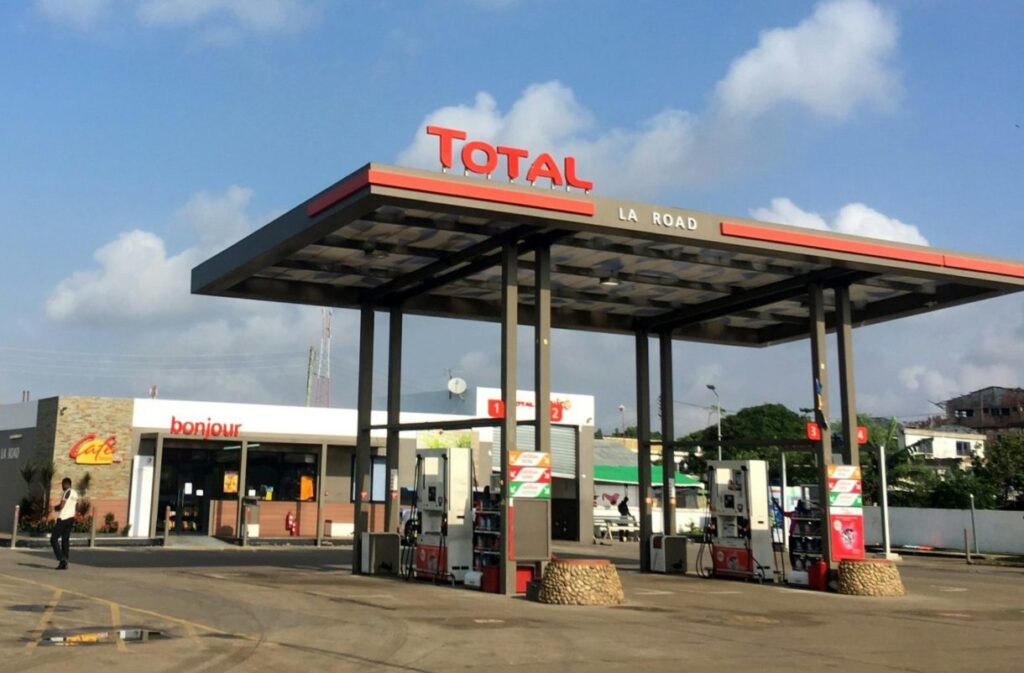
With the request for a possible nationalization of TotalEnergies, Manuel Bompard, coordinator of La France insoumise (LFI), has revived an old question of principle in economic policy: what role should the state play in strategic industries? From the perspective of the radical left, the answer is clear. Energy is not a common market commodity, but a central component of national sovereignty, and therefore should not be exclusively in the hands of private companies.
The reason for the discussion was the high profits of the French oil and energy giant and its role in climate policy. Bompard argues that public control over TotalEnergies would not only be ecologically sensible, but could also generate significant revenue for the state in the long term. The logic behind this is simple: if a company makes multimillion-dollar profits and distributes high dividends, that income could in the future go directly into public coffers.
The request is part of a long tradition in French economic policy. Already after World War II, France strongly favored industries under state control. Large parts of the energy, transport, and financial sectors were under public control for a time. Also in the 1980s, the socialist government of François Mitterrand pushed for extensive nationalizations, before privatizations later returned.
For the LFI, today it is less about classic industrial policy and more about managing ecological transformation. A nationalized TotalEnergies could, according to the party’s ideas, concentrate investments more on renewable energies, limit the expansion of fossil projects, and make price developments politically more controllable. Behind this is the conviction that the market alone would not be able to organize the energy transition quickly enough.
The economic reality makes such a project extremely complicated. TotalEnergies is one of the most valuable companies in Europe. A full acquisition by the state would probably cost, depending on the stock market valuation, well over one hundred billion euros. Even a majority stake would heavily strain France’s already tight budgetary situation.
Furthermore, such a step would not only be financially risky but also politically and legally delicate. International investors could withdraw their capital, shareholders would demand compensation, and French public debt would likely continue to grow. There is also the practical question of whether a state can really manage an energy group operating globally and with activities in dozens of countries efficiently.
However, it is noted that the debate about stronger state intervention in strategic sectors is gaining importance across Europe. The energy crisis caused by the war in Ukraine has prompted many governments to intervene more in the markets. Recently, Germany and Great Britain have temporarily intervened in energy companies to ensure supply security and price stability. The idea that the state should once again play a stronger role in economic direction in times of crisis is no longer considered a purely ideological and marginal position.
In France, however, a full nationalization of TotalEnergies remains unlikely for now. Neither the political center around Emmanuel Macron, nor the conservative forces, nor much of the social democrats currently support a project of such magnitude. The debate, however, shows how much the political-energy and economic fault lines in Europe are being reshaped under the pressure of climate change, geopolitical crises, and growing social insecurity.