
Back

Nachrichten.fr · 05/18/2026

Darmanin in Algiers: France Wrestles Over Its Policy Toward Algeria

On the day of France’s Justice Minister Gérald Darmanin’s visit to Algeria, the domestic political debate in Paris over how to deal with the North African neighbor is intensifying. While President Emmanuel Macron’s government is pursuing a cautious rapprochement, the Rassemblement National (RN) is calling for a fundamental change of course – away from diplomatic restraint and toward a policy of toughness and clear counter-demands.

The trigger for the new controversy are remarks by RN spokesperson Laurent Jacobelli, who sharply attacked France’s Algeria policy. France has pursued for years a “diplomacy of bowing,” he declared on public radio. Macron’s strategy, he said, produced no tangible results. Every phase of rapprochement had ultimately been followed by new diplomatic tensions.

A relationship full of historical burdens

The relations between France and Algeria have been among the most complicated in France’s foreign-policy environment for decades. The Algerian War from 1954 to 1962 continues to shape the political and social relationship between the two countries. Questions of memory culture, migration, security policy and economic cooperation are constantly overlapping.

Under President Emmanuel Macron there were repeated attempts at historical reconciliation. Macron had early on declared that colonialism was a “crime against humanity” – a statement that was positively received in Algeria, but provoked sharp criticism in parts of France. Nevertheless, even his presidency did not succeed in creating a stable foundation for bilateral relations.

Tensions repeatedly escalate over visa issues, deportations, security cooperation or historical statements by French politicians. Added to this is the domestic political dimension: several million people of Algerian origin live in France, so any crisis between Paris and Algiers has an immediate societal resonance.

The RN demands a break with Macron’s line

Laurent Jacobelli used Darmanin’s trip to launch a frontal attack on the government. The RN accuses Macron of being too lenient toward President Abdelmadjid Tebboune. According to the right-wing party, France must assert its own interests much more offensively.

At the center of the demands are two main points: first, the RN calls for a more consistent readmission of Algerian nationals who have been convicted in France or are to be expelled. Second, the party wants stronger pressure on Algiers in the case of the French journalist Christophe Gleizes, who is currently imprisoned in Algeria.

The RN deliberately links these issues with the general migration debate. For years the party has argued that France must use its diplomatic and economic levers more forcefully to secure cooperation from countries of origin on returns. Algeria is considered a particularly difficult partner in this respect, as readmission procedures regularly stall or become politicized.

By using the term “Aplaventrisme” — roughly meaning submissiveness — the RN at the same time seeks to portray Macron as a weak head of state who does not defend France’s interests energetically enough. This strategy fits the party’s broader foreign-policy positioning, which emphasizes national sovereignty and demonstrative toughness.

Darmanin’s delicate mission in Algiers

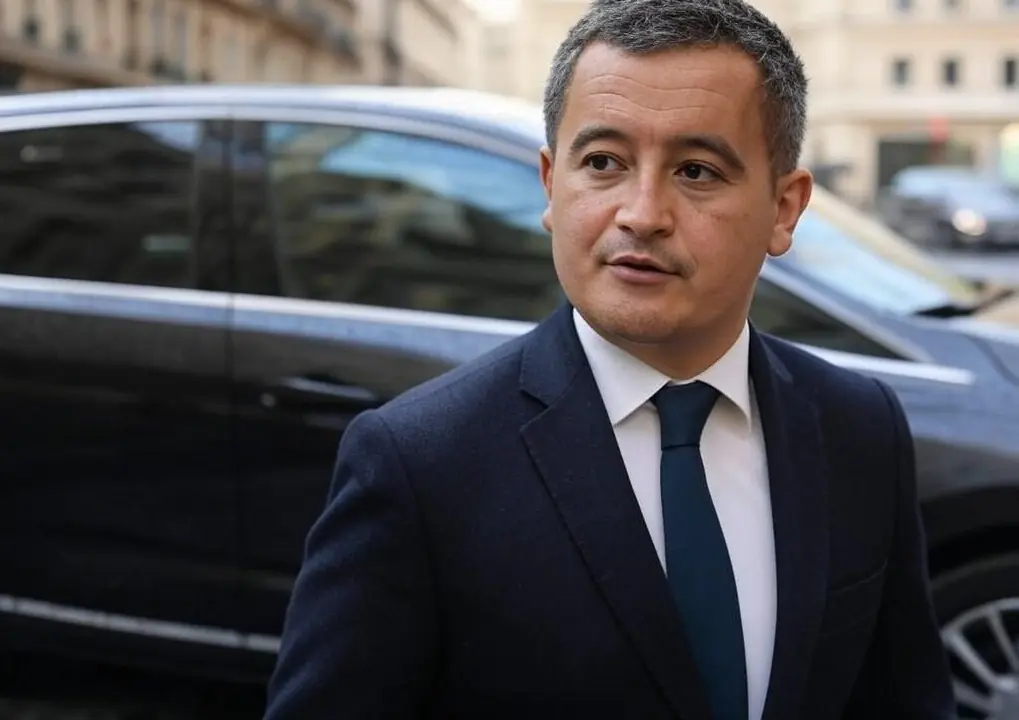
Officially, Gérald Darmanin’s trip aims to restore judicial cooperation between the two states. In recent months diplomatic relations had deteriorated significantly. Several political controversies and mutual accusations had heavily strained cooperation.

Darmanin is now trying, at least at a technical level, to reopen channels of communication. In the fields of criminal prosecution and legal cooperation the two countries depend on each other. France needs Algeria’s cooperation, for example, on extraditions and readmissions; Algeria, for its part, is interested in economic stability and security-related exchanges.

However, the minister’s mission is politically highly sensitive. On the one hand, Paris must not create the domestic impression that it is yielding to Algiers. On the other hand, a sustained deterioration of relations would be problematic for both states.

Algeria is strategically significant for France: in terms of energy, migration and security policy. Especially since Russia’s war of aggression against Ukraine, Algeria has gained additional geopolitical weight as a gas supplier. Europe is stepping up efforts to secure alternative energy partnerships in the Mediterranean region.

French domestic politics harden the tone

The debate about Algeria has long become part of the domestic power struggle in France. The RN uses the issue to put pressure on the government on both security and migration policy. It meets a social climate in which questions of national identity and state authority are increasingly discussed emotionally.

The government, for its part, is trying to perform a balancing act. Representatives of the president’s camp warn against defining the relationship with Algeria solely through domestic symbolism. A permanent diplomatic rupture would not only jeopardize economic interests but could also massively hinder cooperation on migration and counterterrorism.

Left-wing parties also largely reject the RN’s demands for a confrontational course. They argue that historical sensitivity and pragmatic diplomacy are necessary to build long-term stable relations.

At the same time, impatience is growing even within the political center over what is often seen from the French perspective as difficult cooperation with Algeria. French authorities have for years complained about a lack of cooperation, particularly regarding the return of people obliged to leave.

Between pragmatism and power politics

Gérald Darmanin’s trip exemplifies how complex Franco-Algerian relations have become. Paris faces a strategic dilemma: a tougher line might be popular domestically but carries significant diplomatic risks. A policy of dialogue, in turn, is increasingly interpreted by the opposition as a sign of weakness.

Moreover, Algeria too uses the tensions for political purposes. President Tebboune likes to present himself domestically as a defender of national sovereignty against the former colonial power. Every confrontation with France therefore also has symbolic value for Algerian domestic politics.

Whether Darmanin’s visit will actually lead to a relaxation remains open. It is more likely that there will be a cautious stabilization of specific areas of cooperation. The fundamental conflicts – migration, historical memory and questions of political influence – are likely to remain.

Thus, Algeria policy remains a sensitive field for France in which foreign policy, history and domestic power struggles are inextricably linked.

P.T.