
The great wave of inflation in 2022 and 2023 has indeed calmed down in France. However, economic uncertainty persists—and it increasingly shapes the everyday lives of many people. Prices are rising more slowly today than two years ago, yet numerous households still perceive their financial situation as strained. Energy, food, insurance, and housing costs permanently burden budgets. For many French people, the feeling has solidified that economic stability is no longer a given.
In this climate, a quiet parallel economy of mutual aid is growing. It does not prominently appear in any national economic statistics but increasingly shapes the country’s social fabric: neighborhood help, joint shopping, exchange markets, carpools, food aid, online fundraising campaigns, or local solidarity networks are experiencing remarkable growth.
This development reveals much about the state of French society—and about the deeper fears of a population beginning to adapt to a world of permanent crises.
The Return of Everyday Solidarity
Solidarity has always been part of French society. What is new, however, is who today is in need of support. It no longer exclusively concerns socially disadvantaged groups or the unemployed. Employees, students, retirees with small pensions, and parts of the lower middle class increasingly rely on informal support networks.
In daily life, this manifests in many small gestures. Neighbors share the commute to work, families exchange children’s clothing, or organize communal meals. Furniture changes owners before moves, tools are shared, repairs are undertaken reciprocally. In some regions, residents organize bulk orders for heating material or food to reduce costs.
Above all, the secondhand economy is growing significantly. Flea markets, online platforms for used goods, and local repair workshops gain importance. What used to be frequently seen as an expression of financial hardship is today increasingly socially accepted—sometimes even consciously understood as a countermodel to a consumption-oriented economy.
The Fear of Social Decline
Behind this development is a deeper insecurity. Many French people have experienced how quickly economic crises can emerge in recent years. The pandemic, the war in Ukraine, the energy crisis, geopolitical tensions, and increasing trade conflicts have shaken trust in long-term stability.
Even where macroeconomic indicators improve, the memory of crises remains present. Numerous households now permanently reckon with possible financial setbacks. The thought of suddenly slipping into precarious conditions oneself has reached the social middle class.
Younger generations are particularly affected. High rents, insecure employment, and rising living costs make it difficult for many young adults to build financial security. In the large cities of France, even academics with permanent contracts are often forced to rely on family support or significantly reduce consumption.
Thus, the family regains a central economic function. Parents finance longer education periods, help with rent payments, or continue to offer living space to adult children. Grandparents often support several generations simultaneously. These private safety nets in many cases prevent social downfall—but at the same time, they also increase inequality between those with stable family support and those without such resources.
Associations and Aid Organizations Under Pressure
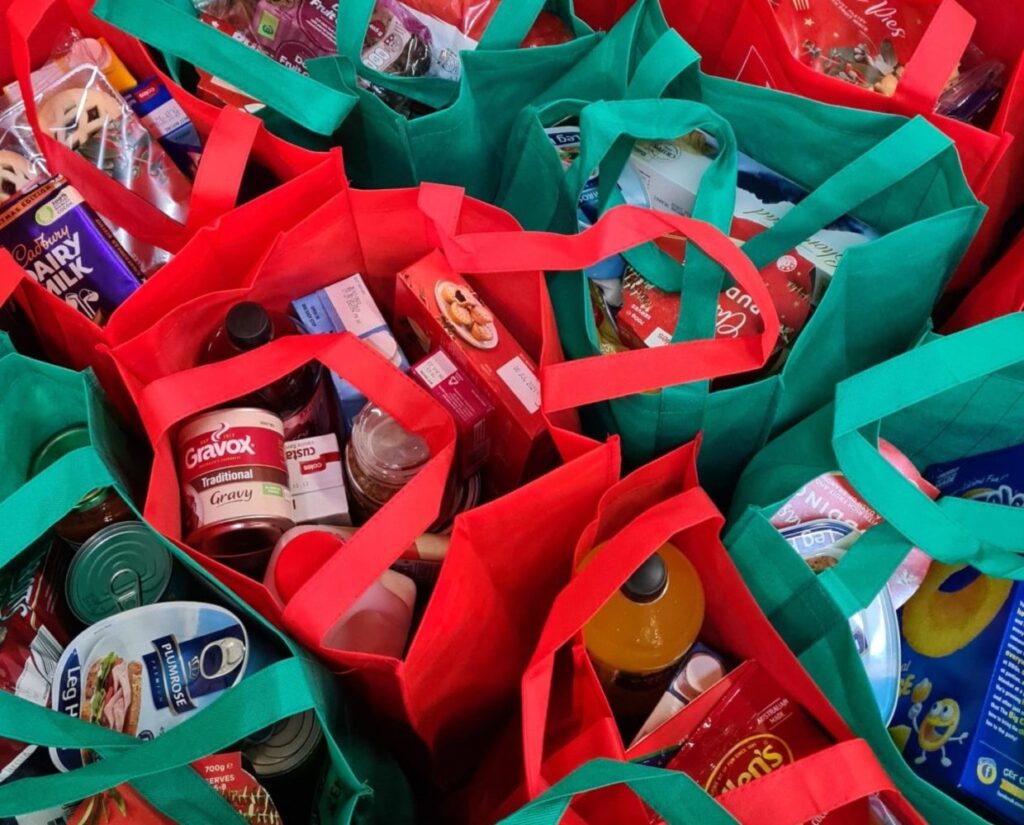
At the same time, classic aid structures are increasingly reaching their limits. Charitable organizations, food aid, and local social clubs have seen rising demand for years. Food distributions for students especially have increased markedly in university towns.
Many of these organizations themselves struggle with financial problems. Rising operating costs, decreasing public subsidies, and increasing bureaucratic effort complicate their work. Numerous facilities operate only thanks to volunteer commitment, which after several years of crises is reaching capacity limits in many places.
This represents a fundamental paradox of the current situation: precisely in a phase of growing social insecurity, local solidarity structures are expected to do more, while their own resources become scarcer.
Many citizens also perceive state support as slow or insufficient. As a result, social security partly shifts back into informal networks of personal relationships.
A Cultural Response to the Crisis Society
The growing mutual help is not only an expression of economic weakness. It also points to a cultural change. In a globalized and perceived unstable world, many people are searching increasingly for local anchoring and concrete social connections.
This development also appears in other areas: regional products, community projects, repair instead of throwing away, or consciously reduced consumption are gaining importance. For some French people, this is long more than just a savings measure. It is an attempt to regain control over their own daily life.
Everyday solidarity not only creates material relief. It also generates belonging and social security in a time when many traditional certainties have become fragile.
Of course, mutual aid neither replaces adequate wages nor affordable housing or functioning social policies. Informal solidarity cannot solve structural problems in the long term. However, it shows that social cohesion can persist even in economically strained times.
Perhaps therein lies one of the most important developments of these years: in an increasingly nervous world, many French people are rediscovering that security does not depend solely on the state or the market—but often first on the immediate environment, on neighbors, on friends, and on the ability of a society to catch each other.