
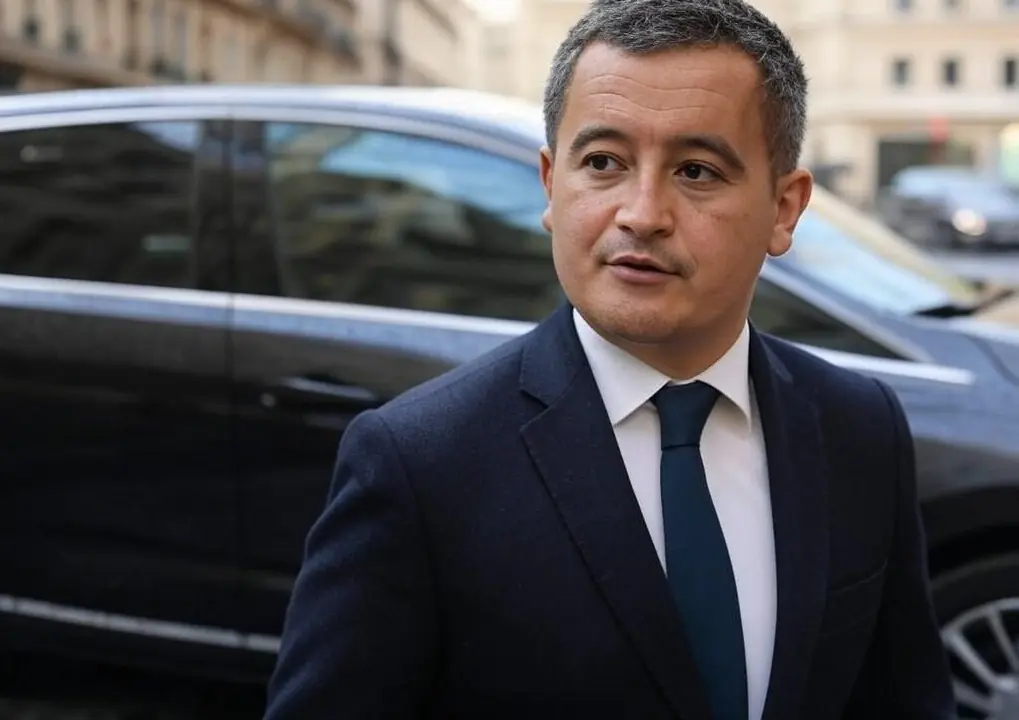
On the day French Justice Minister Gérald Darmanin visited Algeria, the domestic political debate in Paris about how to deal with this North African neighbor became increasingly intense. President Emmanuel Macron’s government advocates a cautious rapprochement, while the Rassemblement National (RN) calls for a fundamental change in course—from diplomatic restraint to a tougher policy with clear confrontational demands.
The trigger for this new controversy was the statement by RN spokesman Laurent Jacobelli, who launched a fierce attack on France’s Algeria policy. He stated on public broadcasting that France has pursued a “diplomacy of bowing” for years. He believes Macron’s strategy has not produced tangible results. Every rapprochement phase is ultimately replaced by new diplomatic tensions.
A Relationship Laden with Historical Burdens
The relationship between France and Algeria has been one of the most complex in the French diplomatic environment for decades. The Algerian War from 1954 to 1962 still profoundly influences the political and social relations between the two countries today. Issues of memory culture, immigration, security policy, and economic cooperation are continuously intertwined.
During Emmanuel Macron’s tenure, there have been multiple attempts to achieve historical reconciliation. Macron previously stated that colonialism was a “crime against humanity”—a statement that was positively received in Algeria but triggered strong criticism in parts of the French public. Nevertheless, his term has not succeeded in laying a stable foundation for bilateral relations.
Visa issues, expulsions, security cooperation, or historical statements by French politicians often lead to escalating tensions. Additionally, there is the domestic political aspect: millions of people in France have Algerian roots, so any crisis between Paris and Algiers directly resonates within society.
RN Calls for a Break with Macron’s Line
Laurent Jacobelli used Darmanin’s visit to launch a direct attack on the government. RN accuses Macron of being too weak in his stance toward President Abdelmadjid Tebboune. From the right-wing party’s perspective, France must defend its interests more assertively.
The party’s demands focus mainly on two points: first, RN calls for more decisive deportations of Algerian citizens convicted or who should be deported from France. Second, the party demands greater pressure be applied on Algiers over the detention of French journalist Christophe Gleizes in Algeria.
RN intends to link these issues to the broader immigration debate. The party has long advocated that France should use its diplomatic and economic leverage more forcefully to compel immigrant source countries to cooperate on deportation matters. Algeria is seen as a particularly difficult partner because deportation procedures are often stalled or politicized.
RN uses the term “Aplaventrisme”—meaning submission or obsequiousness—to describe Macron, attempting to depict him as a weak head of state who fails to strongly defend French interests. This strategy aligns with the party’s broader foreign policy positioning, emphasizing national sovereignty and an exemplary tough stance.
Darmanin’s Sensitive Mission in Algiers
The official statement is that Gérald Darmanin’s trip aims to restore cooperation between the two countries in the field of justice. Diplomatic relations have noticeably deteriorated in recent months. A number of political disputes and mutual accusations have severely impacted cooperation.
Darmanin is now trying to at least restart channels of dialogue on a technical level. The two countries depend on each other in criminal prosecution and judicial cooperation. France needs Algeria’s cooperation on issues such as extradition and repatriation, while Algeria is concerned with exchanges in economic stability and security fields.
However, the minister’s mission is politically highly sensitive. On the one hand, Paris cannot appear to be making concessions to Algiers in domestic politics; on the other hand, the continuous deterioration of bilateral relations will cause problems for both countries.
Algeria has important strategic significance for France: especially in the areas of energy, migration, and security policy. Since Russia launched the war against Ukraine, Algeria’s geopolitical weight as a natural gas supplier has increased further. Europe is strengthening efforts to find alternative energy partners in the Mediterranean region.
Domestic French Politics Make the Tone Sharper
The debate about Algeria has long since become part of France’s domestic political power struggle. The RN (National Rally) uses this issue to pressure the government on security and migration policies. In the current social atmosphere, questions of national identity and state authority are discussed with increasing emotional intensity.
The government is trying to maintain a balance on this issue. Representatives of the presidential camp warn against defining relations with Algeria solely by symbolic acts in domestic politics. Long-term diplomatic rupture would not only jeopardize economic interests but could also seriously hinder cooperation on migration and counterterrorism.
Left-wing parties generally reject the confrontational approach proposed by RN, believing that a historically sensitive and pragmatic diplomatic approach should be used to build long-term stable relations.
At the same time, even among political centrists, there is growing impatience with the perception that cooperation with Algeria is difficult. Especially regarding the repatriation of individuals with an obligation to leave, French authorities have complained for years about a lack of cooperation on the other side.
Between Pragmatism and Power Politics
Gérald Darmanin’s trip vividly illustrates the complexity of Franco-Algerian relations. Paris faces a strategic dilemma: a tougher stance might be more popular domestically but entails significant diplomatic risks. Meanwhile, a policy of dialogue is increasingly interpreted by the opposition as a sign of weakness.
Moreover, Algeria also politically exploits these tensions. President Abdelmadjid Tebboune likes to portray himself domestically as a defender of national sovereignty against the former colonial power. Therefore, every dispute with France also holds symbolic significance in Algeria’s internal politics.
Whether Darmanin’s visit can truly bring about reconciliation remains uncertain. The more likely initial outcomes are cautious stabilization in several areas of cooperation. Fundamental conflicts—immigration, historical memory, and political influence—may still persist.
Therefore, for France, Algeria policy remains a sensitive area where diplomacy, history, and domestic political power struggles are intertwined and inseparable.
P.T.