
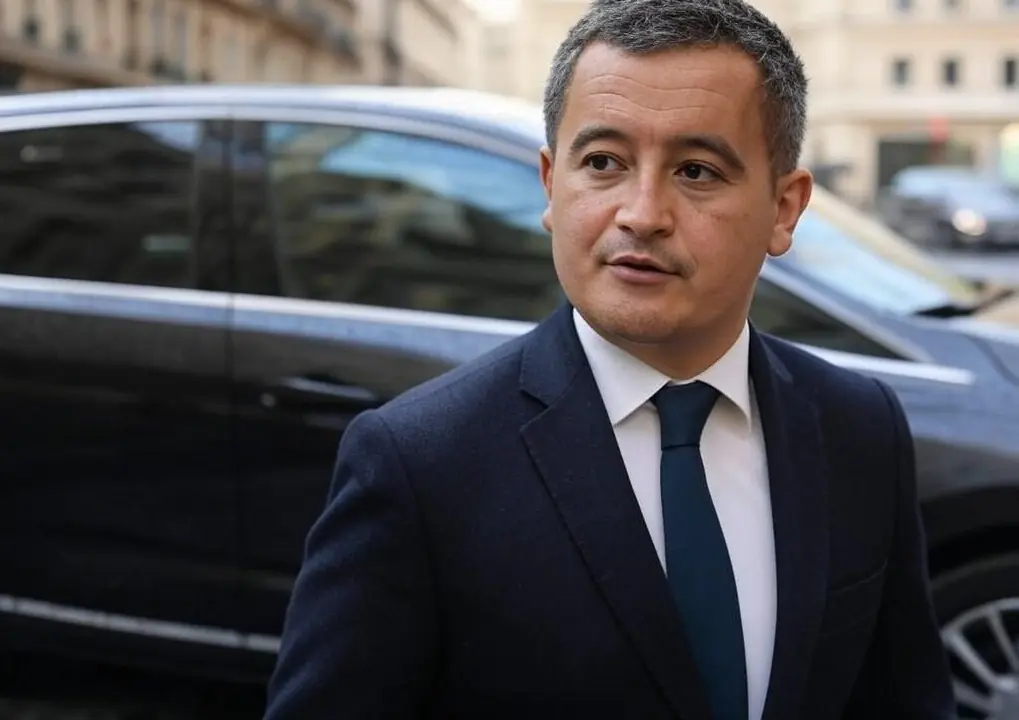
On the day of French Minister of Justice Gérald Darmanin’s visit to Algiers, domestic political debates in Paris surrounding relations with the North African neighbor are intensifying. While President Emmanuel Macron’s government aims for a cautious rapprochement, the Rassemblement National (RN) is demanding a shift away from diplomatic restraint towards a tough policy and clear counter-proposals.
The spark for the new controversy is the statement by RN spokesperson Laurent Jacobelli. He sharply criticized France’s Algeria policy on public broadcasting, claiming that France has pursued a “diplomacy of bowing” for years. He pointed out that Macron’s strategy has not yielded visible results, and every phase of reconciliation has eventually led to new diplomatic tensions.
A Relationship Laden with Historical Burdens
The relationship between France and Algeria is considered one of the most complex in France’s diplomatic environment for decades. The Algerian War, which lasted from 1954 to 1962, still shapes the political and social relations between the two countries today. Issues of collective memory, immigration, security cooperation, and economic collaboration remain persistently intertwined.
During Emmanuel Macron’s presidency, there were several attempts at historical reconciliation. Macron once described colonialism as a “crime against humanity,” a statement that was positively received in Algeria but sparked strong criticism in parts of France. Nevertheless, during his term, he failed to establish a stable foundation for relations between the two countries.
Tensions repeatedly escalate around issues such as visas, expulsions, security cooperation, or historical statements by French politicians. This is compounded by domestic political factors. Millions of people with Algerian roots live in France, so crises between Paris and Algeria have immediate social repercussions.
RN demands break with Macron’s policy
Laurent Jacobelli directly attacked the government on the occasion of Darmanin’s visit. The RN criticizes Macron for being excessively defensive in dealing with President Abdelmadjid Tebboune. From the perspective of the right-wing party, France should assert its national interests much more firmly.
The core of the demands involves two issues. First, the RN calls for more consistent repatriation measures for Algerian nationals who have been convicted or are subject to forced expulsion from France. Second, the party demands increased pressure on Algeria regarding the case of French journalist Christophe Gleizes, who is currently imprisoned in Algeria.
RN deliberately links these issues to a broader immigration debate. The party has argued for years that France should exert stronger diplomatic and economic leverage to secure repatriation cooperation from the countries of origin. Algeria is considered a particularly difficult partner, as repatriation procedures are often stalled or politicized.
RN also uses the term “Aplaventrisme” to portray Macron as a submissive leader. The term essentially means ‘submissiveness,’ and RN frames Macron as failing to defend France’s interests strongly enough. This strategy aligns with the party’s diplomatic stance emphasizing national sovereignty and a showy tough approach.
Darmanin’s sensitive mission to Algeria
Officially, Gérald Darmanin’s visit is intended to restore judicial cooperation between the two countries. In recent months, diplomatic relations have deteriorated significantly. Several political controversies and mutual accusations have placed heavy burdens on cooperation.
Darmanin is attempting to reopen dialogue channels, at least on a technical level. In matters of criminal case processing and legal cooperation, the two countries are mutually dependent. France requires Algeria’s cooperation on extradition and repatriation, while Algeria, on the other hand, is interested in economic stability and security exchanges.
However, the minister’s task is politically very sensitive. On the one hand, Paris must not give the impression of conceding to Algeria in domestic politics. On the other hand, if relations between the two countries continue to deteriorate, it could become a serious problem for both sides.
Algeria plays a strategically important role for France: in terms of energy, immigration, and security. Especially since Russia’s invasion of Ukraine, Algeria’s geopolitical importance has increased as a gas supplier. Europe is trying to strengthen alternative energy partnerships in the Mediterranean region.
The domestic political situation in France intensifies the tone
The debate over the Algerian issue has already become part of the power struggle within France. The RN is using this issue to pressure the government on both security and immigration policies. This process is intertwined with a social atmosphere in which questions about national identity and national authority are increasingly discussed emotionally.
The presidential side is trying to strike a balance. Representatives from the presidential camp warn that relations with Algeria should not be defined merely as a domestic political symbol. A long-term and permanent diplomatic rupture would not only damage economic interests but could also seriously hinder cooperation on immigration and counter-terrorism.
Left-wing parties also generally reject RN’s confrontational line demand. They argue that sensitivity to history and pragmatic diplomacy are necessary to build stable relations in the long term.
At the same time, within the political center, patience is also running thin regarding the often difficult aspects of cooperation with Algeria from the French perspective. In particular, the French authorities have complained for years about Algeria’s lack of cooperation concerning the return of deportees.
Between Pragmatism and Power Politics
Gérald Darmanin’s recent visit clearly shows how complicated the France-Algeria relationship has become. Paris faces a strategic dilemma: a hardline approach may be popular domestically but carries serious diplomatic risks. On the other hand, a policy of dialogue is increasingly interpreted by the opposition as a sign of weakness.
Moreover, Algeria also politically exploits this tension. President Abdelmadjid Tebboune wants to appeal domestically as a figure defending national sovereignty against the former colonial power. Therefore, every conflict with France also has symbolic value in Algerian domestic politics.
Whether Darmanin’s visit will actually lead to a relaxation of tensions is uncertain. Initially, a cautious stabilization in certain areas of cooperation seems more likely. However, fundamental conflicts—migration, historical memory, political influence—are expected to persist.
Therefore, Algerian policy remains a sensitive area for France, inseparably linked to diplomacy, history, and domestic political power struggles.
P.T.