
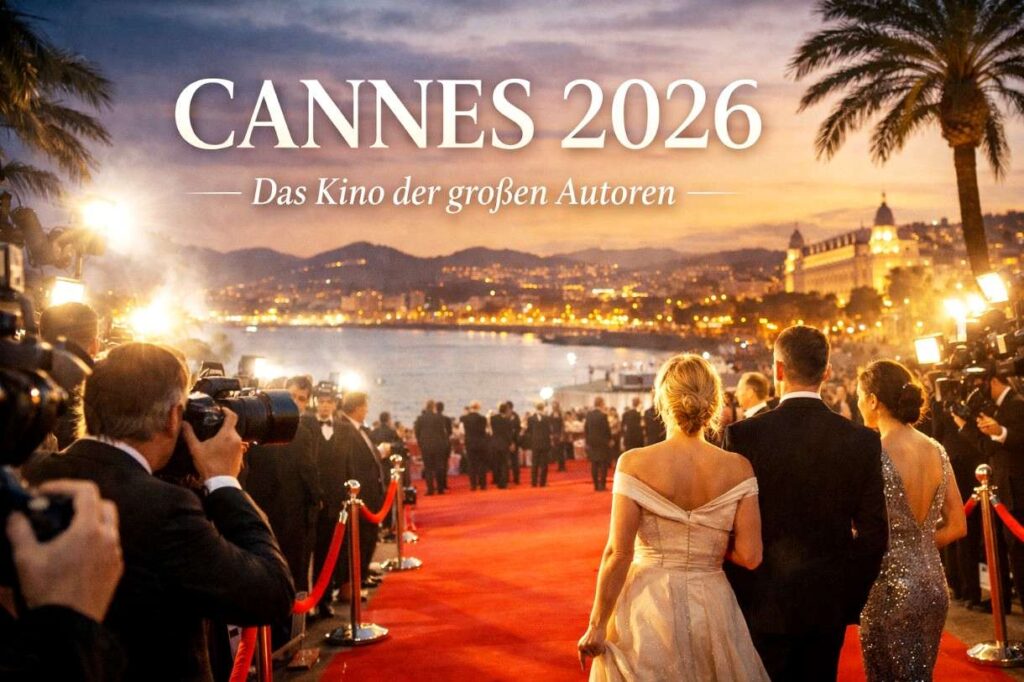
The Cannes Film Festival loves its grand stage. The Palme d’Or, flashing cameras, tailored tuxedos, and dresses more expensive than small cars — every year the Croisette presents itself as the center of the international film world. But behind all that glamour, there is a system that strictly controls who belongs in that space. And those who no longer belong.
Cannes celebrates stars. But Cannes can also throw them away like a hot potato.
This was especially evident in the case of Danish director Lars von Trier. During the 2011 Melancholia press conference, he caused a major media stir with strange and provocative remarks about Hitler and Nazism. The festival authorities responded firmly. Von Trier was declared a “persona non grata” — a historic measure. His film remained in the competition section, which precisely corresponds to the principle Cannes still upholds today: even if the person disappears from the spotlight, the work is often left untouched.
It is a delicate balancing act between artistic freedom and image management.
Even today, the festival operates in a similar way, but much more quietly. There is no longer a need for public expulsion. Invitations can be canceled, access passes restricted, or red carpet access denied. In this way, someone suddenly disappears without a trace.
For actors, influencers, and producers, this is tantamount to a social death sentence.
In 2025, French actor Théo Navarro-Moussi was the target. Several allegations of violence from former partners were raised against him. The film was officially invited, but he could not walk the red carpet. Cannes once again distinguished between the film and the individual. It was a coldly calculated, almost surgical handling.
The Croisette operates like a clockwork mechanism intertwined with fame, diplomacy, and control. Every movement on the red carpet appears choreographed. Selfies are officially prohibited. The use of smartphones during certain screenings can result in immediate expulsion. Even outfits regularly become topics of debate. Too provocative an appearance or strict rule violations soon hit the invisible boundaries of the festival.
And those boundaries do indeed exist.
Cannes no longer sees itself as just a cultural event. The festival is like a global brand that ruthlessly protects its image. No scandal is allowed to slip out of control. Especially in the age of social media, a single viral moment can headline worldwide.
But Cannes has always been political.
For example, in 1968, in the midst of social turmoil in France, the film festival was effectively paralyzed. Directors like François Truffaut and Jean-Luc Godard protested the situation at the time. Films disappeared from the competition and screenings were halted, and the atmosphere changed completely. It was a kind of earthquake in the film industry.
During the Cold War, Cannes was often caught between opposing sides. Some films were considered anti-colonialist, while other works had diplomatically sensitive themes. Governments applied pressure behind the scenes. Art and politics — at Cannes, they always walked together and sometimes had quite a tense relationship.
Today, conflicts revolve around different topics. Debates about sexual violence, political positions, and the Middle East conflict regularly cause tensions. Behind the scenes, some even mention unofficial blacklists. It is reminiscent of 1950s Hollywood, but has suddenly become a very real issue.
The appeal of Cannes lies precisely in this contradiction.
The film festival sells the ideal of unlimited artistic freedom. At the same time, it is one of the most strictly regulated places in the cultural world. Glamour and control dance closely together on the red carpet.
Perhaps that is exactly why the myth of Cannes remains irresistible to this day.
Author: C.H.