
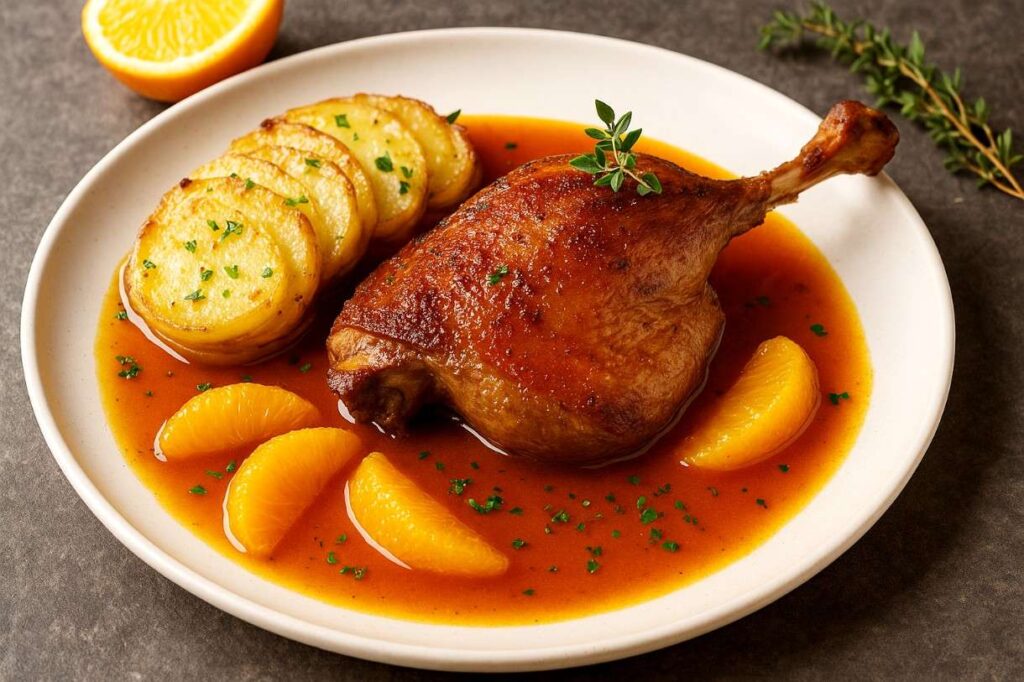
A modern French Christmas classic – crispy, aromatic, festive
Confit de Canard is a pride of southwestern French cuisine: tender duck leg, slowly cooked in its own fat, with skin that crisps seductively at the first bite. Combined with a bright, slightly tart orange jus, it becomes a Christmas dish that tastes traditional, elegant, and wonderfully modern.
Below you will find a detailed article explaining origin, preparation, and enjoyment – and of course a complete, fail-safe recipe.
⭐ The history of Confit de Canard
“Confit” means preserved – originally a method to preserve meat by slow cooking in fat. Ducks from the Gascogne were salted, seasoned, and cooked for many hours at low temperature. The result: tender meat that could last for weeks.
Today Confit de Canard is less a storage method and more a delicacy beloved for its texture and incredibly intense aroma. It is especially served in France for festive occasions like Christmas.
🍊 Why orange jus pairs so well
Duck meat pairs perfectly with fruity-acidic components. Orange jus provides:
- Freshness from citrus
- Elegant sweetness that balances the seasoning of the duck
- Subtle bitterness that gives the dish a modern touch
The light sauce forms a wonderful contrast to the rich duck.
🍽️ Recipe: Confit de Canard with Orange Jus
A recipe for 4 people
📝 Ingredients
For the duck legs (confit):
- 4 duck legs
- 2 tbsp coarse sea salt
- 4 sprigs thyme
- 2 sprigs rosemary
- 4 garlic cloves, crushed
- 1 tsp black peppercorns
- 500–700 g duck fat (or goose fat)
For the orange jus:
- 2 organic oranges (zest & juice)
- 1 shallot, finely chopped
- 1 tbsp honey
- 150 ml poultry stock
- 100 ml white wine or orange juice
- 1 tbsp butter (ice cold)
- Salt & pepper
Optional as a side:
- Potato gratin
- Crispy rosemary potatoes
- Parsnip purée
- Glazed root vegetables
🧑🍳 Step-by-step preparation
1. Prepare the legs
- Pat the duck legs dry.
- Rub with sea salt and place in a dish.
- Distribute herbs, garlic and peppercorns over them.
- Cover and let marinate in the refrigerator for 12 hours.
➡️ This step ensures the typical intense flavor and makes the meat tender.
2. Cook the confit
- Wipe the salt off the legs (do not rinse).
- Put the duck fat in a cast-iron pot and slowly melt it.
- Place the legs so they are completely covered.
- Cook in the oven at 110–120 °C for 2.5 to 3 hours.
➡️ The legs are done when the meat easily comes away from the bone.
3. Crisp the skin
- Carefully lift the legs out of the fat.
- In a hot pan, sear skin-side down for 3–5 minutes until the skin is golden brown and crispy.
🍊 Prepare the orange jus
1. Build the base
- Sauté shallot in a little fat until translucent.
- Add honey and let it caramelize lightly.
- Deglaze with white wine and reduce by half.
2. Add orange notes
- Add orange juice and zest.
- Add poultry stock.
- Reduce everything for 10–15 minutes until a syrupy consistency forms.
3. Finish
- Remove sauce from the heat.
- Whisk in ice-cold butter (mount the sauce).
- Season with salt and pepper.
➡️ The butter provides shine and a silky texture.
🎄 Plating & Serving
- Place the duck leg centrally on the plate.
- Coat with some orange jus, serve the remaining jus on the side.
- Suitable sides include creamy potatoes or winter vegetables.
- Garnish with orange zest or a sprig of thyme.
💡 Pro tip:
If you want to pre-produce the confit, you can simply store the legs in the fat – they keep for several weeks in the refrigerator.
🍷 Wine recommendation
- Red wine: Pinot Noir from Burgundy
- White wine: full-bodied Chardonnay
- Alternative: Crémant de Loire for a festive sparkle