
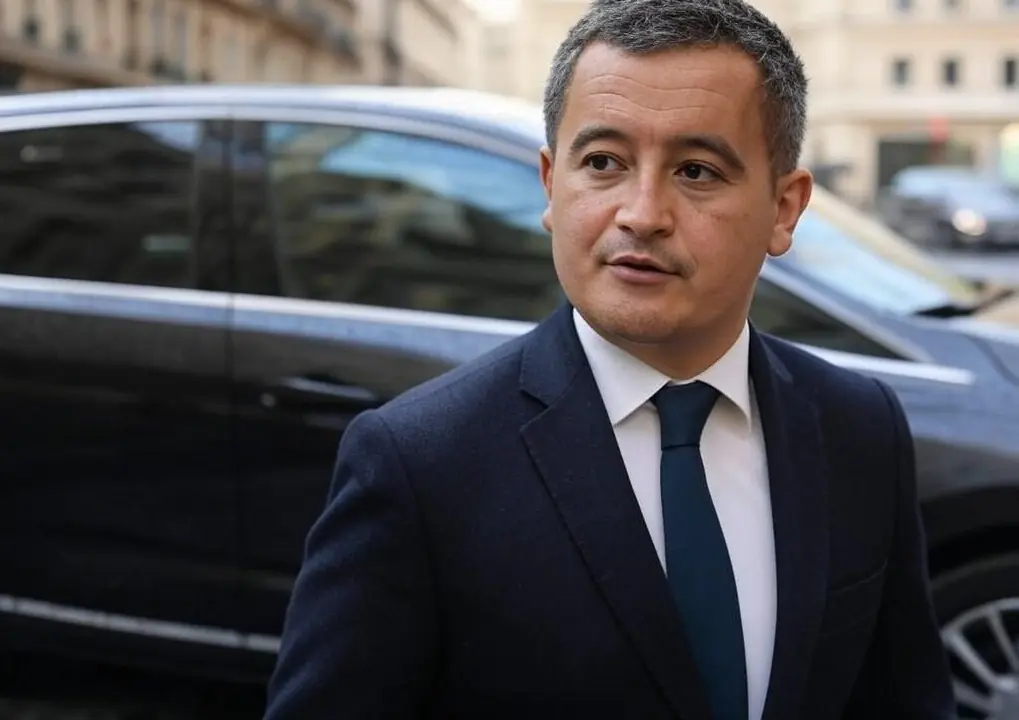
On the day of French Justice Minister Gérald Darmanin’s visit to Algeria, domestic political controversy in Paris is intensifying over the response to the neighboring North African country. While President Emmanuel Macron’s government aims for cautious relationship improvement, the National Rally (RN) is demanding a fundamental change in direction, advocating a shift from diplomatic caution to a hardened policy and clear counter-demands.
The new controversy was sparked by statements from RN spokesperson Laurent Jacobelli. He severely criticized France’s policy towards Algeria on public broadcasting, stating that France has long engaged in “obsequious diplomacy.” He pointed out that Macron’s strategy has not produced concrete results, and each stage of rapprochement ultimately involves new diplomatic tensions.
A Relationship Burdened by Historical Weight
The relationship between France and Algeria is one of the most complex within France’s diplomatic environment and has lasted for decades. The Algerian War from 1954 to 1962 still strongly influences the political and social relations between the two countries today. Issues of memory culture, immigration, security policy, and economic cooperation constantly overlap.
Under President Emmanuel Macron, there have been multiple attempts at historic reconciliation. Macron early on described colonialism as a “crime against humanity,” which was received favorably in Algeria but drew harsh criticism from some quarters in France. Nevertheless, during his presidency, a stable foundation between the two countries could not be established.
Tensions over visa issues, forced deportations, security cooperation, and historical statements by French politicians have repeatedly escalated. Furthermore, there is a domestic political aspect: millions of people of Algerian descent live in France, and crises between Paris and Algiers immediately provoke social repercussions.
The RN demands a change in Macron’s policy
Laurent Jacobelli used the opportunity of Darmanin’s visit to harshly criticize the government. The RN accuses Macron of being weak towards President Abdelmadjid Tebboune and argues that France should assert its own interests more actively.
RN’s claims focus particularly on two points. First, there is a more thorough demand for the acceptance of Algerian nationals who have been convicted or are subject to forced deportation. Second, they are calling for stronger pressure on Algeria regarding the case of the French journalist Christophe Ghez, who is currently detained in Algeria.
RN deliberately links these issues to the broader debate on immigration. The party has long argued that France needs to strengthen its diplomatic and economic leverage and pressure countries of origin to secure cooperation on deportations. Algeria is considered a particularly difficult partner, and deportation procedures frequently stall or become politicized.
There is also an attempt to depict President Macron as a weak head of state who does not assert French interests forcefully enough, using the expression “Aplaventrisme (cowardice).” This strategy aligns with the party’s broader foreign policy stance, which emphasizes national sovereignty and a demonstrative hardline approach.
Darmanin’s Tightrope Mission
Officially, Gérald Darmanin’s visit aims to restore judicial cooperation between the two countries. In recent months, diplomatic relations have significantly deteriorated, with multiple political disputes and mutual accusations severely damaging cooperation.
Darmanan is trying to reopen channels of dialogue at least on a technical level. In particular, the two countries are mutually dependent in the fields of criminal prosecution and judicial cooperation. France needs Algeria’s cooperation in extraditions and deportations, while Algeria is interested in economic stability and security exchanges.
However, this minister’s mission is politically extremely sensitive. On one hand, Paris must not give the impression domestically that it is making concessions to Algiers. Nevertheless, a sustained deterioration of relations would also pose a problem for both countries.
Algeria is a strategically important country for France in terms of energy, security, and migration issues. Especially since Russia’s invasion of Ukraine, its geopolitical significance as a gas supplier has increased. Europe is trying to strengthen alternative energy partnerships in the Mediterranean region.
French Domestic Politics Intensify Dispute over Algeria
The debate over Algeria has already become part of the political power struggle in France. The RN is exploiting this issue to pressure the government on both security and migration policies. Socially, there is an atmosphere in which issues of national identity and state authority are increasingly discussed emotionally.
On the other hand, the government is trying to strike a balance. Representatives of the presidential camp warn against treating the relationship with Algeria as merely a symbol of domestic politics. A permanent diplomatic break could severely damage not only economic interests but also cooperation on immigration issues and counter-terrorism.
Left-wing parties are also generally opposed to RN’s confrontational line demand. They argue that historical sensitivity and realistic diplomacy are necessary for building long-term stable relations.
However, frustration over the difficulty of cooperating with Algeria is increasing even among political centrists. Especially regarding the deportation issue, French authorities have lamented years of insufficient cooperation.
Between Realism and Great Power Politics
Gérald Darmanin’s visit typically illustrates the complexity of Franco-Algerian relations. Paris faces a strategic dilemma. A tougher line may be popular domestically, but it carries significant diplomatic risks. The policy of dialogue is increasingly interpreted by the opposition as a sign of weakness.
Additionally, Algeria is also politically exploiting the tensions. President Tebboune positions himself domestically as a defender of national sovereignty against the former colonial power. Any conflict with France carries symbolic meaning.
It is unclear whether Darmanin’s visit will actually lead to a relaxation of tensions. Initially, careful stabilization of individual areas of cooperation is expected, while fundamental conflicts over migration, historical memory, and political influence are likely to persist.
Thus, Algeria policy remains a delicate area for France, where diplomacy, history, and domestic political power struggles are inseparable.
P.T.